
UV water sterilizers work by using ultraviolet light, typically around 254 nanometers, to destroy harmful bacteria, viruses, and other pathogens without adding chemicals or altering the taste. They are most effective when properly maintained, with regular lamp replacements and cleaning of components like the quartz sleeve. UV makes sense if you want a chemical-free, reliable way to ensure safe drinking water. Keep exploring to discover how proper maintenance preserves their performance.
Key Takeaways
- UV water sterilizers effectively destroy bacteria and viruses without chemicals, making them ideal for chemical-free water purification.
- They are most suitable when microbiological contamination is the primary concern, such as in well or municipal water supplies.
- Proper maintenance, including regular bulb replacement and cleaning of components, ensures continued sterilization efficiency.
- UV sterilizers are cost-effective and environmentally friendly, especially when chemical disinfection is undesirable or impractical.
- They are less effective against chemical pollutants or sediments, so pre-filtration may be necessary for optimal performance.

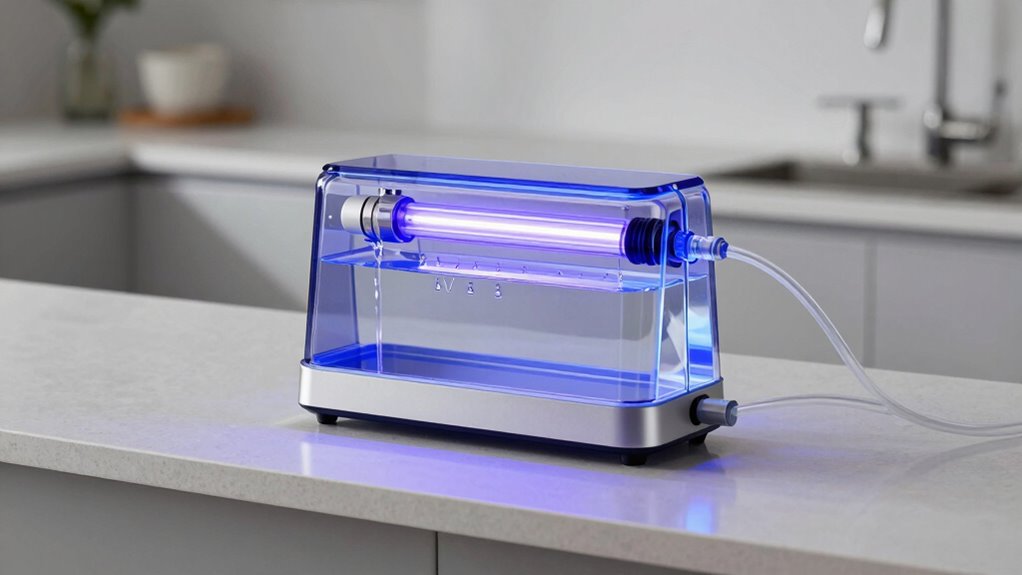
UV water sterilizers offer an effective, chemical-free way to purify your drinking water by using ultraviolet light to destroy bacteria, viruses, and other pathogens. At the core of this process is the UV wavelength, typically around 254 nanometers, which is ideal for disrupting the DNA and RNA of microorganisms, rendering them harmless. When you install a UV sterilizer, you’re harnessing this specific wavelength to guarantee your water is safe without adding chemicals or altering its taste. The process is quick, efficient, and environmentally friendly, making it a popular choice for homeowners seeking clean, healthy water. Understanding UV wavelength is vital because it determines the sterilizer’s effectiveness. Most UV sterilizers are designed to emit light at the germicidal range, which is between 200 and 280 nanometers. When functioning correctly, this wavelength penetrates the cell walls of microorganisms and disrupts their genetic material. This prevents them from reproducing or causing infection. If your sterilizer’s UV lamp isn’t emitting the correct wavelength, the unit won’t work as intended. That’s why knowing about UV wavelength helps you recognize when your sterilizer is operating at its best or needs attention. Proper sterilizer maintenance is equally important to keep your UV water purifier functioning effectively. Over time, the UV lamp’s intensity diminishes, even if it still appears operational. Regularly replacing the UV bulb—usually every 12 months—is essential because a weakened lamp won’t deliver the proper UV wavelength for effective sterilization. Additionally, keeping the quartz sleeve clean prevents dirt and mineral buildup from blocking UV light. This involves removing and gently cleaning the sleeve periodically with a soft cloth and mild solution. If the sleeve is damaged or scratched, replacing it guarantees your sterilizer continues to operate efficiently. Another aspect of sterilizer maintenance involves checking the power supply and ensuring the unit’s sensors and electronic components are working correctly. Some modern sterilizers have alarm systems to alert you when the UV lamp needs replacing or if the unit isn’t functioning properly. Regular inspections and following the manufacturer’s maintenance schedule will help you avoid unexpected failures. Proper maintenance not only prolongs the lifespan of your sterilizer but also guarantees that it provides the highest level of water safety. This process is similar to how high-quality projectors use specific technology to optimize image clarity and performance.
UV water sterilizer for home use
As an affiliate, we earn on qualifying purchases.
As an affiliate, we earn on qualifying purchases.
Frequently Asked Questions
How Long Do UV Water Sterilizers Typically Last?
UV water sterilizers typically last around 9 to 12 months, but this can vary based on maintenance intervals and water quality. You should replace the UV bulb regularly to guarantee peak performance. Check your device’s warranty coverage; some manufacturers offer replacements if the unit fails prematurely. Regular maintenance not only prolongs the lifespan but also guarantees effective sterilization, keeping your water safe and clean.
Are UV Sterilizers Effective Against All Waterborne Pathogens?
When it comes to pathogens, UV sterilizers hit the nail on the head for many, but they don’t cover all bases. Some waterborne pathogens, like Cryptosporidium and Giardia, have high resistance or protection against UV light limitations. So, while UV sterilizers are effective against many germs, they might not eliminate every pathogen, especially those with strong resistance. You’ll want to combine UV with other treatment methods for thorough safety.
Do UV Sterilizers Require Regular Bulb Replacements?
Yes, UV sterilizers require regular bulb replacements to stay effective. The UV bulb lifespan is typically about 9 to 12 months, depending on usage and water quality. You should follow the maintenance schedule recommended by the manufacturer, which usually includes monitoring the bulb’s condition and replacing it when needed. Doing so guarantees your sterilizer continues to effectively eliminate pathogens and keeps your water safe.
Can UV Sterilizers Treat Large Volumes of Water Efficiently?
Yes, UV sterilizers can treat large volumes of water efficiently, but scaling challenges may arise if the system isn’t properly designed. You might face installation complexities when integrating UV units into bigger setups, requiring careful planning. To guarantee effective sterilization, choose a UV system rated for your water volume, and consider professional installation to avoid issues like poor exposure or flow rate limitations. Proper maintenance keeps your system running smoothly.
Are UV Water Sterilizers Safe for Drinking Water?
Yes, UV water sterilizers are safe for drinking water because they effectively eliminate harmful pathogens without adding chemicals, guaranteeing health safety. They have minimal environmental impact since they don’t produce byproducts or waste. You can trust UV sterilizers to provide clean, safe drinking water while protecting both your health and the environment. Just ensure your unit is properly maintained for peak performance and safety.
Conclusion
UV water sterilizers can be a highly effective way to guarantee clean drinking water, especially in areas with limited access to traditional treatment. Did you know that UV sterilization can inactivate over 99.9% of harmful bacteria and viruses with no chemicals involved? If you’re seeking a quick, eco-friendly solution to improve water safety, UV sterilizers might be just what you need. Consider your water quality and usage to determine if UV technology fits your needs best.