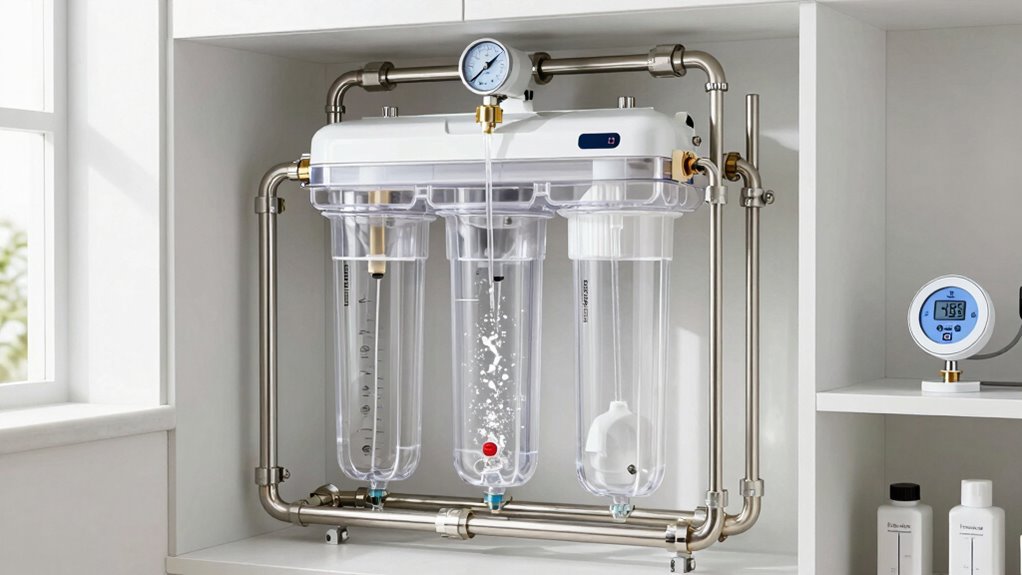

To properly size your whole-house water filter, start by evaluating your household’s peak water demand—think about bathrooms, kitchens, and appliances running simultaneously. Measure your home’s water pressure, which usually falls between 40-80 psi, and select a filter rated for that range. Overestimating slightly ensures your system can handle future needs and avoids pressure issues. For detailed steps on matching flow rate and pressure, keep exploring how to optimize your filtration system effectively.
Open a free Amazon Business account
Business pricing, bulk buying and tax-exempt orders.
As an affiliate, we earn on qualifying purchases.
Key Takeaways
- Measure your home’s peak water demand by counting fixtures and appliances to determine necessary flow rate.
- Check your household water pressure to select a filter rated for your home’s psi range.
- Size your filter capacity to match maximum flow during peak usage, avoiding system overwhelm.
- Consider future household growth and add slight oversizing for sustained performance.
- Regularly maintain and replace filters based on manufacturer recommendations to ensure optimal flow and pressure.
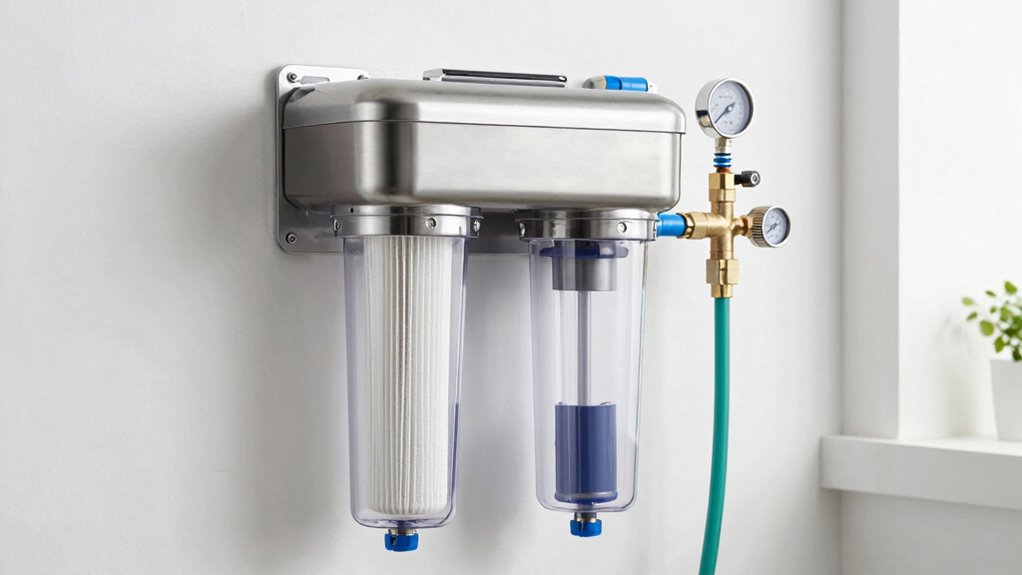
If you’re looking to improve the quality of every drop of water in your home, whole-house water filters offer an effective solution. But before you invest, you need to consider how to properly size the system for your household’s flow rate and pressure needs. Proper sizing guarantees your filter can handle your daily water demand without sacrificing flow or pressure. One of the key installation considerations is understanding your household’s peak water usage. Take note of how many bathrooms, kitchens, and appliances are connected to your water line, and estimate the maximum flow rate you’ll need at any given time. This helps determine the filter’s capacity, preventing the system from becoming overwhelmed during high demand periods. Additionally, you should evaluate your home’s water pressure, which can vary widely. Most homes operate between 40 to 80 psi. A filter system that’s too small or not rated for your pressure range can lead to reduced flow, or worse, damage to the filter itself. Hence, measuring your pressure beforehand and selecting a unit designed to accommodate it is essential.
Once installed, maintenance requirements become an ongoing consideration. Whole-house filters typically need regular filter replacements or cleanings to maintain ideal performance. Depending on the filter type—carbon, sediment, or multi-stage—the frequency can range from every three to six months. Failing to adhere to these maintenance schedules can result in decreased water flow, reduced filtration efficiency, or bacterial buildup. It’s wise to choose a system with easily accessible filter housings, making routine maintenance less cumbersome. Also, keep in mind that some filters require more frequent attention if your water contains high levels of sediment or contaminants. Regular maintenance not only preserves water quality but also extends the lifespan of your entire system. Moreover, utilizing proper installation techniques can help ensure optimal performance and longevity of your filter system.
Furthermore, when selecting a size, think about future needs, especially if your household is expected to grow or if you plan to install additional fixtures. Oversizing slightly can guarantee your system remains effective as demand increases. Remember, neglecting proper sizing and maintenance can lead to subpar water quality and increased costs over time. By carefully considering installation factors like flow rate and pressure, and staying committed to routine upkeep, you’ll guarantee your whole-house water filter provides consistently clean, high-quality water for years to come.
As an affiliate, we earn on qualifying purchases.
Frequently Asked Questions
Can I Install a Whole-House Filter Myself?
Yes, you can install a whole-house water filter yourself if you’re comfortable with DIY projects. Follow the manufacturer’s instructions carefully, and make certain you have the right tools. However, for complex setups or if you’re unsure about plumbing or pressure requirements, it’s safer to hire professional service. A professional can guarantee proper installation, prevent leaks, and maintain your system’s efficiency. If you’re confident, DIY installation can save time and money.
How Often Should I Replace Filter Cartridges?
Imagine a clear mountain stream, pristine and flowing steadily. Your filter’s lifespan mirrors this, and you should replace the cartridges every 6 to 12 months, depending on usage and water quality. Follow your filter’s recommended replacement schedule to keep water fresh and clean. Regular changes prevent buildup and guarantee ideal flow and pressure. Stay attentive to signs like reduced flow or strange tastes, and swap out cartridges promptly to maintain your system’s health.
Will a Larger Filter Reduce Water Pressure?
A larger filter won’t necessarily reduce water pressure if you choose one with appropriate pressure loss and capacity. In fact, bigger filters often handle higher flow rates with less pressure drop, maintaining steady pressure. Just make sure to select a filter sized for your home’s flow rate and pressure needs. Proper sizing guarantees ideal filter capacity, preventing pressure drops and ensuring consistent water flow throughout your whole house.
Are There Filters for Specific Contaminants?
Yes, there are contaminant-specific filters designed for targeted filtration. These filters target particular contaminants like chlorine, lead, or bacteria, ensuring you get cleaner, safer water. When shopping, look for filters labeled for specific pollutants you want to remove. This focused approach helps improve water quality effectively and efficiently, giving you peace of mind knowing your entire household receives water filtered for the exact contaminants present in your supply.
How Do I Troubleshoot Low Flow Issues?
Think of your water flow like a garden hose losing pressure. First, perform water pressure testing to identify if pressure drops before reaching your faucet. Check for clogged filters or sediment buildup that block flow. Adjust the flow rate if possible, and replace filters if they’re clogged. These steps help restore steady water flow, ensuring your entire house gets the pressure it needs and resolving low flow issues effectively.
Conclusion
So, now that you know how to size your whole-house water filter for flow rate and pressure, you’re practically a plumbing genius. Just remember, ignoring these details might leave you stuck with sluggish flow or worse—no water at all. But hey, who needs a steady shower or clean dishes when you can indulge in the thrill of guessing your way through water filtration? Stay smart, stay prepared, and enjoy the endless adventure of household water management!
NFL season / tailgating Picks
team gear
As an affiliate, we earn on qualifying purchases.