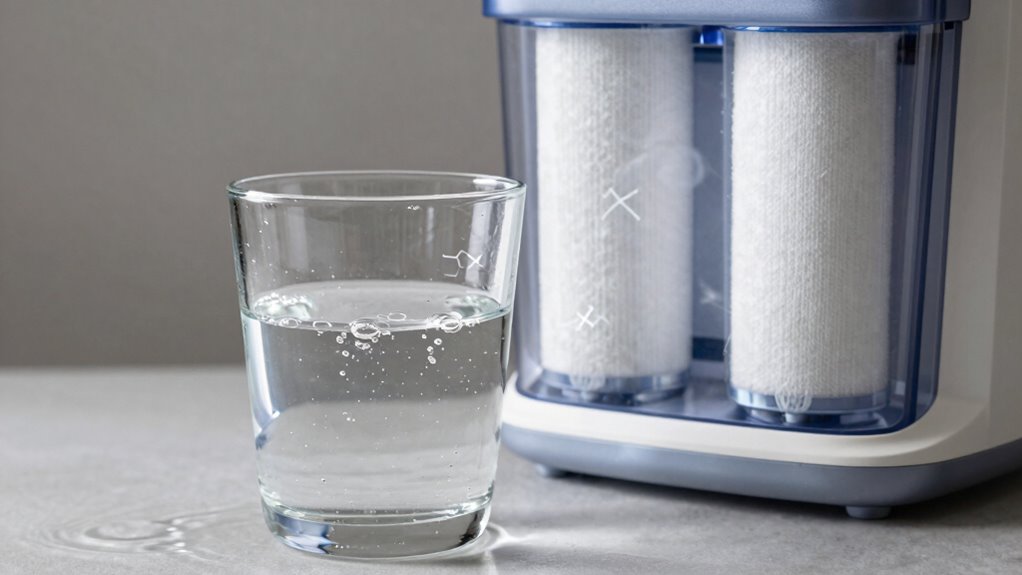

Standard water filters like pitchers or faucet mounts mainly target chlorine, sediment, and some metals, but they don’t effectively remove PFAS chemicals. Reverse osmosis systems are your best bet, as they force water through membranes that trap these tiny, persistent pollutants. Activated carbon can help with some PFAS but isn’t foolproof. To better protect yourself, choose high-quality, certified systems, and stay informed about your water’s contamination levels. If you’d like to discover more, keep exploring the options available.
Key Takeaways
- Standard pitcher and faucet filters mainly remove chlorine and sediment, not effective against most PFAS molecules.
- Reverse osmosis systems are highly effective at removing PFAS from water.
- Activated carbon filters can reduce some long-chain PFAS but are not wholly reliable for all variants.
- Certification and lab testing results are essential to verify a filter’s PFAS removal capability.
- No single filter technology guarantees complete removal; combining methods or advanced systems offers better protection.
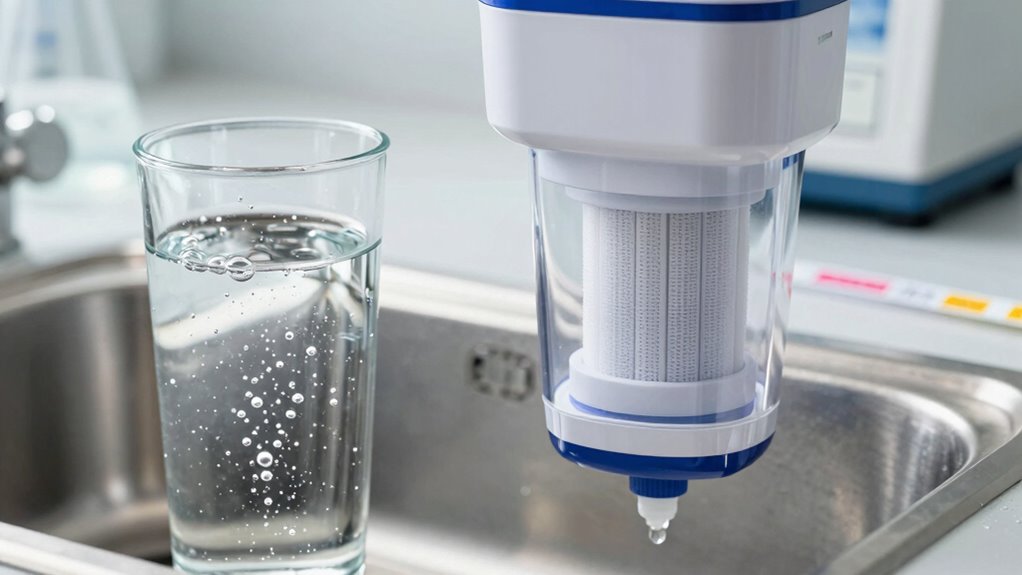
Have you ever wondered what’s lurking in your water? It’s a valid concern, especially when you consider the presence of PFAS, or per- and polyfluoroalkyl substances. These chemicals are often linked to industrial contamination, meaning they can seep into water sources from factories, manufacturing sites, and waste disposal facilities. Once in your water supply, PFAS become a serious health concern because of their persistence and potential health effects. Unlike other contaminants that break down, PFAS are highly resistant to natural degradation, so they can accumulate over time, making them difficult to eliminate once present. This persistent nature means that exposure can happen repeatedly, increasing the risk of adverse health effects such as immune system suppression, hormone disruption, and even certain cancers.
PFAS are persistent chemicals from industrial sources that can accumulate in water, posing serious health risks over time.
Understanding what filters can and can’t remove is essential if you’re trying to protect your household. Most standard water filters, like basic pitcher filters or faucet-mounted units, are designed to reduce common contaminants such as chlorine, sediment, and some heavy metals. However, they generally fall short when it comes to PFAS. These chemicals are tiny and stubborn, often passing right through activated carbon filters that many people rely on daily. While activated carbon can reduce some PFAS, especially long-chain variants, it’s not reliable for comprehensive removal. Reverse osmosis systems, on the other hand, are much more effective because they force water through a semi-permeable membrane that can block many PFAS molecules. These systems are among the best options for reducing PFAS levels, but they can be costly and may require professional installation.
It’s important to recognize that not all filters are created equal. Some marketed as “PFAS filters” or “chemical removers” might not meet the necessary standards, so you should carefully check their certifications or lab testing results. Filters that use advanced technologies such as ion exchange resins or specialized activated carbon are more likely to effectively reduce PFAS. Still, no single filtration method guarantees complete removal, especially if the contamination levels are high or if your water contains multiple pollutants.
Ultimately, if you’re concerned about industrial contamination and its health effects, investing in a high-quality, certified filtration system is wise. But remember, even the best filters have limitations. Regular testing of your water supply can help you understand the specific contaminants present and guide you toward the most effective treatment options. Staying informed and proactive is the key to protecting yourself and your family from the hidden dangers posed by PFAS in water. Additionally, awareness of Vetted water treatment options can help ensure you select the most reliable filtration method.

iSpring RCC7AK-BN NSF Certified, 75 GPD, Alkaline 6-Stage Reverse Osmosis System, pH+ Remineralization RO Water Filter System Under Sink Patented Top-Mounted Faucet Design for Easy Installation
- Patented Top-Mounted Faucet: Easy above-sink installation
- Mineral Boost Stage: Adds essential minerals and balanced pH
- Transparent Filter Housing: Monitor contaminant buildup easily
As an affiliate, we earn on qualifying purchases.
As an affiliate, we earn on qualifying purchases.
Frequently Asked Questions
Are All Water Filters Effective Against PFAS?
Not all water filters effectively remove PFAS. You need filters with high efficiency for chemical adsorption, like activated carbon or ion exchange systems, to target PFAS compounds. These filters can substantially reduce PFAS levels, but others, such as basic pitcher filters or UV purifiers, often aren’t designed for chemical removal. Always check the filter’s specifications to guarantee it’s rated for PFAS reduction before trusting it to clean your water.
How Long Do Pfas-Removing Filters Last?
Most PFAS-removing filters last between 6 to 12 months, depending on usage and water quality. Did you know that over 50% of filter failures occur due to poor maintenance? To guarantee peak performance, you should follow the recommended replacement intervals and perform regular filter maintenance. Check your manufacturer’s guidelines, as neglecting these can reduce filter effectiveness and compromise water safety. Replace filters promptly to stay protected from contaminants.
Can Boiling Water Eliminate PFAS?
Boiling water doesn’t effectively eliminate PFAS because it doesn’t break down these chemicals. Boiling can reduce some contaminants, but PFAS are heat-resistant, so their chemical structure remains intact. The boiling effectiveness for PFAS is minimal, and it won’t remove them from your water. To truly reduce PFAS levels, consider using specialized filters like activated carbon or reverse osmosis systems, which are designed to target and remove these persistent chemicals.
What Are the Health Risks of PFAS Exposure?
Imagine walking through a fog that silently impacts your health. Chronic exposure to PFAS can cause serious health effects, including hormone disruption, immune system issues, and increased cancer risk. These chemicals linger in your body and environment, slowly building up over time. You may not see immediate symptoms, but long-term exposure poses real dangers. Protect yourself by reducing contact and staying informed about water safety to minimize these unseen health risks.
How Can I Test My Water for PFAS?
To test your water for PFAS, you can choose between laboratory testing and home test kits. Laboratory testing provides the most accurate results but can be costly and take time. Home test kits are more convenient and affordable, allowing you to collect samples yourself and send them to a lab for analysis. Whichever option you pick, guarantee the testing method specifically detects PFAS compounds for reliable results.
Conclusion
Protecting your water from PFAS is key, but not all filters are created equal. While activated carbon and reverse osmosis systems can substantially reduce these harmful chemicals, some cheaper options won’t do the job. Did you know that over 97% of Americans have PFAS in their blood? Being informed about effective filtration helps you make smarter choices for your health and safety. Stay vigilant and choose filters proven to remove these persistent pollutants.