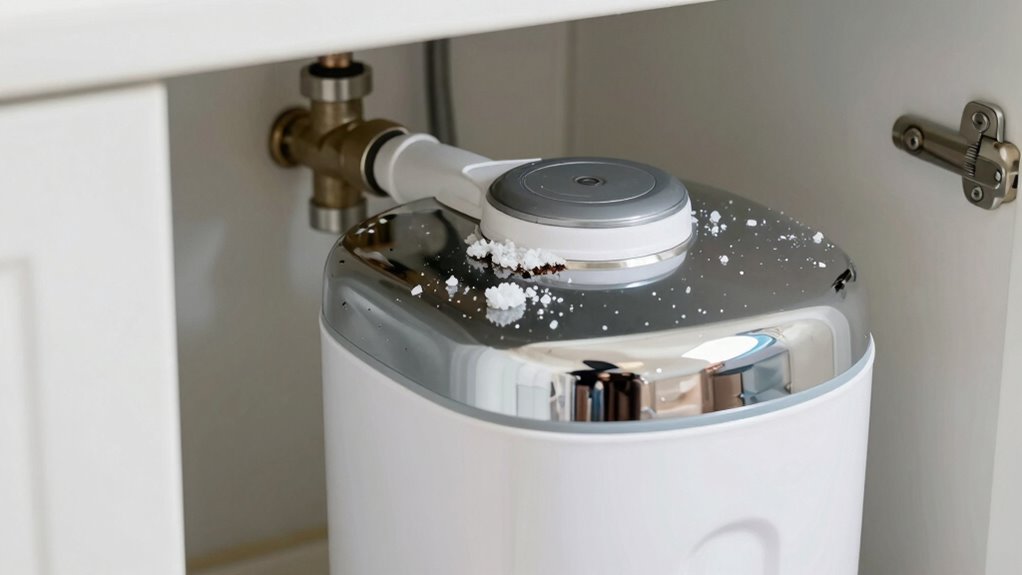

Hard water can cause serious damage to your home’s plumbing, appliances, and water quality. Minerals like calcium and magnesium build up as limescale, clogging pipes, reducing water flow, and making appliances work harder. This leads to higher energy bills, shorter appliance lifespans, and costly repairs. Installing a water softener helps prevent these issues by removing minerals, saving you money and extending your appliances’ life. If you want to know how, keep exploring this topic.
Key Takeaways
- Hard water minerals cause limescale buildup, damaging appliances and plumbing, reducing efficiency, and increasing repair costs.
- Mineral deposits clog pipes and appliances, leading to decreased water flow and higher energy consumption.
- Ignoring limescale results in costly repairs, shortened appliance lifespan, and increased utility bills.
- Water softeners exchange calcium and magnesium ions for sodium or potassium, preventing mineral buildup.
- Installing a water softener preserves appliance life, reduces maintenance, and improves water quality for daily use.
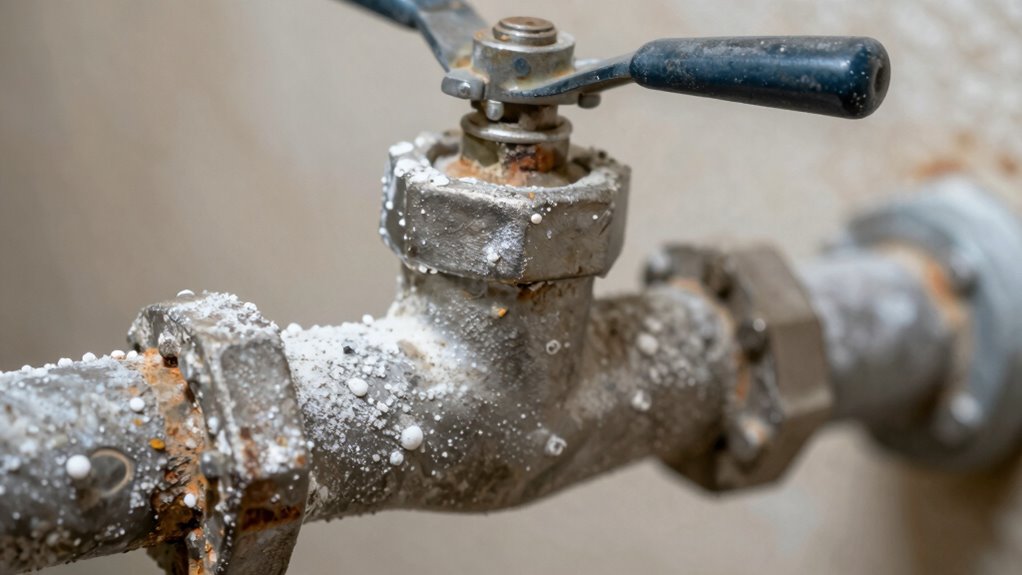
Water softeners are devices designed to remove minerals like calcium and magnesium from your tap water, preventing that stubborn buildup known as limescale. When you have hard water, those minerals don’t just stay dissolved in your water; they settle and form deposits on your fixtures and appliances. Over time, this limescale buildup can become a serious problem, affecting the efficiency and lifespan of your household appliances. Think about your dishwasher, washing machine, or even your coffee maker—each one relies on water to operate smoothly. When mineral deposits accumulate inside them, they have to work harder to do their job, which increases energy consumption and wear and tear. You might notice your appliances take longer to clean or heat water less effectively, but the real cost is often hidden in higher utility bills and reduced appliance longevity.
By installing a water softener, you actively combat this issue. It works by exchanging calcium and magnesium ions for sodium or potassium ions, which don’t cause limescale. This process results in gentler water flowing through your home’s plumbing. Softer water means fewer mineral deposits accumulating on your fixtures and appliances, which directly translates into improved appliance efficiency. When mineral buildup is minimized, your appliances don’t have to work as hard to heat water or clean clothes, extending their lifespan and reducing maintenance needs. Plus, softer water feels better on your skin and hair and can even improve the quality of your laundry and dishes, leaving them brighter and cleaner.
Ignoring limescale buildup can lead to costly repairs or replacements down the line. Your water heater, for example, may have to work overtime, which shortens its lifespan and increases your energy bills. Similarly, your plumbing pipes can become clogged or corroded faster, leading to leaks or reduced water flow. The cumulative effect is a home where appliances don’t perform at their best, and you end up spending more money fixing or replacing them. Installing a water softener is a proactive step toward safeguarding your appliances and maintaining the efficiency of your entire plumbing system. Not only will you notice an immediate improvement in water quality, but you’ll also see long-term savings and extended appliance life, all while enjoying the benefits of softer, more comfortable water in your daily routine.
A better understanding of water treatment processes can help you make informed decisions about maintaining your home’s plumbing.
As an affiliate, we earn on qualifying purchases.
Frequently Asked Questions
How Do Water Softeners Affect Plumbing Lifespan?
Water softeners extend your plumbing’s lifespan by reducing mineral buildup and pipe corrosion. When you soften water, fewer minerals like calcium and magnesium deposit inside pipes, preventing clogs and damage. This means your plumbing stays cleaner and lasts longer, saving you money on repairs. By maintaining a water softener, you actively protect your pipes from corrosion and buildup, ensuring your plumbing system remains efficient and durable over time.
Are Water Softeners Environmentally Friendly?
You might think water softeners are a double-edged sword, but they can be eco-friendly if you choose wisely. Today’s models have a lower environmental impact, especially when paired with eco-friendly options like salt-free systems or recharge methods that reduce waste. While traditional softeners use salt and generate wastewater, newer technologies aim to lessen their footprint, making them a greener choice for your home and the planet.
Do Water Softeners Remove All Minerals From Water?
Water softeners don’t remove all minerals from your water. Instead, they target minerals like calcium and magnesium that cause hardness, improving water quality. This process primarily involves minerals removal that affects scale buildup and soap efficiency, but other minerals, such as iron or manganese, may not be fully eliminated. So, while your water quality improves, some minerals still remain, ensuring the water isn’t completely mineral-free.
Can Water Softeners Cause Any Health Concerns?
Water softeners generally don’t cause health concerns, but they can impact your mineral intake. If you rely heavily on softened water, you might get less calcium and magnesium, which are essential minerals. For most people, this isn’t a problem, but if you have specific health conditions or need higher mineral intake, you should consult a healthcare professional. Overall, softened water is safe and doesn’t pose significant health impacts for the average person.
How Often Should I Service My Water Softener?
You should service your water softener every 6 to 12 months to keep it functioning properly. Regular maintenance tips include checking salt levels, cleaning the resin tank, and inspecting for leaks. Service frequency depends on your water usage and the hardness level, so if you notice issues like reduced softening or strange tastes, it’s time for a tune-up. Staying consistent with maintenance helps extend your softener’s lifespan and guarantees peak performance.
Conclusion
While hard water might seem harmless at first, it quietly causes buildup and damage over time. Think of water softeners as your home’s safeguard, turning stubborn minerals into gentle flow. Without them, your pipes, appliances, and skin face relentless wear and tear. The difference is clear: one simple system can save you hundreds in repairs and keep your home running smoothly. Don’t wait until damage strikes—choose to soften your water today, before hard water hardens your home’s future.