TL;DR

Get garden gear delivered free with Prime
- Fast, free delivery on millions of items
- Prime Video, Amazon Music and more included
- Member-only deals all year
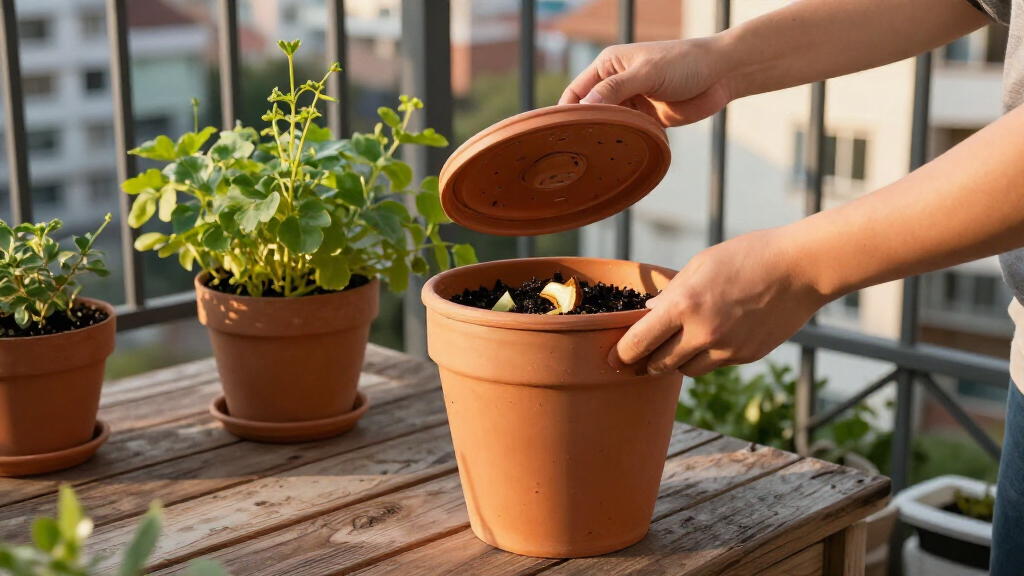
A report by Amateur Gardening describes ways to compost food scraps without a garden, including a small balcony bin, a wormery or a countertop bokashi system. The article says worm compost may be ready in eight to 12 weeks, while the best method depends on available space and local rules.
Amateur Gardening has published advice for people who want to compost food scraps without a garden, describing options for balconies, kitchen counters and shared spaces. The report’s author, Chris Collins, says a small 20-litre bin, a wormery or a bokashi container can make composting possible in a flat, though each requires a suitable setup.
Collins says he uses a 20-litre compost bin on his London balcony, mixing shredded paper with kitchen waste in roughly equal amounts. The report presents this 50:50 balance of brown and green materials as a practical starting point for a small bin, with compost bins for kitchen scraps available in different sizes. It does not specify a universal recipe for every compost system, so users should check the instructions for their chosen equipment.
A wormery is another option for turning food scraps into compost, alongside garden compost turners for larger setups. The article describes a homemade version using three stacking trays: holes are drilled in two trays for airflow and drainage, while the bottom tray remains unperforated to collect liquid. The upper tray holds damp soil, compost or shredded paper, worms and food scraps. Collins says vegetable peelings, crushed eggshells, coffee grounds, tea bags and torn egg boxes can be added, chopped into smaller pieces and balanced with brown materials.
For homes where an outdoor wormery is not suitable, the report suggests bokashi composting on a countertop, an alternative to using garden compost tumblers. It uses a sealed container and an inoculant such as bran to ferment food waste in an oxygen-free process. The resulting material is described as pre-compost and can be placed at the bottom of a plant container to break down further. The article also suggests asking about shared ground-level areas, such as community spaces or car parks, for a larger composting setup.
Composting in Small Homes
For people in flats, limited outdoor space can make ordinary garden composting impractical. The options outlined in the report offer different ways to handle food scraps without needing a garden, from a compact bin to a shared neighborhood site. That can make composting more accessible to renters and urban residents, although permission and space remain practical constraints.
The methods also differ in what they produce and how they are used. A wormery can yield crumbly compost and liquid that the report says may be used as plant fertilizer when diluted. Bokashi-treated waste needs to break down further in soil or a container. Readers should not assume these systems are interchangeable or that every household can process all food waste in the same way.
Popular right now

Roborock F25 BX Cordless Wet Dry Vacuum Mop

De'Longhi Magnifica Evo Fully Automatic Espresso Machine with Manual Milk Frother, Silver

Ninja DualZone Air Fryer 10 Qt Smart 6-in-1 Grey (DZ950)
As an affiliate, we earn on qualifying purchases.
Three Routes for Flat Dwellers
The source is an Amateur Gardening advice report, rather than a new regulation, scientific study or announcement of a public program. Collins draws on his experience living in a central London flat to describe small-scale methods. The article also points readers to Garden Organic for further information about bokashi and composting.
For wormeries, Collins estimates that compost may appear after eight to 12 weeks, with liquid collecting in the lower tray. The timing is presented as guidance, not a guarantee for every bin. The report separately suggests making leafmould from fallen leaves in loosely tied plastic sacks over a year or two, and says to ask the landowner before collecting leaves.
“I’ve lived in a central London flat for many years, so I know what it’s like to make compost in a tight space.”
— Chris Collins, writing for Amateur Gardening
Choosing a Suitable Setup
The report does not compare the cost, capacity or maintenance needs of the methods, or set out which foods every bokashi or wormery system can accept. Processing times and results can vary; the eight-to-12-week estimate applies to the wormery advice in this article and is not a stated timeline for bokashi.
Whether residents can use a balcony, communal area or car park will depend on their building and permissions. The source does not give local rules for renters or explain how to arrange a shared scheme. It advises seeking permission before collecting leaves from land that belongs to someone else.
Steps Before Starting
Residents considering a system can first assess how much space they have and whether a balcony or shared location is allowed. They can then choose between a small bin, a wormery or a sealed bokashi container, following the product guidance for setup and acceptable materials. For a homemade wormery, the article specifies separate trays for drainage and liquid collection, plus a balance of green scraps and brown material.
Those interested in communal composting can ask neighbors or a building manager whether a suitable shared area is available. The source recommends Garden Organic’s website for more composting and bokashi information. No specific policy change, launch date or further development is identified in the report.
Key Questions
Can I compost if I only have a flat?
Yes. The report describes a small balcony bin, a wormery and a countertop bokashi system as options, depending on space and permissions.
How long does a wormery take to produce compost?
Chris Collins says crumbly worm compost may appear after eight to 12 weeks. This is an estimate, and the source does not promise the same timing for every setup.
What can I put in a wormery?
The report lists vegetable peelings, crushed eggshells, coffee grounds, tea bags and torn egg boxes. It recommends chopping ingredients into small pieces and balancing green scraps with brown materials such as shredded paper.
What is bokashi composting?
Bokashi uses a sealed container and an inoculant, such as bran, to treat food waste without oxygen. The resulting material is pre-compost and can break down further in soil or a plant container.
Can I collect leaves for leafmould?
The report says well-rotted leaves can be added to potting compost and suggests storing wet leaves in loosely tied sacks for a year or two. It advises asking the landowner for permission before collecting them.
Source: amateurgardening.com