
TL;DR

Get garden gear delivered free with Prime
- Fast, free delivery on millions of items
- Prime Video, Amazon Music and more included
- Member-only deals all year
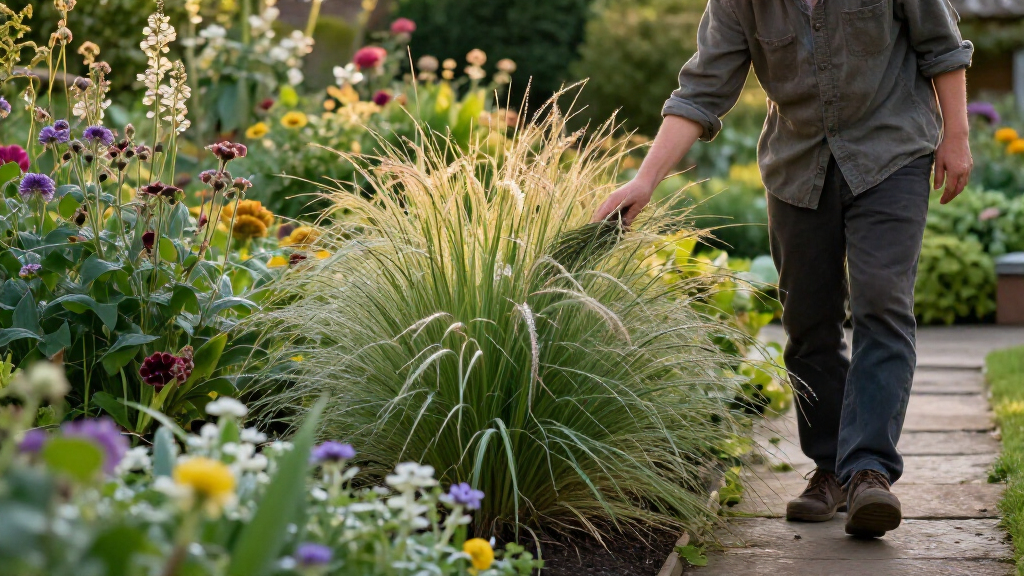
Monty Don’s Instagram photo of Longmeadow shows a grass border filled with ornamental grasses, foliage and seedheads beside a more formal garden. Ideal Home describes the planting as a low-maintenance style that can offer shelter for wildlife, though the photo does not confirm every plant or the border’s care requirements.
Monty Don has shared a photograph of the grass border at his Longmeadow garden, showing a loose planting of ornamental grasses and tall seedheads beside a more formal area. In a report prompted by the image, Ideal Home presented the border as an example of low-maintenance planting that may also provide shelter for garden wildlife; the post itself does not establish the planting’s upkeep or identify every plant in view.
Don’s caption, as quoted by Ideal Home, reads: “Grass borders to the right, jewel garden to the left.” The image contrasts the informal, layered border with the jewel garden, giving a view of two different planting styles at Longmeadow. Ideal Home describes the border as containing ornamental grasses, lush foliage and prominent seedheads, including flower heads darkened by autumn weather.
The report suggests grass varieties such as Calamagrostis x acutiflora ‘Karl Foerster’, which it says can reach up to 1.8 metres, and Anemanthele lessoniana, whose foliage can turn yellow, orange and red in colder months. It also points to plume thistle, Cirsium rivulare ‘Atropurpureum’, as a possible feature in the photograph. These are the article’s identifications and planting suggestions, not a confirmed inventory from Don.
Ideal Home says the tall, dense planting could offer shelter for insects, small mammals and amphibians. It notes that a square support frame is visible around some of the taller thistle stems, while much of the border appears to stand without support. The image does not show how the border is maintained or establish how much work it requires.
A Border With Wildlife Potential
The photograph offers gardeners a practical visual reference for combining height, texture and seasonal interest in one border. Rather than relying on a succession of conspicuous flowers, the planting described by Ideal Home includes grasses and seedheads that remain visually prominent as the season changes. The report’s low-maintenance framing is an interpretation of the image, not a measured assessment of labor or cost.
The wildlife angle is relevant because a dense border can provide cover as well as decoration. Ideal Home says the planting may shelter insects, small mammals and amphibians, but the source does not report wildlife counts or document particular species using the area. For readers considering a similar design, the photo is inspiration rather than proof of a specific ecological result.
Popular right now

Vitamix Propel Series 510 Professional-Grade Blender, 3 Programs, Black

Ninja CREAMi Scoop & Swirl 13-in-1 Ice Cream and Soft Serve Maker, NC701

Ninja Flip Toaster Oven and Air Fryer, 8-in-1, Stainless Steel, SP151
As an affiliate, we earn on qualifying purchases.
The Longmeadow Planting Contrast
Longmeadow is the garden associated with Don, the television gardener and writer. In the caption reported by Ideal Home, he identifies the grass border and the jewel garden on opposite sides of the scene. That contrast is central to the image: one side appears more informal and foliage-led, while the other is described as a jewel garden.
Ideal Home uses the post to discuss ornamental grasses as plants that can add vertical form and changing foliage colour. It names tufted hairgrass, Deschampsia cespitosa ‘Goldtau’, as another option for a prairie-style border. The article also lists retailer availability for some plants, but those listings are shopping information rather than evidence that Don used or endorsed those products.
“Grass borders to the right, jewel garden to the left.”
— Monty Don, in the Instagram caption quoted by Ideal Home
What the Photograph Cannot Confirm
The source does not provide the date of Don’s Instagram post, a direct link to the post, or a detailed plant list verified by Don. Some plants are described as appearing in the image, so their identification should be treated as Ideal Home’s interpretation. The report also does not include information about soil, border size, planting dates, maintenance hours or costs.
Nor does the material document wildlife using this particular border. The idea that the planting can provide shelter is a general assessment in Ideal Home’s report, not a measured finding about Longmeadow. The article does not establish that ornamental grasses are maintenance-free; care needs can vary by species, climate and garden conditions.
How Gardeners Can Use the Idea
Readers interested in the look can use the photograph as a starting point, then check each plant’s mature height, growing conditions and seasonal care before planting. Ideal Home’s named options include Karl Foerster feather reed grass, pheasant’s-tail grass and tufted hairgrass, alongside plume thistle. Those suggestions come from the publication; the source does not say Don recommends a particular planting plan.
No further announcement or follow-up from Don is included in the source material. Any later details about the border, its plants or its management would need to come from a subsequent post or a direct statement from Don.
Key Questions
What did Monty Don share?
He posted a photograph of Longmeadow showing a grass border beside what his caption calls the jewel garden, according to Ideal Home.
Which plants does the report mention?
Ideal Home names Calamagrostis x acutiflora ‘Karl Foerster’, Anemanthele lessoniana, plume thistle and Deschampsia cespitosa ‘Goldtau’ as plants visible or suitable for a similar border. The source does not confirm that all are present in Don’s border.
Does the border require no maintenance?
No. Ideal Home calls the planting low-maintenance, but the source gives no care schedule or labor figures. Maintenance will depend on the plants and local growing conditions.
How might a grass border help wildlife?
Ideal Home says thick foliage and seedheads can provide shelter for insects, small mammals and amphibians. It does not report wildlife observations or counts from Longmeadow.
Source: idealhome.co.uk