TL;DR

Get garden gear delivered free with Prime
- Fast, free delivery on millions of items
- Prime Video, Amazon Music and more included
- Member-only deals all year
Birds may tap at windows to forage for insects, react to reflections they mistake for rivals, or investigate unfamiliar surroundings. Wildlife expert Lucy Taylor says autumn light and young birds’ exploration can contribute; decals, tape or other exterior coverings may reduce reflection confusion.
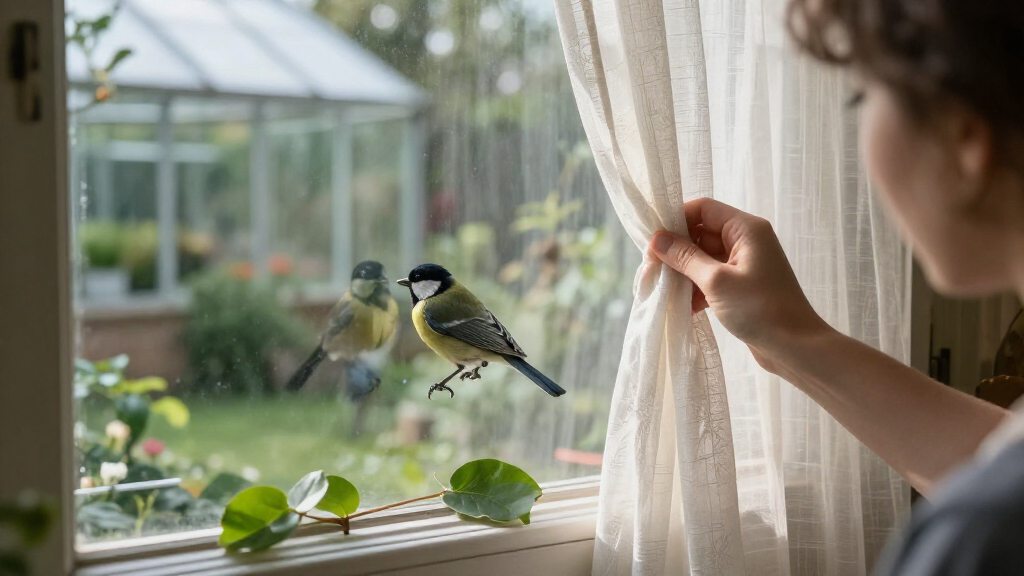
Birds tapping at windows may be searching for insects, reacting to their reflections or exploring unfamiliar surfaces, according to wildlife expert Lucy Taylor of Vine House Farm, in a Country Living report about the behavior in autumn. Taylor says seasonal light and young birds’ exploration can make windows more confusing, while reflective glass may appear to show a rival or an extension of the garden.
Food is one possible draw. Taylor says small birds, especially members of the tit family, may forage around window frames for spiders, larvae and insects sheltering in crevices as temperatures cool. She also says older windows can attract some tits because traditional putty may contain fish or linseed oils. The report does not establish how often either food-related explanation accounts for repeated tapping.
Reflections offer another explanation. Birds may fail to recognize their own image in glass and treat it as another bird in their territory. Taylor notes that territorial defense is more common in spring and summer, but some birds continue defending an area in autumn. Young birds dispersing to find feeding and roosting sites may also encounter unfamiliar windows.
Autumn conditions and fledglings may add to the confusion. The report says lower-angle sunlight can make glass reflect trees and branches more clearly, giving the impression that the garden continues through the window. Young birds that hatched over summer are also learning to navigate and may investigate objects they have not encountered before.
Reducing Window Tapping and Risk
Repeated pecking can waste a bird’s energy and may bruise its bill, the report says. Window reflections can also make glass difficult for birds to distinguish from open space. The explanations point to different possible attractions: insects or putty near the frame, an apparent rival in the glass, or reflected vegetation.
The report recommends disrupting reflections rather than assuming every bird is tapping for the same reason. Bird-safe decals, specialist collision tape or cording placed on the outside of the glass are suggested options. A temporary exterior covering, such as cardboard or newspaper, may also help. These are practical suggestions from the source, not a guarantee that tapping will stop.
Popular right now

Roborock F25 BX Cordless Wet Dry Vacuum Mop

De'Longhi Magnifica Evo Fully Automatic Espresso Machine with Manual Milk Frother, Silver

Ninja DualZone Air Fryer 10 Qt Smart 6-in-1 Grey (DZ950)
As an affiliate, we earn on qualifying purchases.
Why Autumn Can Change Window Reflections
The report focuses on autumn, when birds that hatched during summer are beginning to explore beyond familiar surroundings. Taylor says some young birds may also be moving to establish new feeding and roosting areas. Those activities can bring them to windows they have not encountered before.
Light is another seasonal factor described in the report: with the sun lower in the sky, glass may reflect more of the surrounding garden. The article also notes that birds can continue territorial behavior beyond the spring and summer period. It provides expert explanation and practical advice, rather than results from a study measuring how common each cause is.
“Smaller birds, particularly those within the tit family, visit window frames during autumn to hunt for spiders, larvae, and any overwintering insects that may be hidden or tucked into corners.”
— Lucy Taylor, wildlife expert at Vine House Farm
What Causes Each Bird to Tap
The cause in any individual case is not confirmed by the report. It lists possible explanations—food, putty, territorial reactions, curiosity and reflection confusion—but gives no method for determining which one is responsible at a particular window. It also supplies no data on how frequently the behavior occurs, which species are most affected overall, or whether one deterrent works better than another.
The recommendations are presented as ways to reduce reflection confusion or discourage birds from a particular surface, not as proven solutions for every situation. The source does not report a specific incident, new research finding or official wildlife guidance beyond Taylor’s explanations and advice.
Practical Steps for Homeowners
For repeated tapping, the report suggests making the exterior glass less reflective or visually continuous with the garden. Bird-safe decals, specialist collision tape or exterior cording can break up the reflection; cardboard or newspaper may be used as a temporary covering. If birds appear to be investigating traditional putty, the article suggests covering it with masking tape while it hardens.
Homeowners can observe whether the activity centers on the frame or on the reflective glass, but that observation alone may not identify the cause. The supplied report does not describe a follow-up study or announce further action. It remains unclear how effective each measure is across different windows, species and settings.
Key Questions
Why might a bird keep pecking at my window?
According to Lucy Taylor, possibilities include foraging for insects around the frame, being attracted to traditional putty, mistaking its reflection for a rival, or investigating an unfamiliar surface.
Why might window tapping happen in autumn?
The report points to young birds exploring after hatching in summer, birds moving to new feeding or roosting areas, and lower-angle sunlight that can make windows reflect more of the garden.
How can I make a window less confusing for birds?
The article suggests bird-safe decals, specialist bird collision tape or cording on the outside of the glass. A temporary exterior covering such as cardboard or newspaper is another option it describes.
Can window tapping hurt a bird?
The report says repeated pecking can waste energy and potentially bruise a bird’s bill. It does not provide measurements of injuries or quantify the risk.
Is reflection confusion always the reason?
No. The source lists several possible causes, including food and curiosity, and does not establish the cause for any particular bird or window.
Source: countryliving.com