TL;DR

Get garden gear delivered free — and shop member deals
- Fast, free delivery on millions of items
- Access to Prime Big Deal Days deals on October 6–7
- Prime Video, Amazon Music and more included
Planet Natural’s fall checklist says healthy, naturally declining tomato vines can go into a well-managed home compost pile, but plants with rapidly spreading lesions, unexplained wilt, decay or heavy pest problems should be kept out of a casual backyard pile. Symptoms do not confirm a disease, so gardeners should use caution, check local disposal rules and seek local advice if a diagnosis would affect next year’s planting.
Planet Natural’s fall checklist recommends composting spent tomato vines only when they appear healthy or show ordinary end-of-season decline, and keeping plants with concerning disease or pest symptoms out of a casual backyard pile. The guidance matters to gardeners deciding how to dispose of a crop’s debris: a symptom can have several causes, and an ordinary home compost pile may not heat evenly enough to reliably reduce pathogens.
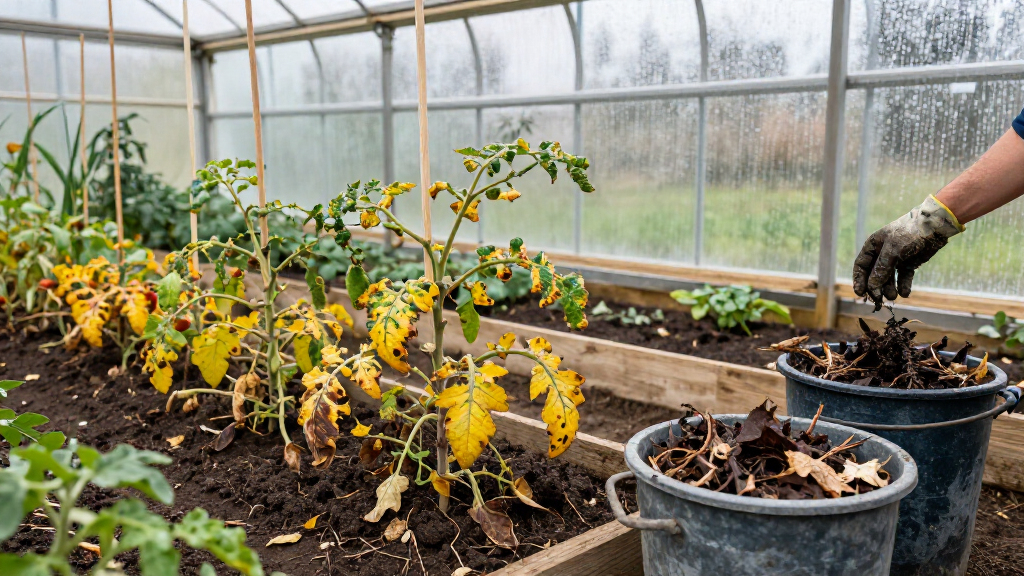
The report advises inspecting the whole plant before pulling it, rather than deciding from one spotted leaf. On a dry day, gardeners can check leaves, stems, fruit and the crown or roots, then consider whether the problem affects one plant, a section of the row or several tomatoes and peppers. Rapidly spreading lesions, dark or water-soaked stem damage, soft or rotting fruit, a plant that collapses while the soil is moist, and decayed roots are reasons to be cautious. These signs do not establish a specific diagnosis.
Plants with normal late-season aging, no concerning disease pattern, no serious fruit rot and no heavy pest infestation are suitable candidates for a home pile, according to the report. It recommends removing clips and ties, chopping vines, mixing them with dry carbon-rich material such as leaves or straw, and maintaining moisture similar to a wrung-out sponge. Sound fruit can be composted with healthy vines; dropped or rotting fruit should be collected separately.
For suspicious plants, the report advises avoiding a small, cool or poorly mixed backyard pile. Gardeners can use the trash under local rules, or check whether a municipal composting program accepts diseased garden material. The source notes that managed hot composting can reduce many plant pathogens, but says gardeners should not assume an uneven backyard pile has reached and maintained adequate heat.
Keeping Disease Out of Backyard Compost
The disposal choice affects both the compost pile and the next growing season. Adding plants with an unresolved disease or pest problem to a small home pile may retain material gardeners are trying to keep away from their beds; discarding every vine, on the other hand, gives up usable organic matter when plants have simply aged or been killed by frost. The checklist offers a cautious middle course: compost apparently healthy vines, and separate plants with warning signs.
Its advice is also a reminder that visual inspection has limits. Wilt, spots and leaf discoloration can result from disease, but the source also names drought, heat, nutrient problems, herbicide injury and insect or mite damage as possible lookalikes. When a plant’s cause is uncertain, conservative disposal can avoid relying on an unverified diagnosis.
home composting bin for vegetable waste
As an affiliate, we earn on qualifying purchases.
As an affiliate, we earn on qualifying purchases.
A Symptom Is Not a Diagnosis
The Planet Natural report frames the checklist as a practical fall-cleanup decision, not a laboratory diagnosis of tomato diseases. It says late-season yellowing and other visible changes can overlap across diseases and non-disease stresses. Gardeners are encouraged to assess the pattern across the bed as well as individual leaves: whether symptoms are spreading, which plant parts are affected, and whether other tomatoes or peppers show a similar problem.
For plants with unusual distortion, mosaic-like color or powdery growth, the source cautions that more than one cause may fit the appearance. If identifying the cause could change what a gardener plants, treats or saves next year, it recommends photographing the plant and contacting a local nursery rather than treating a visual guess as certain. It also suggests noting where a wilted or decayed plant grew and avoiding moving soil from its root area into another tomato bed.
What Symptoms Cannot Confirm
The checklist cannot determine the cause of a plant’s decline from appearance alone, and the source does not provide laboratory results or confirm that any particular plant is infected. Spots, wilt, powdery growth and distorted leaves may have multiple explanations; the report says pattern and progression can guide a disposal decision but do not identify every pathogen.
Local options also vary. The source advises checking current municipal program rules before sending diseased tomato debris, but does not name specific programs or state what each accepts. It gives no universal temperature or timing rule for safely processing suspicious plants in home compost, and explicitly warns against assuming a backyard pile has been sanitized.
Inspect, Separate and Check Rules
For fall cleanup, the report’s next steps are to inspect plants on a dry day, separate sound fruit from rotting fruit, and sort vines by their overall condition. Chop and mix apparently healthy material with dry leaves, straw or another carbon-rich ingredient. Keep plants with rapidly spreading lesions, unexplained collapse, significant decay or heavy pest problems out of a casual home pile.
If the cause remains uncertain, gardeners can follow local trash rules or ask a municipal compost program whether it accepts diseased garden waste. Those who need a diagnosis to guide next year’s crop choices can photograph the plant and consult a local nursery. The report does not set a single disposal rule for every community, so local acceptance policies remain the next point to check.
Key Questions
Can healthy tomato vines go in a home compost pile?
Yes, according to Planet Natural, if the vines show ordinary seasonal decline and no concerning disease pattern, serious fruit rot or heavy pest infestation. Chop them and mix them with dry, carbon-rich material.
Should tomato plants with leaf spots be composted?
Leaf spots alone do not establish a diagnosis. If lesions are rapidly spreading or the plant has other signs of serious decline, the report recommends keeping it out of a casual backyard pile and checking local disposal options.
Does hot composting kill tomato plant diseases?
The report says a properly managed hot pile can reduce many plant pathogens, but warns that backyard piles may not heat evenly or remain hot long enough. It does not advise treating an uncertain pile as a reliable sanitation method.
What should I do with wilted tomato plants?
Wilt can have several causes, including dry soil and root problems. If a plant suddenly collapses while soil is moist or has a decayed crown or roots, the report recommends a conservative disposal choice and avoiding moving nearby soil to a new tomato bed.
Can diseased tomato plants go in municipal compost?
Possibly, but acceptance rules differ. Check the program’s current rules before sending diseased garden material; the source does not identify a universal municipal policy.
Source: rss
Fall yard work Picks
leaf blowers
As an affiliate, we earn on qualifying purchases.