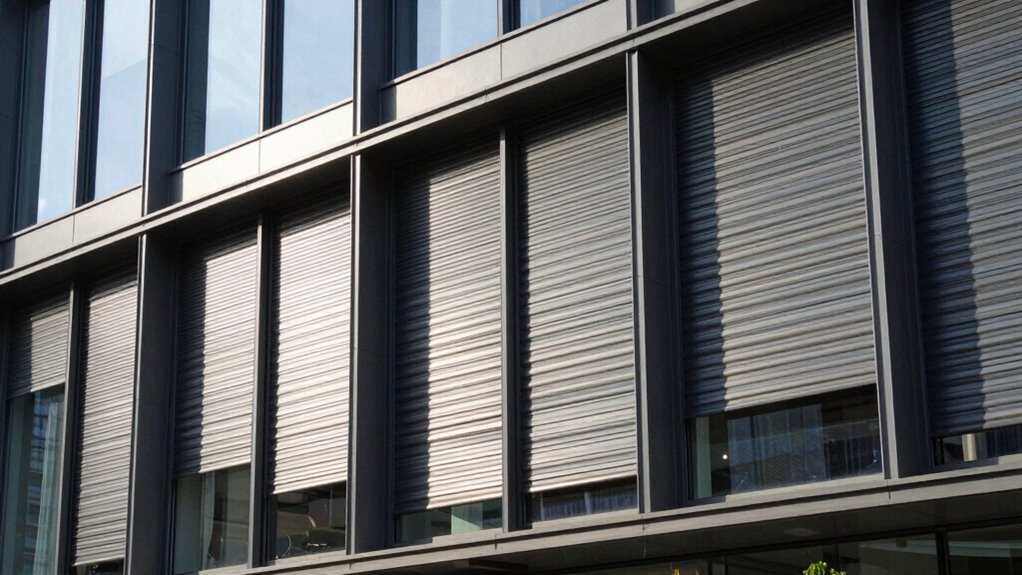

Exterior shading blocks sunlight before it hits your windows, effectively reducing heat gain and lowering your cooling costs. Unlike interior blinds, which only control sunlight after it enters, exterior shades work outside the building envelope to prevent heat transfer altogether. They also help protect your interior furnishings from fading and can enhance your building’s appearance. Keep exploring to uncover how this proactive solution can improve your energy efficiency and comfort even further.
Key Takeaways
- Exterior shades block sunlight before it hits windows, significantly reducing heat transfer compared to interior blinds.
- They help lower indoor temperatures and decrease cooling energy needs more effectively.
- Exterior shading prevents interior furnishings from fading due to direct sunlight exposure.
- They enhance building aesthetics and can be customized to match architectural styles.
- Automated and motorized systems improve efficiency and ease of use for proactive heat management.
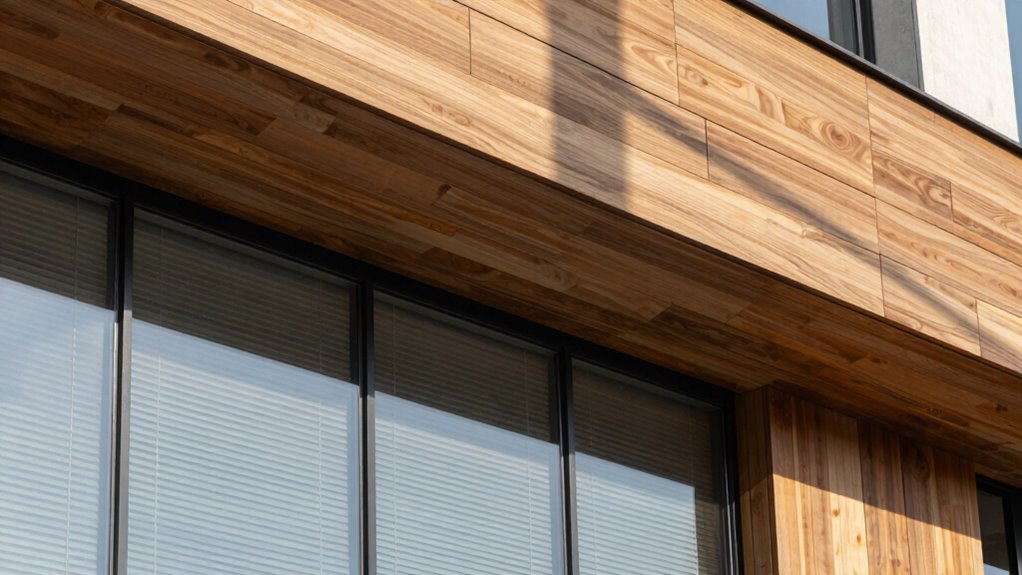
Exterior shading systems are an effective way to reduce heat gain and improve energy efficiency in your building. Unlike interior blinds, exterior shades work proactively by blocking sunlight before it reaches your windows, making a significant difference in controlling indoor temperatures. When you choose exterior shading, you’re not just making a functional decision; you’re also enhancing your building’s architectural aesthetics. Modern exterior shading can be designed to complement your building’s style, whether it’s sleek and minimalist or ornate and traditional. The visual impact of these systems can elevate your property’s overall appearance, creating a cohesive and attractive look that interior blinds simply can’t match.
Beyond aesthetics, exterior shading offers practical benefits that interior blinds can’t provide. Because they are installed outside the building envelope, they shield the glass from direct sunlight and reduce the heat transfer into your space. This means your cooling systems won’t have to work as hard, leading to lower energy bills and a smaller carbon footprint. Exterior shades also help prevent the fading of interior furnishings, which can be caused by prolonged sun exposure. This preservation of your interior assets saves you money on maintenance and replacement over time. Additionally, weather-resistant materials can significantly extend their lifespan and performance, ensuring long-term durability. Incorporating energy-efficient solutions like exterior shading is an increasingly popular approach for eco-conscious property owners. To optimize their effectiveness, many systems are now available with motorized operation that can be integrated with smart home technology for convenient use.
When considering exterior shading, it’s important to think about maintenance considerations. These systems are exposed to weather elements, so choosing durable, weather-resistant materials is essential. Proper cleaning and periodic inspections will keep the shading in ideal condition, ensuring it performs effectively season after season. While exterior shades may require a bit more upkeep than interior blinds, their longevity and performance benefits often outweigh the additional effort. Additionally, some modern systems are designed with motorization and automated controls, making operation easier and reducing the need for manual adjustments. These technological features can further streamline maintenance and provide seamless control over heat gain and daylight levels.
In the end, exterior shading offers a thorough solution for heat control that surpasses interior blinds in many ways. It enhances your building’s architectural aesthetics, provides better protection from the sun, and reduces energy consumption. Though maintenance considerations are a factor, investing in high-quality, weather-resistant options makes upkeep manageable and worthwhile. With exterior shading, you gain a proactive approach to managing heat, protecting your interior environment, and elevating your building’s overall look—making it a smart choice for any property owner aiming for efficiency and style.
As an affiliate, we earn on qualifying purchases.
Frequently Asked Questions
How Long Do Exterior Shading Systems Typically Last?
Exterior shading systems typically last 10 to 20 years, depending on material durability and maintenance. You’ll find that high-quality materials like aluminum or fabric designed for outdoor use resist weathering better and extend the lifespan. Installation ease also affects longevity; a professional setup guarantees stability and reduces wear over time. Regular cleaning and inspections help maintain performance, so you get the most out of your investment in exterior shading.
Are Exterior Shades More Energy-Efficient Than Interior Blinds?
Imagine sunlight streaming through your windows, and exterior shades acting like a fortress blocking out heat before it even enters. Exterior shades are more energy-efficient than interior blinds because they reduce heat gain at the source. While the cost comparison might be higher upfront, their sleek aesthetic appeal and superior insulation save you money on cooling bills long-term. You get both style and energy savings, making them a wise investment for your comfort.
Can Exterior Shading Be Customized for Different Building Types?
Yes, exterior shading can be customized for different building types. You can tailor designs to enhance architectural adaptability, ensuring the shading complements the building’s structure and purpose. Additionally, exterior shades can be integrated aesthetically, blending seamlessly with the overall design. Whether you’re working with commercial, residential, or historic buildings, customization options allow you to optimize energy efficiency, comfort, and visual appeal, making exterior shading a versatile solution for any project.
What Maintenance Is Required for Exterior Shading Solutions?
You’ll need to follow a regular cleaning schedule to keep your exterior shading in top shape, removing dirt, dust, and debris that can accumulate. Additionally, make certain your shading system has good weather resistance to withstand harsh conditions like rain, wind, and sunlight. Periodic inspections help identify any damage or wear, and prompt repairs maintain its effectiveness. Proper maintenance ensures your exterior shading continues to perform well and lasts longer.
Do Exterior Shades Impact Natural Light and Outdoor Views?
Exterior shades do impact natural light and outdoor views, but they do so in a controlled way. You can adjust them to let in the right amount of light, reducing glare and heat while maintaining visibility of outdoor views. Unlike interior blinds, exterior shades block harsh sunlight before it enters, so you experience less heat gain without sacrificing your connection to the outdoors. This balance enhances comfort and preserves your view.
Conclusion
Choosing exterior shading over interior blinds can notably improve your home’s heat control. In fact, studies show that exterior shading can block up to 90% of solar heat before it enters your space, making it far more effective than interior options. By investing in exterior shading, you not only enhance energy efficiency but also reduce cooling costs. So, next time you think about controlling heat, remember that the best solution is right outside your windows.