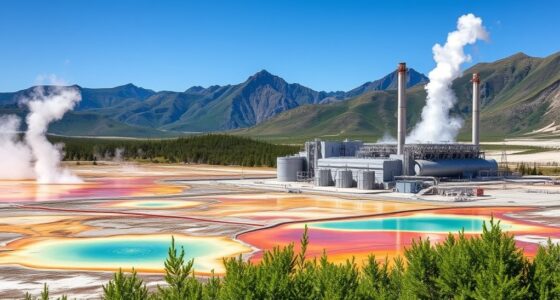
Geothermal heating and cooling works by using Earth’s constant underground temperatures to regulate your home’s climate efficiently. It involves burying a loop of piping underground, which absorbs or releases heat depending on the season. This system is highly energy-efficient, reduces your carbon footprint, and operates quietly. With less maintenance and long-term savings, it’s a smart choice for sustainable comfort. Want to discover how this innovative technology can benefit your home? Keep exploring to learn more.
Key Takeaways
- Geothermal systems use Earth’s stable underground temperatures to efficiently heat and cool buildings without combustion or resistance.
- Installation involves burying underground loops that transfer heat, providing consistent climate control year-round.
- They offer high energy efficiency, lower utility bills, and long-lasting components with minimal maintenance.
- Environmentally friendly, geothermal systems significantly reduce carbon footprints compared to traditional HVAC.
- Advancements in technology continue to improve efficiency and adoption, making geothermal a sustainable, cost-effective option.
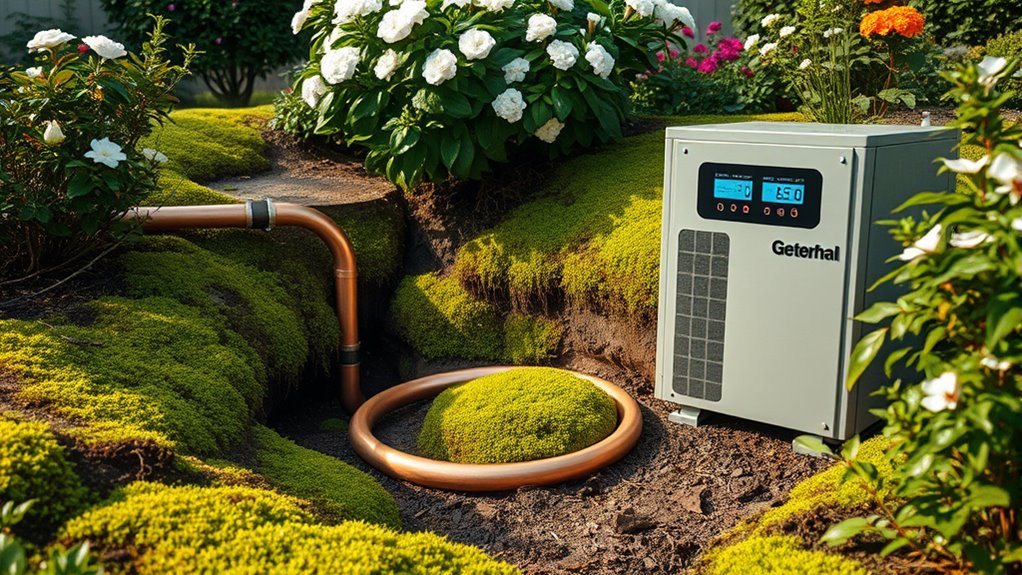
Have you ever considered how geothermal heating and cooling systems tap into the Earth’s natural energy to regulate indoor temperatures? These systems, often called ground source heat pumps, leverage the stable temperatures beneath the surface to provide efficient climate control in your home or business. Unlike traditional HVAC systems that generate heat or cool air through combustion or electrical resistance, geothermal systems utilize the consistent underground temperature, making them a highly energy-efficient choice. This reliance on the ground source means you can substantially reduce your energy bills while lowering your carbon footprint.
When you install a geothermal system, you’re fundamentally creating a loop of piping buried underground, either horizontally or vertically, depending on your property’s layout. This loop acts as a heat exchanger, absorbing heat from the earth during winter to warm your space, and dissipating heat back into the ground during summer for cooling. Because the temperature underground remains relatively constant—typically between 45 to 75 degrees Fahrenheit—your system doesn’t need to work as hard as conventional heating or cooling units, which must compensate for fluctuating outdoor temperatures. This consistency translates directly into higher energy efficiency, meaning less electricity consumption for the same level of comfort.
Ground source systems are also incredibly durable. The underground piping typically lasts for decades, with minimal maintenance required once installed properly. This longevity, combined with their energy efficiency, makes ground source heat pumps a smart long-term investment. You’ll notice the savings on your utility bills right away, and over time, the reduced operational costs more than offset the initial installation expense. Plus, since these systems draw from a renewable underground energy source, they’re more environmentally friendly than traditional HVAC options that rely heavily on fossil fuels.
Another advantage of ground source systems is their quiet operation. Since most of the machinery is located outside or underground, you won’t hear noisy fans or compressors inside your home. The system’s efficiency also means it can be paired with smart thermostats and modern controls, allowing you to fine-tune your indoor climate and maximize energy savings even further. Ultimately, choosing a ground source geothermal system offers a sustainable, cost-effective way to maintain a comfortable home while actively contributing to environmental conservation.
In principle, geothermal heating and cooling harness the Earth’s stable underground temperatures to deliver superior energy efficiency. By doing so, they provide a reliable, eco-friendly solution that reduces your energy consumption, cuts costs, and supports a greener future. Additionally, advancements in refrigerant technology are enhancing system efficiency and reducing environmental impact, making ground source heat pumps an even more attractive choice.

Ground-Source Heat Pumps: Fundamentals, Experiments and Applications
As an affiliate, we earn on qualifying purchases.
As an affiliate, we earn on qualifying purchases.
Frequently Asked Questions
How Long Does a Geothermal System Typically Last?
Your geothermal system typically lasts 25 to 30 years, thanks to its durable design. Its system durability is high, but regular maintenance requirements can extend its lifespan even further. You should schedule annual check-ups to guarantee peak performance and catch any issues early. Proper upkeep helps maximize your investment, and with good maintenance, some components may last up to 50 years, making geothermal systems a reliable, long-term heating and cooling solution for your home.
Can Geothermal Systems Be Installed in Existing Homes?
Yes, you can install a geothermal system in an existing home. Retrofit options make it possible to upgrade your current heating and cooling setup without major renovations. Before proceeding, consider upgrade considerations like available space for ground loops and your budget. Consulting with a geothermal professional helps ensure the system’s compatibility with your home’s structure and maximizes energy efficiency, making the shift seamless and effective.
What Are the Environmental Benefits of Geothermal Heating?
You benefit from geothermal heating by considerably reducing your carbon footprint through renewable energy use. It’s an eco-friendly choice that cuts down greenhouse gas emissions compared to traditional systems. By harnessing the Earth’s natural heat, you contribute to carbon reduction efforts, helping combat climate change. Plus, geothermal systems are highly efficient, sustainable, and environmentally safe, making them a smart, green option for your home energy needs.
How Much Space Is Needed for a Geothermal System?
Think of your property as a canvas; you need enough space for your geothermal system to thrive. Typically, you’ll require about 1 to 1.5 acres for a standard residential setup, depending on system capacity. This space allows for the installation of ground loops, either horizontal or vertical. Larger capacities need more room, but with smart planning, you can efficiently utilize your land while enjoying the benefits of geothermal energy.
Are There Any Government Incentives for Geothermal Installations?
Yes, there are government incentives for geothermal installations. You can benefit from financial rebates and tax credits offered by federal, state, or local programs. These incentives help offset the initial installation costs, making geothermal systems more affordable. It’s a good idea to check with your local government or energy agencies to find out which specific incentives are available in your area and how to apply for them.

Geo Power: Stay Warm, Keep Cool and Save Money with Geothermal Heating & Cooling
As an affiliate, we earn on qualifying purchases.
As an affiliate, we earn on qualifying purchases.
Conclusion
Now that you know how geothermal systems work, you’ll appreciate their efficiency. Did you know that, on average, geothermal heating and cooling can reduce energy bills by up to 50%? That means you save money while helping the environment. With such impressive savings and eco-friendliness, switching to geothermal is a smart choice. So, why not consider this sustainable, cost-effective solution for your home? It’s a small change with a big impact!
Geo Power: Stay Warm, Keep Cool and Save Money with Geothermal Heating & Cooling
As an affiliate, we earn on qualifying purchases.
As an affiliate, we earn on qualifying purchases.
underground piping for geothermal
As an affiliate, we earn on qualifying purchases.
As an affiliate, we earn on qualifying purchases.