Before buying more equipment, you should track costs, including initial price and ongoing expenses like maintenance and fuel, to understand the true long-term investment. Check your supplier’s reputation and after-sales support to guarantee reliability. Make certain the equipment meets industry standards and integrates with your current setup. Consider durability, warranty options, and how well it fits your specific operational needs. If you keep these factors in mind, you’ll be better prepared for a smart purchase.

Get garden gear delivered free — and shop member deals
- Fast, free delivery on millions of items
- Access to Prime Big Deal Days deals on October 6–7
- Prime Video, Amazon Music and more included
Key Takeaways
- Assess long-term costs, including maintenance, fuel, and downtime, to ensure budget sustainability.
- Verify equipment meets industry safety standards and incorporates modern technological features.
- Ensure compatibility with existing infrastructure and alignment with operational needs.
- Check supplier reputation, support services, and warranty coverage for reliable after-sales assistance.
- Evaluate equipment durability and future-proofing to maintain efficiency over its lifespan.
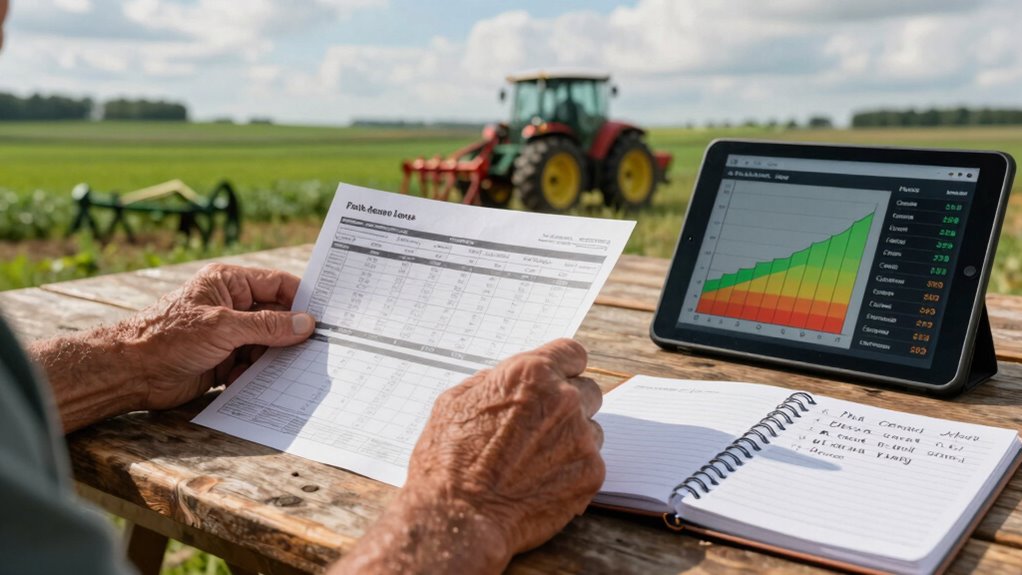
Buying new equipment is a big investment for growers, and knowing what to track beforehand can save you time and money. When you’re considering a purchase, you need to conduct a thorough cost analysis to determine whether the investment aligns with your budget and long-term goals. This means not only comparing the initial price but also factoring in ongoing costs like maintenance, fuel, and potential downtime. A detailed cost analysis helps you understand the true expense over the equipment’s lifespan, so you avoid surprises that could strain your finances later on.
Conduct a thorough cost analysis to understand true expenses and avoid surprises later on.
Equally important is evaluating the supplier’s reputation. You want to buy from a trusted source with a proven track record of quality and reliability. Check reviews, ask for references, and verify their history of customer service. A reputable supplier can provide better support, timely repairs, and genuine parts, which are *vital* for minimizing downtime. Knowing your supplier’s reputation also helps you gauge their commitment to after-sales service and whether they stand behind their equipment, giving you peace of mind that your investment is protected. Additionally, researching industry standards can help you determine if the equipment meets safety and efficiency benchmarks. Incorporating technological advancements into your evaluation can further ensure you select equipment that stays competitive and future-proof. To make a well-rounded decision, consider also the cost of maintenance and how it impacts your long-term budget, as these ongoing expenses can significantly influence your overall investment.
Furthermore, understanding equipment durability and how it performs under different conditions can help you choose options that will last longer and require fewer repairs over time.
Beyond cost analysis and supplier reputation, you should identify the specific needs of your operations. Ask yourself what tasks the equipment is supposed to accomplish and whether it fits your current scale or future plans. Will it improve efficiency, reduce labor, or increase yield? Understanding these factors *guarantees* you don’t end up with tools that are either overkill or inadequate, saving you money and effort in the long run. Additionally, researching technological capabilities can help you identify equipment that offers innovative features such as data tracking or automation, which might be beneficial for your operation.
Additionally, consider compatibility with your existing machinery and infrastructure. Equipment that integrates smoothly reduces installation time and avoids costly modifications. You should also examine the equipment’s features and technological capabilities—advanced features might offer benefits like data tracking or automation, but only if they align with your operational needs and budget. Ensuring compatibility can also prevent future upgrade costs that could otherwise diminish the value of your purchase.
Finally, don’t overlook warranty options and after-sales support. Confirm what coverage is included and how responsive the supplier is to service requests. A solid warranty can save you significant costs if repairs are needed, and reliable support ensures you won’t be left stranded if issues arise. Combining all these factors—cost analysis, supplier reputation, operational needs, compatibility, and support—helps you make informed decisions that maximize your investment and sustain your growth.
agricultural equipment maintenance tools
As an affiliate, we earn on qualifying purchases.
As an affiliate, we earn on qualifying purchases.
Frequently Asked Questions
How Do I Determine the Right Equipment Size for My Farm?
To determine the right equipment size for your farm, consider your crop rotation plans and soil health needs. Bigger equipment might boost efficiency, but it can also damage soil structure if too large. Balance equipment size with your current crop rotation schedule, ensuring it promotes soil health. Evaluate your field size and future growth plans to select machinery that maximizes productivity without compromising soil quality.
What Is the Typical Lifespan of Different Farming Equipment?
The typical lifespan of farming equipment varies, but most lasts 8-15 years with proper care. To maximize longevity, consider consistent maintenance, timely repairs, and thoughtful use. When planning purchases, think about crop rotation and soil health, which affect equipment needs. Regularly tracking these factors helps you decide when to upgrade, ensuring your tools stay efficient, effective, and eco-friendly, ultimately supporting sustainable, successful farming seasons ahead.
How Can I Assess the True Cost of Ownership?
To assess the true cost of ownership, start by calculating maintenance costs over the equipment’s lifespan, including repairs and parts. Consider financing options to understand your repayment obligations, interest rates, and total costs. Don’t forget to factor in insurance, downtime, and depreciation. Comparing these elements helps you determine if buying new equipment is financially viable, ensuring you make informed decisions that align with your farm’s budget and productivity goals.
What Safety Features Should I Prioritize in New Equipment?
Imagine your equipment as a steadfast partner in the field, safeguarding your team with advanced safety features. Prioritize models with thorough safety training integrations and hazard prevention systems, like emergency shut-offs and protective guards. These features act as shields, preventing accidents before they happen. By choosing equipment with these safety measures, you create a safer environment, reducing risks and ensuring everyone can work confidently and efficiently in the fields.
How Does Equipment Compatibility Affect Future Upgrades?
Equipment compatibility plays a vital role in your future upgrades, as it guarantees seamless equipment integration. When you choose compatible machinery, you simplify maintenance planning and reduce downtime. This foresight allows you to upgrade or add new tools easily without compatibility issues, saving time and costs. By prioritizing compatibility, you build a flexible system that adapts to your evolving needs and keeps your operations running smoothly.
Conclusion
Before you make your next equipment purchase, remember: every tool is a brushstroke in your farming masterpiece. Track your needs, budget, and long-term goals to guarantee each investment adds vibrant color to your success. Think of it as assembling a puzzle—each piece must fit perfectly. By carefully planning and evaluating, you transform your farm into a thriving landscape that’s both beautiful and sustainable. Your future harvest depends on the choices you make today—so choose wisely.
Fall yard work Picks
leaf blowers
As an affiliate, we earn on qualifying purchases.