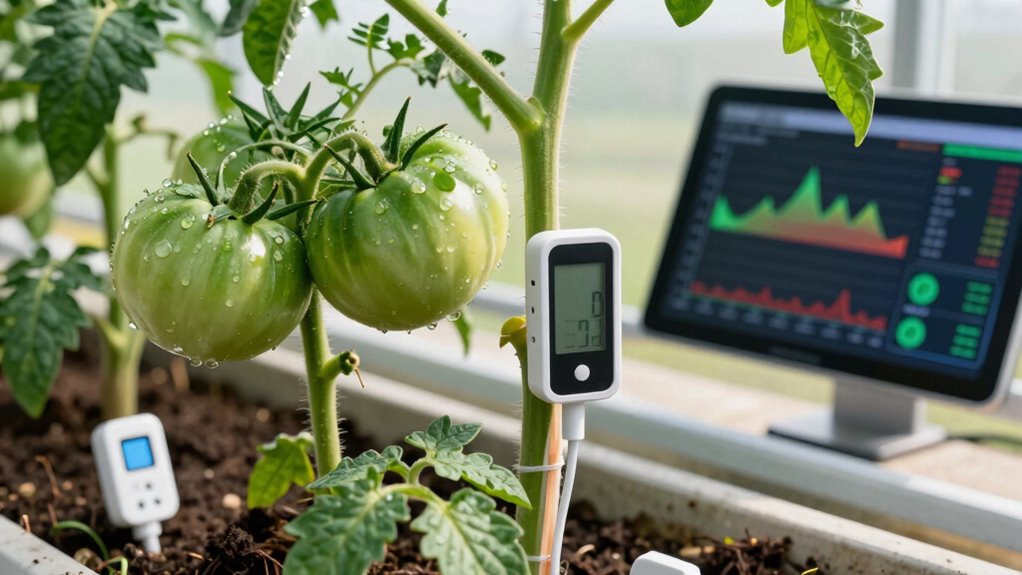

By using data logging, you gain precise, field-specific insights into soil moisture, pest activity, and environmental conditions. This enables you to make informed decisions on irrigation, pest control, and crop management, rather than relying on guesswork. Over time, patterns emerge that help you adjust practices proactively, improving efficiency and yields. Staying on top of data means you can act faster and smarter, giving you a real advantage in crop success—more details await you.

Get garden gear delivered free with Prime
- Fast, free delivery on millions of items
- Prime Video, Amazon Music and more included
- Member-only deals all year
Key Takeaways
- Provides real-time, accurate data for informed decision-making, reducing reliance on assumptions or guesswork.
- Identifies patterns and trends quickly, enabling proactive adjustments for optimal crop growth.
- Facilitates targeted interventions, improving effectiveness and efficiency of pest and water management.
- Builds a comprehensive historical record to refine strategies and accelerate learning over time.
- Enhances operational efficiency and resource allocation through continuous data analysis, leading to faster improvements.

In today’s competitive agricultural landscape, relying on guesswork can slow down your progress and increase risks. Instead, using data logging enables you to make informed decisions that optimize crop yields and resource use. When you systematically record information about soil moisture levels, you gain a clearer understanding of your fields’ needs. Soil moisture is critical because it directly influences plant health, growth rates, and water efficiency. With accurate data, you can adjust irrigation schedules precisely, avoiding overwatering or underwatering. This not only conserves water but also prevents issues like root rot or drought stress, which can hamper crop development. Data logging makes it easier to spot patterns over time, so you can anticipate watering needs based on seasonal changes or weather forecasts. This proactive approach minimizes guesswork and ensures your crops receive the right amount of water at the right time. Additionally, systematic record-keeping helps you track environmental factors, making your management practices more precise and effective. Incorporating data-driven decisions further enhances your ability to optimize resources and improve crop health. This approach also supports sustainability efforts by reducing waste and promoting responsible resource management. As you collect more data, you also build valuable historical records that inform future planning and risk management strategies. Keeping detailed logs can also help you meet regulatory standards and demonstrate responsible farming practices to stakeholders.
Beyond soil moisture, data logging plays a vital role in pest management. Pests can cause significant damage, but reacting only after you notice visible signs often leads to larger infestations. By systematically recording pest activity, damage reports, and environmental conditions, you gain valuable insights into when and where pests are most active. This data allows you to implement targeted interventions, such as localized treatments or biological controls, rather than blanket pesticide applications. Accurate pest management reduces chemical use, saves costs, and limits environmental impact, all while protecting your crops more effectively. Over time, the data helps you identify pest trends and develop predictive models, so you can take preventive steps before infestations become severe. Recognizing these patterns early on enhances your ability to prevent crop loss, safeguarding your harvest from unexpected threats.
Using data logging also improves your overall decision-making process. Instead of relying on intuition or outdated practices, you base your actions on real, measurable information. This increases your confidence when making critical choices, whether it’s adjusting fertilizer application, scheduling planting, or planning harvest times. As you gather more data, your ability to fine-tune your operations grows, leading to faster improvements and higher productivity. The continuous feedback loop created by data logging lets you learn from past seasons, refine your strategies, and reduce errors. In essence, you turn a reactive approach into a strategic, proactive one, giving you a competitive edge. So, by consistently tracking soil moisture, pest activity, and other key factors, you empower yourself to grow smarter—not harder—faster than relying on guesswork ever could.
As an affiliate, we earn on qualifying purchases.
Frequently Asked Questions
What Types of Data Are Most Valuable for Logging in Agriculture?
You should focus on logging data like crop yield and pest monitoring, as these are most valuable in agriculture. Tracking crop yield helps you identify what practices boost productivity, while pest monitoring alerts you to infestations early. This data allows you to make informed decisions quickly, optimize resources, and improve your overall farm management. By consistently recording these key metrics, you can grow smarter and faster than relying on guesswork.
How Do Growers Ensure Data Accuracy and Reliability?
Did you know that proper sensor calibration can improve data accuracy by up to 20%? To guarantee data reliability, you should regularly calibrate your sensors and perform data validation procedures. This means checking readings against known standards and filtering out anomalies. By consistently maintaining calibration and validating data, you’ll trust your logs and make better-informed decisions, ultimately optimizing crop growth and reducing waste.
What Are the Costs Associated With Implementing Data Logging Systems?
The costs of implementing data logging systems include sensor calibration, which guarantees accurate readings, and data storage solutions to handle the information collected. You’ll need to invest in quality sensors, calibration tools, and reliable storage options like cloud services or on-site servers. While initial expenses can be significant, the improved decision-making and crop management gained from accurate data often lead to faster growth and higher yields, justifying the investment.
Can Small-Scale Farmers Benefit From Data Logging Technologies?
Yes, small-scale farmers can definitely benefit from data logging technologies. By using these tools, you can improve climate adaptation strategies and make more informed decisions. Data logging helps you track weather patterns and soil conditions, enabling better market analysis and crop planning. This approach increases efficiency, reduces guesswork, and boosts your chances of a successful harvest, ultimately supporting sustainable growth on a smaller scale.
How Is Data Privacy Maintained in Agricultural Data Logging?
You might worry about data privacy, but rest assured, data encryption and access controls protect your farm info. Data encryption secures your data, making it unreadable without proper keys, while access controls ensure only authorized people can view or modify your data. These measures prevent unauthorized access, keeping your sensitive information safe. So, you can confidently use data logging, knowing your privacy is a top priority and well-guarded.
Conclusion
By harnessing data logging, you turn guesswork into a clear map guiding your growth journey. Each data point is like a beacon illuminating the path ahead, helping you avoid pitfalls and seize opportunities faster. As you embrace this tool, you’ll see your crops flourish with precision and confidence. Imagine your farm as a well-tuned symphony, where every note is perfectly timed—data logging transforms your efforts into a masterpiece of success.
Halloween Picks
halloween
As an affiliate, we earn on qualifying purchases.