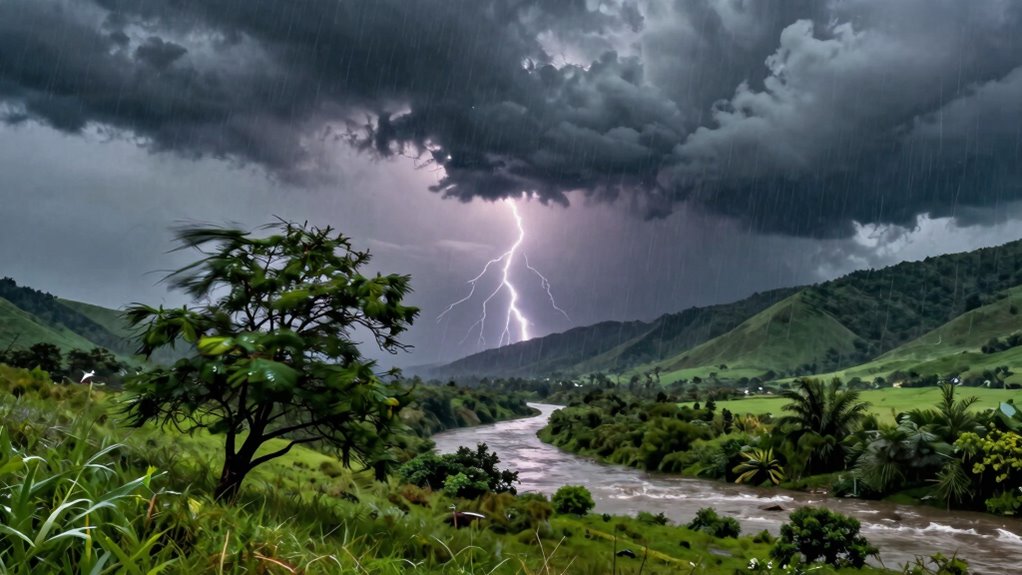

Climate change is causing your local seasonal rainfall patterns to shift, making weather more unpredictable. You may notice longer dry spells, unseasonal rains, or inconsistent rain timing, which can disrupt farming and water supply. These changes are tied to broader climate impacts that alter traditional weather cycles. Staying aware of these shifts helps you understand how ecosystems and livelihoods are affected. Keep exploring to learn more about how these changes could impact you and your community.

Get garden gear delivered free with Prime
- Fast, free delivery on millions of items
- Prime Video, Amazon Music and more included
- Member-only deals all year
Key Takeaways
- Climate change is causing traditional weather cycles to become more unpredictable and less reliable.
- Rainfall patterns are shifting, leading to delayed, extended, or unseasonal rains in many regions.
- These changes disrupt agricultural planting schedules and reduce water availability for various uses.
- Water reservoirs and aquifers are not refilling as expected, intensifying water scarcity during dry periods.
- Adaptive strategies, such as crop diversification and resilient infrastructure, are essential to manage these shifting patterns.
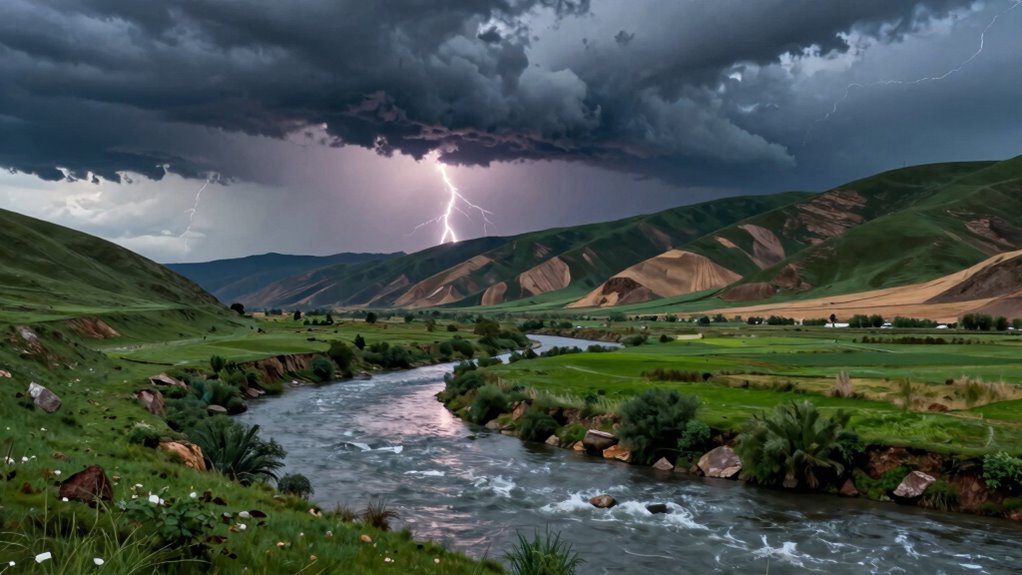
Have you ever wondered why some regions experience heavy rains during certain times of the year while remaining dry at others? It’s a question that’s becoming increasingly relevant as seasonal rainfall patterns start to shift. Climate change impacts are at the heart of this shift, disrupting traditional weather cycles and creating unpredictable rainfall patterns. These changes aren’t just minor inconveniences; they deeply affect agriculture, water management, and the livelihoods of millions who depend on predictable seasons. As rainfall becomes less reliable, communities must find ways to adapt, especially in agriculture, where timing and water availability are critical.
In many areas, the rainy season no longer arrives as expected, or it arrives with less intensity than before. Some regions are experiencing extended dry spells, which threaten crop yields and water supplies. Others see unseasonal rains that can damage crops or cause flooding, making farming even more uncertain. These shifts challenge the ways farmers plan their planting and harvesting cycles. You need to understand that agricultural adaptation becomes essential—changing planting dates, selecting more drought-resistant crops, or implementing efficient irrigation systems. These measures help buffer the impacts of erratic rainfall, but they also require resources, knowledge, and support from local authorities.
The unpredictability of rainfall patterns also complicates water management efforts. When rainfall is inconsistent, reservoirs and aquifers may not refill as expected, leading to water shortages during critical periods. This, in turn, impacts not only agriculture but also industry, households, and ecosystems. Governments and communities are recognizing the urgency to develop resilient infrastructure and water conservation strategies. Additionally, climate change impacts are forcing a reconsideration of traditional farming practices. Farmers are increasingly adopting innovative techniques and diversifying crops to cope with these new realities. Recognizing these issues emphasizes the importance of climate adaptation strategies to effectively manage changing conditions.
You might notice that regions once known for their stable rainy seasons are now experiencing a mosaic of unpredictable weather. This inconsistency hampers efforts to sustain agriculture and manage water resources effectively. To adapt successfully, farmers and policymakers need to prioritize climate-smart practices that enhance resilience. The goal is to reduce vulnerability and ensure food security despite the changing climate. Recognizing that these shifting patterns are driven by broader climate change impacts underscores the importance of global efforts to mitigate further disruptions. It is also crucial to understand how weather cycle disruptions can alter local ecosystems and human activities. As these patterns continue to evolve, your awareness and proactive adaptation will be key to overcoming the challenges posed by shifting seasonal rainfall. Furthermore, understanding the interconnectedness of these changes can guide more effective sustainable living practices in vulnerable communities. The future demands flexibility, innovation, and a shared commitment to address the impacts of climate change on rainfall patterns worldwide.
As an affiliate, we earn on qualifying purchases.
Frequently Asked Questions
How Do Changing Rainfall Patterns Affect Local Agriculture?
Changing rainfall patterns directly impact your local agriculture by making water availability unpredictable. You can adopt crop diversification to reduce risks and improve resilience against droughts or floods. Enhancing irrigation efficiency helps you make the most of limited water resources, ensuring crops get what they need without waste. These strategies allow you to adapt better to shifting rainfall patterns, safeguarding your harvests and maintaining farm productivity despite climate changes.
What Regions Are Experiencing the Most Significant Shifts?
Like a restless tide, regions such as South Asia and parts of Africa face the most significant shifts, where monsoon variability disrupts traditional patterns. You see increased drought frequency, challenging farmers and communities alike. These areas experience unpredictable rainfall, making water management harder and threatening crops and livelihoods. As climate change continues, these shifts grow more intense, urging you to adapt and find sustainable solutions to cope with the changing seasonal rhythms.
How Do Shifting Rainfall Patterns Impact Water Supply Management?
Shifting rainfall patterns require you to adapt water supply management by investing in rainwater harvesting systems and enhancing groundwater recharge efforts. When rains are unpredictable or uneven, collecting rainwater helps supplement supplies, while promoting groundwater recharge guarantees aquifers stay replenished. These strategies help you better manage water resources, reduce dependency on external sources, and build resilience against droughts and water shortages caused by changing seasonal rainfall behaviors.
Are There Long-Term Climate Models Predicting Future Rainfall Changes?
Climate models predict future rainfall changes with remarkable accuracy, like a weather oracle gazing into a crystal ball. You’ll find that long-term climate variability is incorporated into advanced rainfall forecasting, helping us anticipate shifts. These models consider greenhouse gases and other factors, offering insights into potential droughts or floods. By understanding these predictions, you can better prepare for the changing climate and safeguard water resources effectively.
How Can Communities Adapt to These Changing Rainfall Patterns?
You can boost community resilience by adopting adaptive strategies like improving drainage systems, promoting water conservation, and diversifying crops to handle unpredictable rainfall. Educate residents on climate-smart practices and encourage local planning that considers future rainfall patterns. Building strong networks and sharing resources also help communities respond effectively to changing conditions. These proactive steps guarantee your community stays resilient, minimizes damage, and sustains essential resources despite shifting seasonal rainfall patterns.
Conclusion
As the seasons dance to a new, unpredictable tune, you can feel the shifting rhythm in every drop of rain. What once fell with gentle certainty now arrives like a restless tide, reshaping landscapes and lives alike. Embrace this changing ballet of weather, for it’s a whisper of nature’s awakening and transformation. Stay alert, adapt, and listen closely—because in this new rainfall symphony, your awareness becomes the key to riding the waves of change.
Fall yard work Picks
leaf blowers
As an affiliate, we earn on qualifying purchases.