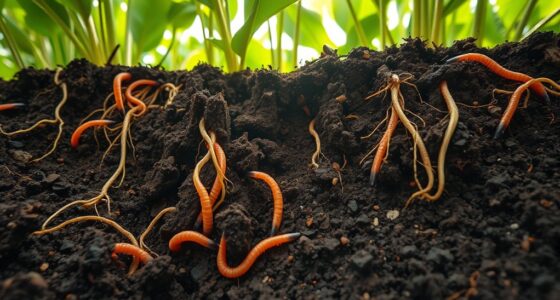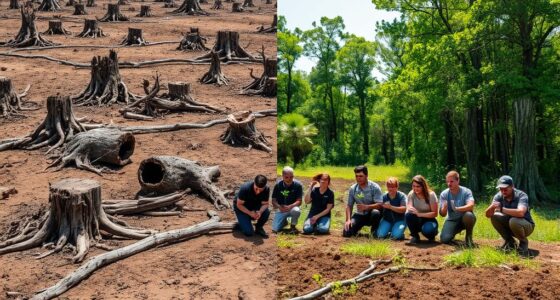
Fungi play a crucial, yet often unnoticed, role in creating healthy landscapes. They act as underground networks, connecting plants and fungi to share nutrients, water, and signals, which boosts growth and resilience. Fungi also break down organic matter, enriching the soil and supporting plant life. Their presence improves soil structure, prevents erosion, and sustains ecosystems. Discovering how fungi support these essential processes can reveal even more about the hidden forces shaping vibrant, thriving landscapes.

Get garden gear delivered free — and shop member deals
- Fast, free delivery on millions of items
- Access to Prime Big Deal Days deals on October 6–7
- Prime Video, Amazon Music and more included
Key Takeaways
- Fungi form underground networks connecting plants, facilitating nutrient and water exchange essential for healthy growth.
- They decompose organic matter, recycling nutrients and enriching soil fertility naturally.
- Fungal hyphae improve soil structure, enhancing aeration, water retention, and erosion prevention.
- Mycorrhizal fungi support plant resilience and growth by supplying vital nutrients like phosphorus and nitrogen.
- They act as ecological architects, maintaining soil health and promoting sustainable, resilient landscapes.
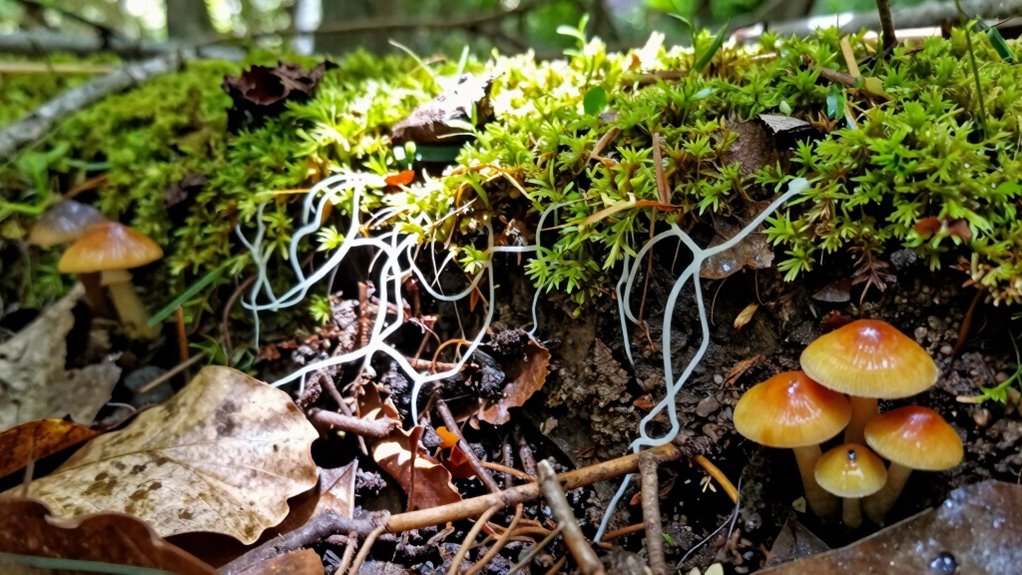
Fungi play an essential role in maintaining healthy landscapes by supporting soil health, fostering plant growth, and breaking down organic matter. One of the most fascinating ways they do this is through mycorrhizal networks, which act like underground highways connecting plants and fungi. These networks allow plants to exchange nutrients, water, and chemical signals efficiently. When you plant a new seed or sapling, you’re not just growing it in isolation—you’re tapping into these vast fungal networks that help supply essential nutrients like phosphorus and nitrogen. This symbiotic relationship enhances plant resilience, boosts growth, and improves overall ecosystem stability.
Fungi connect plants through underground networks, boosting growth, resilience, and ecosystem health.
Through mycorrhizal networks, fungi contribute significantly to soil nutrient cycling. They absorb nutrients from organic matter in the soil and convert them into forms that plants can readily absorb. This process keeps the soil fertile and balanced, reducing the need for chemical fertilizers. As fungi decompose organic materials like fallen leaves, dead roots, and other plant debris, they release vital nutrients back into the soil. You might not see this happening, but it’s a continuous process that sustains plant life and maintains a healthy landscape. Understanding these nutrient cycles can help gardeners and landscapers develop more sustainable practices. Additionally, fungi play a role in disease suppression, helping to protect plants from certain pathogens and promoting overall plant health. Supporting a diverse fungal community is also key to soil stability, as it enhances the soil’s structure and resilience against erosion.
Fungi also help improve soil structure by binding soil particles together through their hyphae, which are tiny root-like filaments. This improves aeration and water retention in the soil, making it easier for roots to grow and access nutrients. When you notice healthy, lush plants, you can thank the fungi that have helped create an environment where roots can spread easily and access the resources they need. This natural process reduces erosion and runoff, protecting the landscape from degradation and helping maintain its health over time.
Moreover, fungi play a crucial role in breaking down organic matter, transforming it into humus, which enriches the soil. This process not only releases nutrients but also enhances the soil’s ability to hold water and nutrients. Supporting soil health through fungi activity can lead to more sustainable landscaping practices and healthier ecosystems. As you tend to your landscape, understanding the role fungi play can help you adopt practices that support their growth, such as reducing chemical inputs and maintaining organic matter. By fostering a healthy fungal community, you ensure the soil remains vibrant and capable of sustaining diverse plant life.
In essence, fungi are silent architects of healthy landscapes. Their networks and activities underpin the complex web of interactions that keep soil fertile, plants thriving, and ecosystems resilient. Recognizing and supporting these microscopic allies can help you create and maintain landscapes that are not only beautiful but also ecologically sustainable.
As an affiliate, we earn on qualifying purchases.
Frequently Asked Questions
How Do Fungi Affect Soil Erosion Control?
Fungi help control soil erosion by strengthening soil structure through mycorrhizal networks, which connect plant roots and enhance stability. Their fungal decomposition breaks down organic matter, enriching the soil and increasing its cohesion. As a result, the soil becomes more resistant to erosion from wind and water. You’ll notice healthier landscapes where fungi thrive, actively supporting soil integrity and preventing erosion naturally.
Can Fungi Improve Water Retention in Landscapes?
Yes, fungi can greatly improve water retention in landscapes. By forming mycorrhizal networks, fungi enhance the soil’s ability to absorb and hold moisture, making landscapes more resilient. Their diverse fungal communities break down organic matter, creating a sponge-like structure that traps water. This symbiotic relationship boosts soil health and helps plants thrive during dry spells, proving fungi’s essential role in fostering moist, manageable landscapes.
Are All Fungi Beneficial for Plant Growth?
Not all fungi are beneficial for plant growth. Many form fungal symbiosis with plants, which enhances soil nutrient cycling and promotes healthy roots. Beneficial fungi help your plants access nutrients more efficiently, boost their resilience, and improve soil health. However, some fungi can be pathogenic, harming plants instead. It’s essential to identify beneficial fungi and foster their presence in your landscape to support ideal plant growth and a thriving ecosystem.
How Do Fungi Interact With Native Plant Species?
You see, fungi interact with native plant species mainly through mycorrhizal networks, which connect roots underground. These networks facilitate nutrient exchange, helping plants access water, minerals, and organic compounds more efficiently. Fungal diversity is vital here, as different fungi support various native plants, enhancing ecosystem resilience. By forming symbiotic relationships, fungi boost plant health, encourage growth, and maintain the balance essential for healthy, thriving landscapes.
What Are Common Signs of Healthy Fungal Activity?
You might notice lush, vibrant plants thriving unexpectedly—signs of healthy fungal activity. This coincidental boom indicates rich fungal diversity aiding soil nutrient cycling. Healthy fungi foster strong root connections, improve soil structure, and promote nutrient availability. When ecosystems flourish with minimal effort, it’s a clear sign that fungi are doing their job. Keep an eye out for resilient growth and soil importance, which directly reflect the unseen but essential work of fungi beneath your landscape.
Conclusion
As you walk through a lush landscape, it’s no surprise that fungi quietly work behind the scenes, nurturing the soil and supporting plant life. Sometimes, it feels like a coincidence that such tiny organisms have such a big impact on our surroundings. Next time you admire a healthy garden or forest, remember that fungi are the unsung heroes in your outdoor story—hidden but essential, turning everyday moments into thriving ecosystems.
Fall yard work Picks
leaf blowers
As an affiliate, we earn on qualifying purchases.