
TL;DR

Get garden gear delivered free — and shop member deals
- Fast, free delivery on millions of items
- Access to Prime Big Deal Days deals on October 6–7
- Prime Video, Amazon Music and more included
European researchers are working on sensor technology to better manage fertilizer application, reducing waste and environmental impact. This initiative aims to enhance sustainable farming practices across the continent.
European research institutions are developing sensor technology to monitor soil conditions and optimize fertilizer application, aiming to reduce waste and environmental impact. This initiative reflects a growing focus on sustainable agriculture and resource efficiency across Europe.
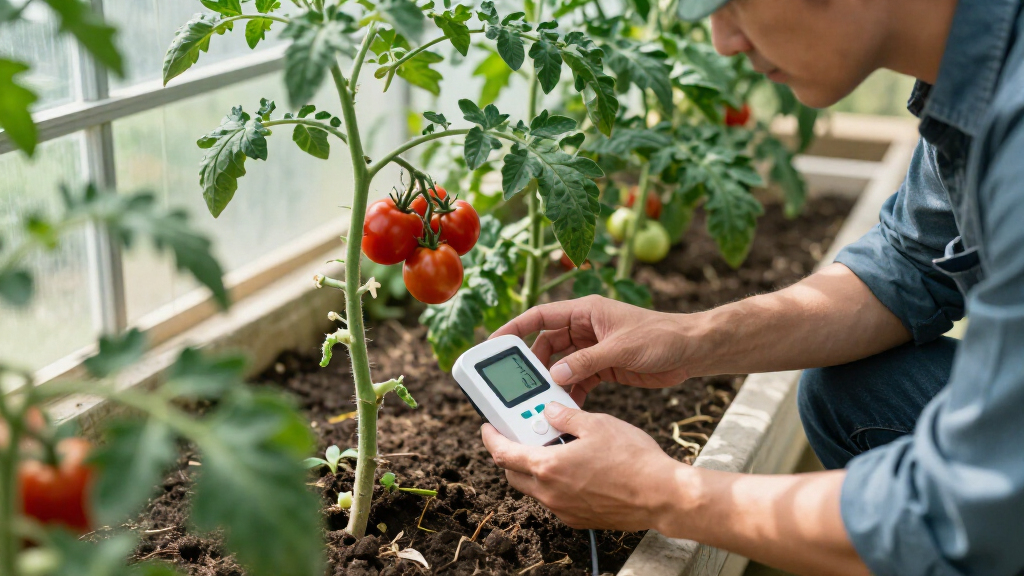
The project involves deploying advanced sensors in agricultural fields to measure soil nutrients, moisture levels, and other key parameters in real time. These sensors will feed data into decision-support systems that guide farmers on precise fertilizer application, minimizing excess use.
According to sources familiar with the research, the technology is still in the development phase, with pilot programs planned for several European countries. The goal is to create scalable, user-friendly systems that can be integrated into existing farming practices.
While specific technical details are not yet publicly available, the initiative is part of broader efforts to enhance sustainable farming and reduce the environmental footprint of agriculture, particularly in terms of nutrient runoff and greenhouse gas emissions.
Potential Impact on Sustainable Agriculture
This research could significantly improve fertilizer efficiency, reducing waste and environmental pollution. By providing farmers with precise, real-time data, the technology aims to prevent over-application of fertilizers, which is a major contributor to water pollution and greenhouse gas emissions.
Moreover, optimizing fertilizer use can lead to cost savings for farmers, making sustainable practices more economically viable. If successful, this approach could serve as a model for global adoption of sensor-based agricultural management.
As an affiliate, we earn on qualifying purchases.
Growing Interest in Precision Farming Technologies
Interest in precision agriculture has surged in recent years, driven by the need to meet environmental regulations and improve resource efficiency. European policymakers have emphasized sustainable farming as part of broader climate and environmental strategies, encouraging innovation in this sector.
The use of sensors and data-driven decision-making in agriculture is not new but is rapidly evolving, with increasing investment in research and pilot projects. This particular initiative reflects a trend toward integrating advanced technology into traditional farming to address environmental challenges.
Previous efforts have focused on crop monitoring and irrigation management; now, attention is turning toward fertilizer management as a key area for reducing ecological impact.
Unconfirmed Details About Technology Readiness
It is not yet clear when the sensor systems will be ready for widespread deployment or how quickly they can be integrated into existing farming operations. Specific technical specifications and cost estimates remain undisclosed, and pilot program results are still pending.
Additionally, the extent to which farmers will adopt the new technology and its effectiveness in diverse agricultural settings are still unknown.
Next Steps and Pilot Program Plans
Researchers plan to conduct pilot programs across several European countries within the next year to test the sensors in real-world conditions. Data collected from these pilots will inform further development and scaling efforts.
Stakeholders, including farmers, policymakers, and technology developers, will monitor pilot outcomes to assess feasibility, cost-effectiveness, and environmental benefits. Further funding and collaboration opportunities are expected to follow based on initial results.
Key Questions
How will sensor technology reduce fertilizer waste?
The sensors will provide real-time data on soil nutrients and moisture, allowing farmers to apply fertilizers more precisely based on actual needs, thereby reducing excess use and runoff.
When might this technology be available for widespread use?
It is currently in development with pilot programs planned within the next year. Full commercial deployment is likely several years away, depending on pilot outcomes and scaling efforts.
Will this technology be affordable for small-scale farmers?
The project aims to develop scalable and cost-effective systems, but affordability for small-scale farmers remains an open question and will depend on pilot results and potential subsidies or incentives.
What environmental benefits are expected from this project?
Reducing fertilizer over-application can decrease nutrient runoff into water bodies, lower greenhouse gas emissions, and improve overall soil and water quality.
Are there any risks or challenges associated with sensor-based fertilizer management?
Challenges include ensuring sensor accuracy in diverse conditions, integrating new systems into existing farm operations, and encouraging adoption among farmers unfamiliar with advanced technology.
Source: rss
Fall Picks
fall essentials
As an affiliate, we earn on qualifying purchases.