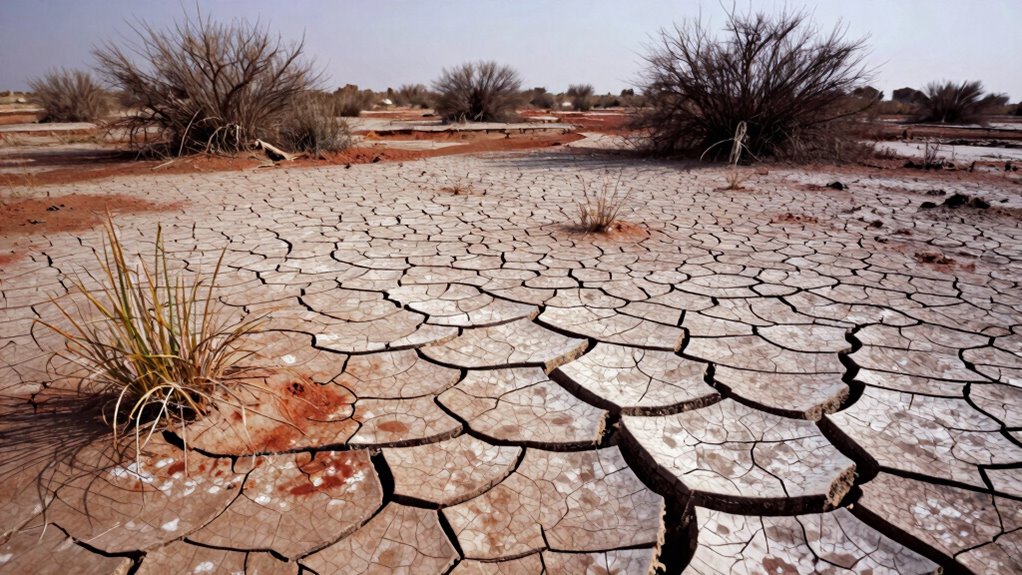

Drought changes soil chemistry by reducing moisture, which limits nutrient movement and makes essential nutrients like nitrogen, phosphorus, and potassium less available to plants. It accelerates chemical transformations in minerals, sometimes causing toxic levels of elements like iron and manganese. Drought also hampers microbial activity, disrupting nutrient cycling and organic matter breakdown. Over time, these changes can weaken soil structure, increase salinity, and reduce fertility. Keep exploring to discover how these effects impact long-term soil health and management.
Prime for Young Adults — start your free trial
Fast free delivery, streaming and member deals for eligible 18–24 year olds.
As an affiliate, we earn on qualifying purchases.
Key Takeaways
- Drought accelerates mineral transformations, increasing soluble iron and manganese, which can lead to toxicity or decreased nutrient availability.
- Reduced soil moisture hampers microbial activity, impairing organic matter decomposition and nutrient cycling processes.
- Increased evaporation during drought elevates soil salinity, negatively affecting plant root function and nutrient uptake.
- Dry conditions cause soil structure degradation, leading to erosion, compaction, and loss of organic matter.
- Long-term drought induces chemical changes that diminish soil fertility and hinder recovery of soil health.
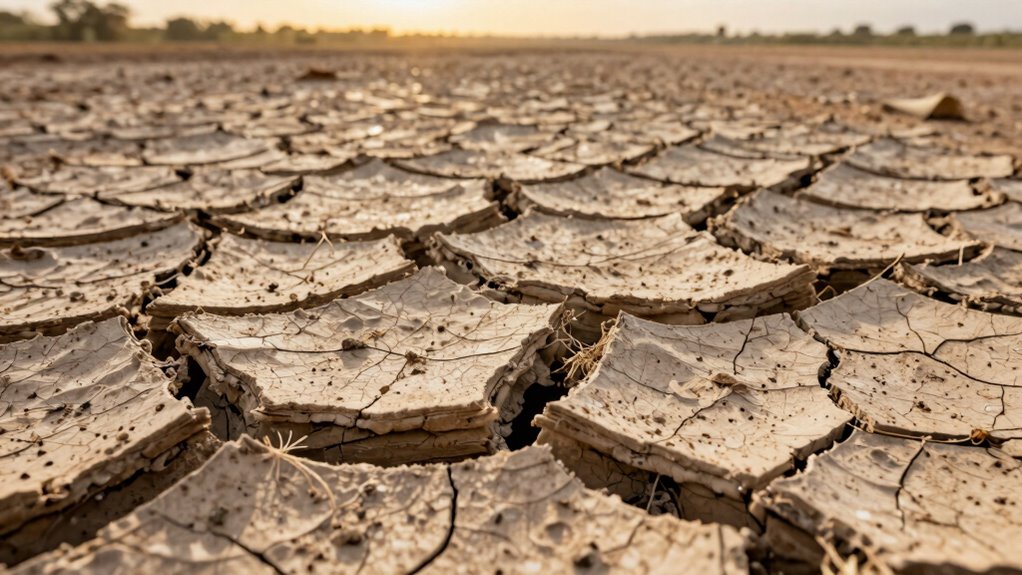
Drought conditions considerably impact soil chemistry, altering the availability of nutrients and affecting plant growth. When water becomes scarce, the delicate balance of plant nutrient dynamics shifts dramatically. Soil moisture levels drop, causing nutrients that rely on water for movement and uptake to become less accessible to plants. As a result, plants may struggle to absorb essential elements like nitrogen, phosphorus, and potassium, which are crucial for their growth and development. Over time, these changes can weaken plant health, reduce crop yields, and make ecosystems more vulnerable to stress.
Drought reduces soil moisture, limiting nutrient availability and weakening plant health and ecosystem resilience.
As drought persists, the process of soil mineral transformations accelerates. Without sufficient water, mineral particles in the soil undergo chemical changes that can either release or lock away nutrients. For instance, certain minerals like iron and manganese become more soluble in dry conditions, potentially leading to toxicity in some plants. Conversely, other minerals may become insoluble, making them unavailable for plant absorption. This shift in mineral availability is essential because it directly influences plant nutrient dynamics, determining which nutrients are accessible and in what quantities.
The reduction in soil moisture also affects microbial activity, which plays a key role in nutrient cycling. Microbes depend on water to facilitate biochemical reactions, so drought-induced dryness hampers their ability to break down organic matter and convert nutrients into forms plants can use. This stagnation in microbial activity further disrupts plant nutrient dynamics, causing nutrient deficiencies or imbalances that weaken plant resilience. Over time, the soil’s capacity to support healthy plant growth diminishes as microbial populations decline and soil mineral transformations favor less plant-friendly forms. Additionally, the diminished microbial activity can lead to a decrease in soil fertility, impacting long-term plant health. Moreover, drought conditions can cause soil structure to deteriorate, making it more prone to erosion and compaction, which further hampers root growth and nutrient exchange. In some cases, a lack of water can also lead to increased soil salinity, as evaporation concentrates salts, creating additional challenges for plant health.
Additionally, drought leads to increased soil salinity in some regions, as water evaporation concentrates salts within the soil profile. Elevated salinity can hinder root function and nutrient uptake, compounding the effects of nutrient deficiencies caused by altered soil chemistry. This creates a challenging environment where plants must adapt to both limited water and increased salt levels, further stressing the soil’s capacity to sustain healthy vegetation.
Furthermore, soil degradation from prolonged drought can result in the loss of organic matter, which is vital for maintaining soil structure and fertility. In the long term, the cumulative effects of drought on soil chemistry can cause degradation that’s difficult to reverse. Changes in soil mineral composition and nutrient availability can persist long after rainfall returns, making recovery slow and complex. To mitigate these impacts, soil management practices like mulching, organic amendments, and controlled irrigation can help maintain soil moisture and support ongoing nutrient and mineral cycles. Understanding how drought influences soil chemistry over time empowers you to adopt strategies that protect soil health and promote resilient plant growth despite water scarcity.
soil testing kit for nutrient levels
As an affiliate, we earn on qualifying purchases.
As an affiliate, we earn on qualifying purchases.
Frequently Asked Questions
How Quickly Do Soil Chemical Changes Occur During Drought?
During drought, soil chemical changes happen relatively quickly, often within weeks to months. You’ll notice soil nutrient depletion as water scarcity hampers nutrient availability, and pH fluctuations occur because reduced moisture affects chemical reactions. These changes can weaken plant growth and soil health. If drought persists, the degradation accelerates, making it vital to monitor soil chemistry and implement amendments to restore balance and support healthy plant life.
Are Certain Soils More Vulnerable to Drought-Induced Chemical Changes?
You notice certain soils, like sandy or low-organic ones, are more vulnerable to drought-induced chemical changes. Their soil mineralogy offers less buffering, and organic matter decomposition slows without moisture, exposing minerals to oxidation and leaching. During drought, these soils become more fragile, losing nutrients faster and altering chemistry more dramatically. Your plants struggle as the soil’s structure and chemistry shift, revealing their vulnerability in dry spells.
Can Drought Effects on Soil Chemistry Be Reversed?
Yes, drought effects on soil chemistry can be reversed, but it takes time and proper management. When you restore moisture, it helps replenish soil nutrient depletion and promotes organic matter breakdown, which are vital for soil health. Adding organic amendments like compost can accelerate recovery by boosting nutrients and improving soil structure. Consistent watering and crop rotation also support the natural restoration process, gradually returning soil chemistry to its healthy state.
How Does Drought Impact Soil Microbial Activity?
Drought decreases soil microbial activity by up to 50%, markedly impacting nutrient cycling. You might notice microbes become less active, but some display remarkable resilience through drought adaptation strategies like forming spores or reducing metabolic rates. This resilience helps microbes survive harsh conditions, maintaining soil health. Understanding microbial resilience enables you to support soil recovery during droughts and foster sustainable land management practices.
What Are Long-Term Ecological Consequences of Drought-Altered Soil Chemistry?
Long-term drought-altered soil chemistry leads to significant ecological consequences. You’ll notice soil nutrient depletion, which hampers plant growth and reduces biodiversity. Organic matter degradation accelerates, weakening soil structure and its ability to retain water and nutrients. Over time, these changes diminish ecosystem resilience, making it harder for plants and animals to recover from droughts. This creates a fragile environment prone to further degradation and reduced productivity.
Conclusion
As drought persists, imagine the soil slowly losing its significance, like a sponge drained of water, its chemistry altered and fragile. You can almost see minerals dissolving away and nutrients becoming scarce, turning once-fertile ground into a barren landscape. The theory that drought silently reshapes soil chemistry proves true—transforming the earth beneath your feet into a stark reminder of nature’s delicate balance. Stay aware, for what happens below can threaten everything above.
Fall yard work Picks
leaf blowers
As an affiliate, we earn on qualifying purchases.