Smart panels are essential during complex home upgrades because they give you centralized control over all electrical components. They improve safety by monitoring for overloads, misconnections, and potential hazards in real time. With remote access and intuitive interfaces, you can easily oversee the process, reduce mistakes, and guarantee a smooth upgrade. Plus, they seamlessly integrate new technologies like solar panels and EV chargers, making your upgrade safer and more efficient. Stick around to discover how these features can transform your home renovation.
Key Takeaways
- Smart panels centralize control, simplifying complex electrical system management during extensive renovations.
- They provide real-time diagnostics and alerts, reducing risks of misconnection and overloading.
- Enhanced safety features automatically shut off circuits during irregularities, protecting both workers and property.
- Remote monitoring and intuitive interfaces enable oversight by multiple contractors, ensuring safe and efficient upgrades.
- Integration with smart devices and renewable energy sources optimizes energy use and prevents overloads during upgrades.
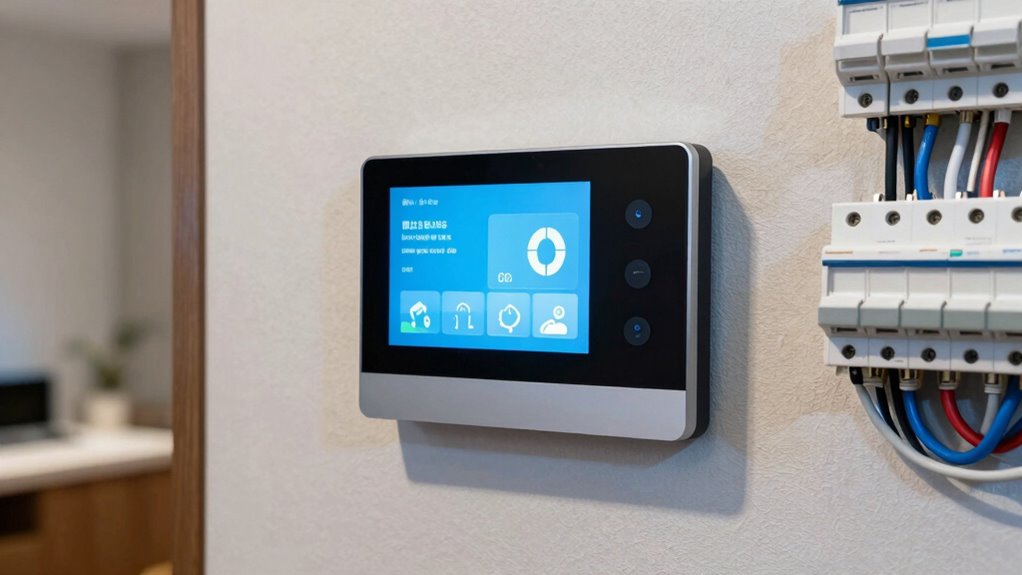
Smart panels are revolutionizing home upgrades by providing a centralized, efficient way to manage your electrical system. When you’re undertaking a complicated renovation or adding new appliances, these panels become essential. They give you greater control over your energy consumption, helping you optimize energy efficiency by monitoring and adjusting power usage in real-time. This not only reduces your utility bills but also minimizes your environmental impact. Plus, during a complex upgrade, smart panels simplify the process, making it easier to coordinate various electrical components and avoid overloads.
Smart panels streamline complex upgrades, enhance energy control, and improve safety for a smoother home renovation experience.
One of the biggest advantages of smart panels is their contribution to installation safety. Traditional electrical panels can pose risks during upgrades—wires might be misconnected, or overloading could lead to dangerous sparks. Smart panels mitigate these hazards with built-in safety features like automatic circuit shutoff when irregularities are detected. They also provide detailed diagnostics and alerts, so you’re always aware of potential issues before they turn into emergencies. When you’re working with multiple contractors or handling a retrofit, this added layer of safety ensures that the electrical system remains secure throughout the process.
During complicated home upgrades, the complexity of electrical systems often increases, and so do the risks. Smart panels help you manage this complexity by offering intuitive interfaces and remote access, allowing you to oversee the system from anywhere. You can easily identify which circuits are active, troubleshoot problems, or make adjustments without needing to physically access the panel. This ease of management reduces the likelihood of mistakes, which are common in intricate upgrades, and guarantees that safety protocols are maintained at every stage. Employing smart panels also enhances electrical system safety by providing real-time monitoring and automatic protections. Incorporating advanced safety features further ensures that your electrical system remains protected against unforeseen issues during upgrades. Additionally, these panels often come with programmable controls that allow for customized safety settings tailored to your home’s specific needs. Understanding biodiversity and how it relates to sustainable practices can also influence how we design and upgrade our homes to be more environmentally friendly.
Furthermore, smart panels streamline the integration of new technology into your home. Whether you’re installing solar panels, electric vehicle chargers, or smart appliances, these panels facilitate seamless communication between devices. They enable smarter energy distribution and help prevent overloading circuits, which is critical during extensive upgrades. The ability to precisely control and monitor power flow not only enhances safety but also ensures that your home is energy-efficient, making your entire upgrade process more effective and less stressful.
In short, when you’re steering through complex home upgrades, smart panels matter most. They enhance energy efficiency by giving you real-time insights into your power consumption, and they bolster installation safety with advanced protective features. They make managing a complicated electrical system more straightforward, safer, and more efficient—fundamental qualities for a successful home transformation.
smart electrical panel for home renovation
As an affiliate, we earn on qualifying purchases.
As an affiliate, we earn on qualifying purchases.
Frequently Asked Questions
How Long Does a Smart Panel Installation Typically Take?
A smart panel installation typically takes about 4 to 8 hours, depending on your home’s complexity. During the process, you’ll notice energy efficiency improvements as the panel optimizes power use, and safety enhancements are prioritized with modern safety features. You should plan for some downtime, but the upgrade offers long-term benefits like better energy management and increased safety, making your home smarter and more secure efficiently.
Are Smart Panels Compatible With Existing Home Wiring Systems?
Think of your home’s wiring like a puzzle—smart panels are designed to fit most pieces. Generally, they’re compatible with existing home wiring systems, but compatibility concerns can arise if your wiring is outdated or non-standard. You might find that some adjustments are needed, especially in older homes. Consulting an electrician guarantees your smart panel integrates seamlessly, avoiding surprises and ensuring a smooth upgrade process.
What Is the Cost Difference Between Smart Panels and Traditional Panels?
Smart panels typically cost more upfront than traditional panels, often by $1,000 to $2,500, depending on features and installation. However, they offer better energy efficiency and cost savings over time by optimizing energy use and reducing utility bills. While the initial investment is higher, you save money on energy costs in the long run, making smart panels a smart choice for complex home upgrades.
Can Smart Panels Be Remotely Monitored and Controlled?
Yes, smart panels can be remotely monitored and controlled. You gain remote access through your smartphone or connected device, allowing you to manage your home’s power from anywhere. However, it’s essential to contemplate security concerns, like protecting your network from potential cyber threats. Ensuring strong passwords and regular updates helps keep your smart panel safe, giving you peace of mind while enjoying the convenience of remote control.
Do Smart Panels Require Regular Maintenance or Updates?
Smart panels do require regular updates to keep them running smoothly, especially when it comes to maintaining battery backup and optimizing power efficiency. Without these updates, your system might become less reliable or efficient during critical moments. Staying on top of maintenance ensures your smart panel adapts to new technology, safeguarding your home’s power stability. Don’t let an overlooked update catch you off guard—stay proactive to keep your system resilient.
Conclusion
Upgrading your home with a smart panel isn’t just about convenience—it’s about future-proofing your space. With smart panels, you gain better control, enhanced safety, and increased energy efficiency, making complex upgrades smoother and more manageable. Did you know that homes with smart electrical systems can reduce energy consumption by up to 30%? Investing in a smart panel today guarantees your home stays smart, safe, and efficient for years to come. Don’t wait—upgrade now and experience the difference.