
Using induction considerably improves your indoor air quality more than you might expect. It heats cookware directly with electromagnetic fields, eliminating combustion and reducing emissions like nitrogen dioxide, carbon monoxide, and VOCs common with gas or electric stoves. This means fewer airborne pollutants and fumes linger during cooking, making your environment healthier, especially in small or poorly ventilated spaces. If you want to discover how induction can create a safer, cleaner home, there’s more to explore.
Key Takeaways
- Induction reduces harmful emissions like nitrogen dioxide and carbon monoxide compared to traditional gas or electric stoves.
- It minimizes airborne pollutants by heating cookware directly, preventing combustion byproducts and fumes.
- Faster, efficient heating lowers overall heat release, decreasing particulate circulation in indoor air.
- Reducing pollutant emissions improves indoor air quality, especially in poorly ventilated kitchens.
- Upgrading to induction enhances indoor safety by lowering risks of CO buildup and indoor air contamination.
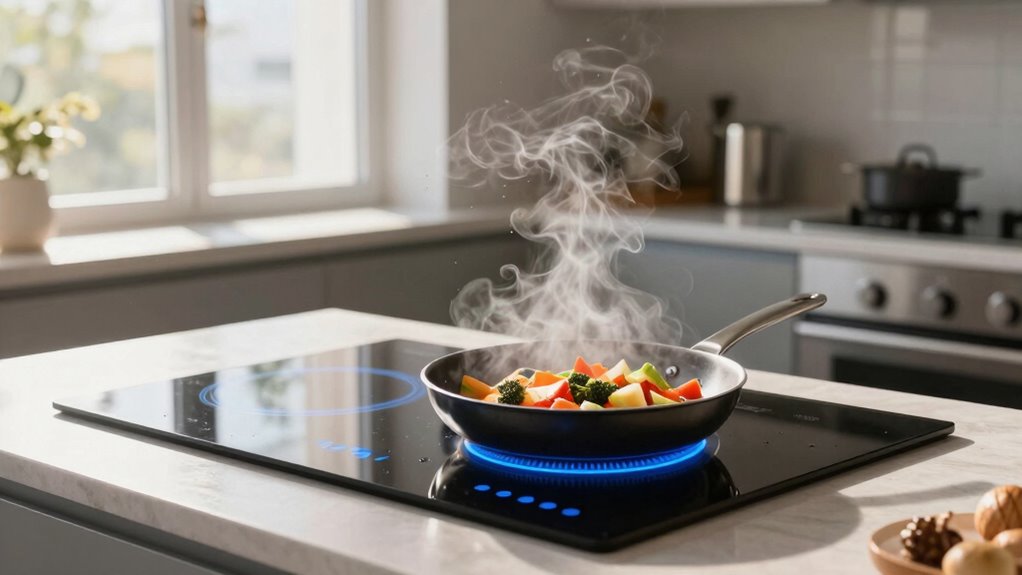
Induction cooking transforms indoor air quality by reducing emissions of harmful pollutants often released during traditional gas or electric stoves. Many people focus on the convenience and speed of induction, but what’s less obvious is how it impacts your home’s air quality. When you cook with gas or electric stoves, the process generates significant cooking emissions—particles, gases, and volatile organic compounds (VOCs)—which can linger in your indoor environment. These emissions contribute to poor air quality and can aggravate respiratory issues, especially if your ventilation isn’t ideal. Switching to induction reduces these emissions dramatically because it doesn’t produce combustion byproducts or high heat that releases fumes into the air.
Induction cooking significantly improves indoor air quality by reducing harmful emissions from traditional stoves.
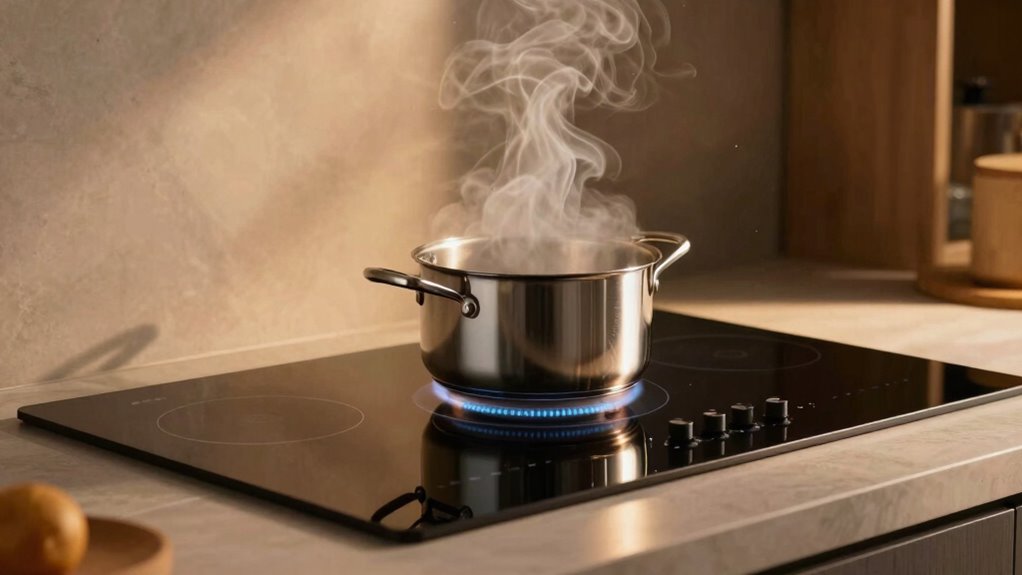
You might not realize that cooking emissions from gas stoves include nitrogen dioxide and carbon monoxide, both of which are linked to respiratory problems and other health concerns. Electric stoves, while cleaner than gas, still emit some particles and VOCs due to the heating process. But induction works differently: it heats cookware directly through electromagnetic fields, so there’s no combustion, no open flame, and less heat loss. This means fewer pollutants are released into your kitchen air. As a result, your air quality improves because there’s less particulate matter and fewer gases floating around during and after cooking. For anyone sensitive to indoor pollutants, induction can make a noticeable difference.
Beyond reducing cooking emissions, induction also helps keep the indoor environment safer by minimizing the presence of harmful gases associated with combustion. You won’t need to worry about accidental carbon monoxide buildup or ongoing nitrogen dioxide exposure, both of which are common concerns with gas stoves. Additionally, since induction heats cookware quickly and efficiently, you tend to cook at lower temperatures, which further limits the release of airborne pollutants. This means that not only is your cooking cleaner, but your overall indoor air remains healthier for longer periods.
Furthermore, because induction stoves produce less heat and no open flames, they help maintain better indoor air stability. Without the constant transfer of heat to the surrounding air, there’s less chance for airborne particles to circulate throughout your space. This can be especially beneficial in small kitchens or homes with limited ventilation, where cooking emissions can otherwise accumulate rapidly. Over time, reducing these emissions contributes to better air quality, less indoor pollution, and a healthier living environment. Additionally, induction’s electromagnetic heating prevents the release of combustion-related pollutants, further supporting healthier indoor air. Properly ventilating your space and choosing efficient appliances like induction can further enhance the benefits by reducing indoor pollutants, creating a safer and more comfortable home environment. Upgrading your stove is a practical step toward improving indoor air quality, especially in homes where ventilation might be limited. Using induction technology can also lead to a more energy-efficient cooking process, further contributing to a healthier indoor environment.

Portable Induction Cooktop 20 Temperature & Power Levels,1800W Single Burner Electric Cooktop with 6.8 inch Heating Coil, Hot Plate with Timer
- High Power and Rapid Heating: 1800W induction for fast cooking
- Even Heat Distribution: 6.8-inch coil ensures consistent heat
- Precise Temperature Control: 20 power and preset levels from 120°F to 465°F
As an affiliate, we earn on qualifying purchases.
As an affiliate, we earn on qualifying purchases.
Frequently Asked Questions
Do Induction Stoves Produce More Indoor Air Pollution Than Gas Stoves?
Induction stoves generally produce less indoor air pollution than gas stoves because they don’t emit combustion byproducts like nitrogen dioxide or carbon monoxide, which are significant emission sources. However, they can still impact air quality if you use certain cookware or release small particles from overheating. While induction stoves are cleaner regarding emissions, it’s wise to guarantee proper ventilation to minimize any indoor air pollution.
Can Induction Cooking Affect Indoor Humidity Levels?
Yes, induction cooking can affect indoor humidity levels. When you use an induction stove, it heats pots quickly, which may cause moisture to evaporate faster, increasing humidity levels temporarily. This impacts your moisture control efforts, especially in small or poorly ventilated spaces. To manage this, guarantee proper ventilation and use exhaust fans, helping maintain comfortable humidity levels and preventing excess moisture buildup during cooking.
Are There Any Health Risks Associated With Induction-Related Indoor Air Changes?
While induction cooking can subtly alter indoor air, the health risks are minimal. In fact, it offers health benefits by reducing allergens and airborne pollutants compared to gas stoves. You’re unlikely to face significant health issues from these air changes, especially with proper ventilation. Instead, you gain cleaner air and a safer cooking environment, making induction a smart choice for healthier living.
How Quickly Do Indoor Air Quality Improvements Occur After Switching to Induction?
Once you switch to induction, your indoor air quality improves rapidly, often within minutes to hours. You’ll notice pollutant reduction as airborne particles from gas cooking diminish, thanks to less heat and combustion emissions. Air filtration systems can accelerate this process, clearing remaining pollutants even faster. This quick change means you can enjoy cleaner, healthier indoor air almost immediately, making your cooking space safer and more comfortable.
Do Induction Cooktops Emit Any Harmful Fumes or Particles?
You might think induction cooktops emit harmful fumes, but they don’t produce traditional cooking fumes or particles like gas stoves do. However, ventilation concerns still matter because cooking oils and food can release some airborne particles. To keep indoor air quality high, use proper ventilation, like range hoods or open windows. This way, you stay safe and breathe easier, even if you’re cooking up a storm.
Conclusion
Understanding how induction affects indoor air is like uncovering a hidden treasure—you realize there’s more beneath the surface. By choosing induction, you’re not just cooking faster; you’re also steering clear of many pollutants that traditional stoves release. It’s a silent shift, quietly improving your home’s air quality. So, next time you cook, remember: induction isn’t just a tool—it’s a gust of fresh air, transforming your kitchen into a healthier haven.