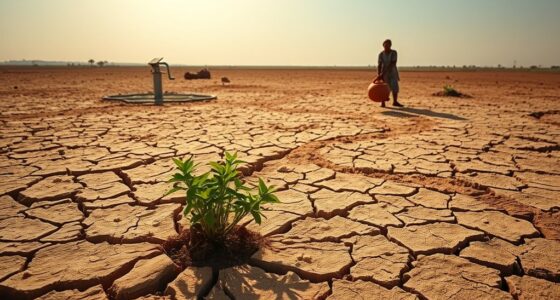

The greenhouse effect is a natural process where gases like CO₂ trap heat, keeping Earth warm enough for life. Global warming occurs when human activities, such as burning fossil fuels and deforestation, increase these gases beyond natural levels, causing the planet’s temperature to rise. While the greenhouse effect is necessary, human actions intensify it, leading to climate change. If you want to understand how these two relate and impact the planet, stay with us to learn more.
Open a free Amazon Business account
Business pricing, bulk buying and tax-exempt orders.
As an affiliate, we earn on qualifying purchases.
Key Takeaways
- The greenhouse effect is a natural process that traps heat in Earth’s atmosphere, essential for maintaining habitable conditions.
- Global warming refers to the recent, human-induced increase in Earth’s surface temperatures due to excess greenhouse gases.
- Human activities like burning fossil fuels amplify the greenhouse effect, leading to enhanced global warming.
- The greenhouse effect occurs naturally, whereas global warming is a consequence of anthropogenic climate change.
- Understanding the difference helps in developing effective strategies to mitigate climate change impacts.

While the terms “greenhouse effect” and “global warming” are often used interchangeably, they actually refer to different but related phenomena. The greenhouse effect is a natural process where certain gases in Earth’s atmosphere trap heat, keeping our planet warm enough to support life. Without it, Earth’s surface would be icy and inhospitable. However, human activities, especially since the Industrial Revolution, have amplified this effect by releasing excess greenhouse gases like carbon dioxide (CO₂), methane, and nitrous oxide. This excess leads to global warming, which is the gradual increase in Earth’s average surface temperature. Understanding these differences is essential because addressing the issue involves both recognizing the natural greenhouse effect and mitigating the human-enhanced warming. Additionally, awareness of the carbon cycle helps you comprehend how human actions disrupt natural processes and contribute to climate change. To understand how the greenhouse effect influences climate change, you need to appreciate the role of the carbon cycle. This cycle describes how carbon moves through Earth’s systems—atmosphere, oceans, land, and living organisms. Human activities, such as burning fossil fuels and deforestation, disrupt this cycle by adding more CO₂ to the atmosphere than natural processes can absorb. This excess CO₂ intensifies the greenhouse effect, leading to higher global temperatures. Climate modeling becomes a critical tool here, helping scientists predict future climate scenarios based on different emission pathways. Climate models simulate how increased greenhouse gases influence Earth’s energy balance, allowing you to see potential outcomes and plan mitigation strategies accordingly.
As an affiliate, we earn on qualifying purchases.
Frequently Asked Questions
How Do Natural Climate Cycles Influence the Greenhouse Effect?
Natural climate cycles, like solar variability and ocean circulation, influence the greenhouse effect by causing fluctuations in Earth’s temperature. When solar activity increases, more energy reaches the planet, amplifying greenhouse gases’ warming effect. Similarly, ocean currents redistribute heat, impacting greenhouse gases’ ability to trap heat. These cycles can temporarily intensify or lessen warming, but long-term trends are primarily driven by human activities.
Can Individual Actions Significantly Reduce Global Warming?
Yes, your actions can make a difference in reducing global warming. By embracing personal responsibility—like conserving energy, reducing waste, and choosing sustainable options—you contribute to broader change. Supporting policy measures that promote clean energy and carbon reduction also amplifies your impact. Together, individual efforts and policy initiatives can substantially slow climate change, helping protect the environment for future generations.
What Are the Economic Impacts of Addressing Climate Change?
You’ll find that addressing climate change costs can create both challenges and chances. Carbon pricing encourages companies to curb carbon emissions, while renewable investments spark sustainable growth. Although initial expenses might seem steep, these strategies can lead to long-term savings, job creation, and economic resilience. By balancing budgets with green goals, you help foster a future where economic development and environmental health walk hand in hand.
How Do Climate Models Predict Future Temperature Changes?
Climate models use complex climate modeling techniques to predict future temperature changes. You input various greenhouse gas emission scenarios, and the models simulate how these gases influence global temperatures. These temperature projections help you understand potential climate futures, guiding policy and adaptation strategies. By analyzing different scenarios, you can see how human actions might accelerate or slow warming, making climate modeling essential for informed decision-making.
What Are the Differences Between Climate Change Adaptation and Mitigation?
Your efforts to fight climate change are incredible, but understanding the difference is vital. Adaptation involves adjusting your lifestyle and infrastructure to lessen impacts, like using renewable energy to reduce your carbon footprint. Mitigation, on the other hand, focuses on preventing further damage by cutting emissions and shifting to cleaner energy sources. Both are essential; adaptation helps you survive today’s challenges, while mitigation safeguards the future.
Conclusion
Now that you understand the difference between the greenhouse effect and global warming, you see how they’re two sides of the same coin. The greenhouse effect naturally keeps our planet warm, but human activities have tipped the scales, causing global warming. Remember, you’re not just a bystander—you’re part of the solution. Don’t wait until the cow’s out of the barn; start making small changes today to help protect our planet for tomorrow.
Fall yard work Picks
leaf blowers
As an affiliate, we earn on qualifying purchases.