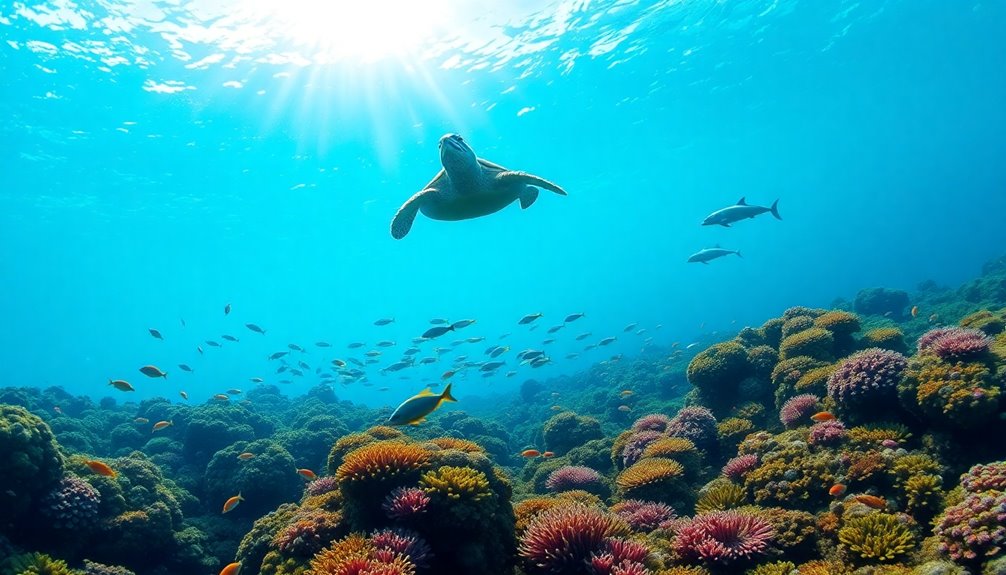

Marine wildlife is key to ocean health and offers innovative solutions to environmental challenges. Phytoplankton capture CO2 and produce oxygen, acting as natural carbon sinks. Marine Protected Areas (MPAs) help preserve ecosystems and rebuild fish populations, while sustainable fishing practices mitigate harm to marine life. Biologging technology provides valuable insights into ocean conditions, enabling better management of our resources. You'll find even more exciting developments that showcase the role of marine wildlife in addressing ocean issues.
Prime for Young Adults — start your free trial
Fast free delivery, streaming and member deals for eligible 18–24 year olds.
As an affiliate, we earn on qualifying purchases.
Key Takeaways
- Marine wildlife, such as phytoplankton, plays a crucial role in carbon capture and climate regulation by absorbing CO2 and producing oxygen.
- Marine Protected Areas (MPAs) foster the recovery of fish populations and preserve biodiversity, contributing to healthier ocean ecosystems.
- Biologging technology enables researchers to gather real-time oceanographic data from marine animals, enhancing our understanding of environmental changes and human impacts.
- Sustainable fishing practices, supported by insights from marine wildlife, help mitigate overfishing and promote the health of marine ecosystems.
- Coastal wetlands, crucial for biodiversity, can be preserved through marine wildlife protection efforts, helping combat climate change effects and habitat loss.
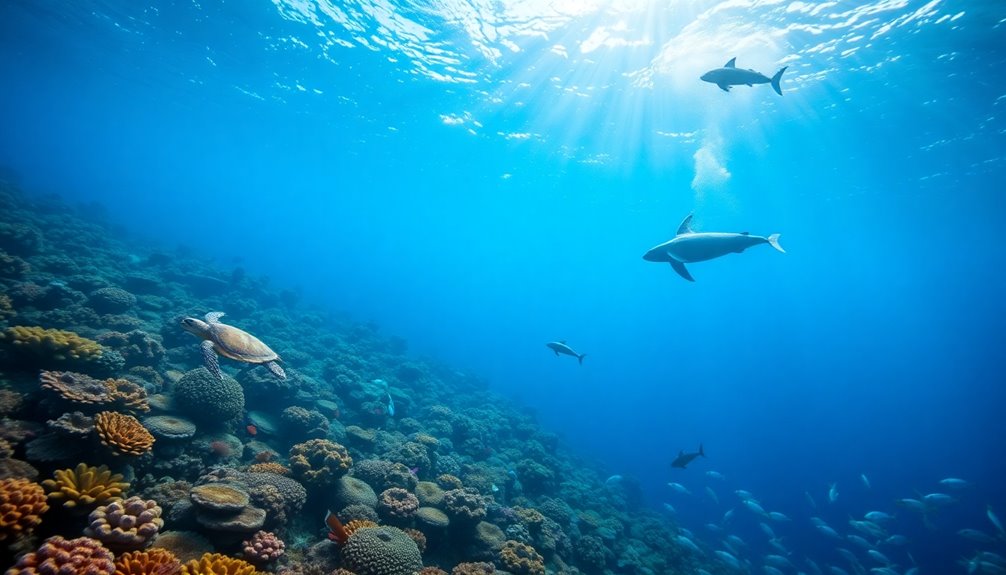
As the world's oceans absorb carbon dioxide at a rate four times faster than forests, they play a vital role in regulating our climate and providing oxygen. However, rising CO2 levels are causing ocean acidification and warming, threatening marine species and ecosystems. You mightn't realize that protecting marine habitats is crucial for maintaining their ability to regulate climate. Coastal wetlands are disappearing rapidly, further endangering these vital ecosystems.
Phytoplankton, the tiny organisms in ocean waters, act as natural carbon sinks. They capture significant amounts of CO2 while producing oxygen, making them essential to the marine environment. To support these ecosystems, Marine Protected Areas (MPAs) have emerged as effective tools. By restricting human activities, MPAs help preserve marine ecosystems, rebuild fish populations, and protect vulnerable species like sea turtles. Oceans act as critical carbon sinks, absorbing CO2 emissions.
Phytoplankton are vital carbon sinks, and Marine Protected Areas play a crucial role in preserving our marine ecosystems.
With different levels of protection, including strict no-take zones, MPAs ensure a healthier marine environment and preserve biodiversity.
You might be surprised to learn that unsustainable fishing practices, such as overfishing and bycatch, harm these ecosystems. Sustainable fishing practices, like catch quotas and gear restrictions, can help mitigate this damage. By choosing sustainably sourced seafood, you play a part in reducing overfishing and its impact on biodiversity. Currently, up to 40% of the global fish catch comes from unregulated and unreported fishing, which exacerbates the problem.
Biologging technology offers another avenue for understanding and protecting our oceans. By attaching sensors to marine animals, researchers gather valuable oceanographic data, bridging gaps left by traditional research methods. This technology provides a 3D view of ocean conditions, such as temperature and salinity, and helps monitor human impacts like pollution and overfishing.
As an affiliate, we earn on qualifying purchases.
Frequently Asked Questions
How Do Marine Wildlife Populations Affect Ocean Health?
Marine wildlife populations significantly impact ocean health in several ways. They help control prey species, maintaining balance within ecosystems.
By supporting food webs, species like sea turtles and whales ensure the survival of various marine organisms. Additionally, marine mammals prevent overgrazing of coastal habitats, fostering biodiversity.
When you support conservation efforts, you contribute to the resilience of these ecosystems against climate change, pollution, and overfishing, ultimately benefiting the ocean's overall health.
What Technologies Are Used to Study Marine Wildlife Interactions?
To study marine wildlife interactions, you can utilize various technologies.
Drones offer aerial views and data collection from hard-to-reach areas. Satellite tags track species across vast oceans, revealing migration patterns.
Acoustic sensors monitor noise and detect whale vocalizations to prevent collisions. Suction cup tags gather behavior data, while AI and machine learning analyze large datasets, enhancing your understanding of ecosystems.
These tools empower you to contribute to effective conservation strategies.
Can Marine Wildlife Help Combat Climate Change?
Oh sure, let's just ask marine wildlife to save the world from climate change! You'd think they've got nothing better to do, right?
But seriously, they actually play a crucial role. By maintaining ecosystem balance, species like whales and sharks support carbon sequestration. Protecting them can enhance biodiversity and resilience, which means healthier oceans.
How Can Individuals Support Marine Wildlife Conservation?
You can support marine wildlife conservation by making conscious choices in your daily life.
Start by reducing single-use plastics, opting for reusable items instead.
Participate in local beach clean-ups to directly impact marine habitats.
Educate others about the importance of ocean health and advocate for policies that protect marine ecosystems.
Additionally, consider donating to conservation organizations or volunteering your time to help amplify efforts aimed at preserving marine biodiversity.
Every action counts!
What Are the Biggest Threats Facing Marine Wildlife Today?
The biggest threats facing marine wildlife today include climate change, overfishing, habitat loss, and pollution.
Rising temperatures lead to coral bleaching and ocean acidification, weakening marine ecosystems. Overfishing depletes fish stocks and disrupts food chains.
Coastal development destroys vital habitats like mangroves and seagrass beds. Pollution from plastics and chemicals harms marine species and ecosystems.
You can help by advocating for sustainable practices and supporting conservation efforts to protect these fragile environments.
Conclusion
In harnessing the incredible ingenuity of marine wildlife, you're not just witnessing ocean solutions; you're witnessing a revolution that could change the fate of our planet! By embracing the natural world around us, you can be part of a movement that champions sustainable practices and protects our precious ecosystems. Together, let's dive into this ocean of possibilities and ensure that our seas thrive for generations to come. The future of our oceans is in your hands!
Fall yard work Picks
leaf blowers
As an affiliate, we earn on qualifying purchases.