Trees and oceans are crucial to Earth’s carbon cycle because they absorb and store large amounts of CO2, helping to regulate climate. Trees take in carbon during photosynthesis, locking it in trunks and roots for decades or centuries. Oceans absorb CO2 from the atmosphere, forming stable compounds that settle deep below. Protecting these natural sinks is essential for climate health. If you continue exploring, you’ll discover how preserving ecosystems supports our planet’s future.
Key Takeaways
- Trees absorb atmospheric CO2 through photosynthesis, acting as vital carbon sinks.
- Oceans dissolve and store large amounts of CO2, helping regulate Earth’s climate.
- Both forests and oceans sequester carbon for decades or centuries, reducing greenhouse gases.
- Disruption of these natural sinks through deforestation and pollution increases atmospheric CO2.
- Protecting ecosystems maintains the balance of the global carbon cycle and mitigates climate change.

Have you ever wondered how carbon moves through our planet? It’s a fascinating process, essential to maintaining the balance that supports life on Earth. One key aspect of this process is carbon sequestration, which involves capturing and storing atmospheric CO2 to prevent it from contributing to climate change. Whether it’s trees absorbing carbon during photosynthesis or oceans acting as vast carbon sinks, understanding these natural mechanisms helps you grasp how our planet regulates its climate.
Carbon moves through Earth via natural processes like photosynthesis and ocean absorption.
When you think about forests, picture them as giant sponges soaking up CO2 from the atmosphere. Trees take in atmospheric CO2 through their leaves, using sunlight to convert it into sugars and oxygen in a process called photosynthesis. This not only fuels their growth but also locks carbon away in their trunks, branches, and roots. As trees grow, they sequester carbon for decades or even centuries, effectively removing CO2 from the atmosphere and reducing greenhouse gas levels. This natural carbon sequestration is essential because it counteracts the amount of CO2 released by human activities like burning fossil fuels. Without forests acting as carbon sinks, atmospheric CO2 levels would rise even faster, exacerbating global warming.
Oceans play an equally critical role in the Earth’s carbon cycle. They act as enormous carbon reservoirs, absorbing a significant portion of atmospheric CO2. When CO2 dissolves in seawater, it forms carbonic acid, which then participates in complex chemical reactions that eventually lead to the formation of stable compounds like bicarbonates and carbonates. These compounds settle into the deep ocean, effectively trapping carbon away from the atmosphere for centuries or longer. This process, known as oceanic carbon sequestration, helps regulate the planet’s climate by keeping atmospheric CO2 levels in check. However, the increasing concentration of CO2 from human emissions is causing ocean acidification, threatening marine ecosystems and the delicate balance of carbon storage in the oceans.
Together, trees and oceans form an essential part of Earth’s natural carbon cycle. They absorb, store, and release carbon, maintaining a delicate equilibrium. When you understand how these processes work, it becomes clear why protecting forests and ocean health is critical. Disrupting these natural carbon sinks, whether through deforestation or pollution, reduces their ability to sequester carbon, leading to higher atmospheric CO2 levels. This, in turn, accelerates climate change. By appreciating the importance of natural carbon sequestration, you can see how essential it is to preserve and restore these ecosystems, not just for their beauty or biodiversity but for the very stability of our climate system. Moreover, promoting sustainable forestry and marine conservation efforts can significantly enhance these natural carbon sinks, supporting global climate mitigation strategies.
As an affiliate, we earn on qualifying purchases.
Frequently Asked Questions
How Do Urban Areas Impact Earth’s Carbon Cycle?
Urban areas markedly impact Earth’s carbon cycle through urban pollution and city heat. You might notice that pollution releases excess carbon dioxide and other greenhouse gases, disrupting natural balance. City heat, caused by dense infrastructure, increases energy use and emissions, further affecting the cycle. When you reduce pollution and incorporate green spaces, you help lessen these impacts, supporting healthier carbon cycling and a more sustainable environment.
Can Planting More Trees Significantly Reduce Global Carbon Levels?
Planting more trees can crucially boost reforestation benefits and enhance carbon sequestration potential. When you support reforestation efforts, trees absorb CO2 from the atmosphere, helping reduce global carbon levels. While planting trees alone isn’t a complete solution, it plays a essential role in mitigating climate change. Your actions contribute to creating healthier ecosystems and lowering greenhouse gases, making a real difference in addressing the climate crisis.
What Role Do Soil Microbes Play in Carbon Storage?
Soil microbes play a vital role in carbon storage by influencing soil respiration and microbial decomposition. When you think about how soil stores carbon, microbes break down organic matter, releasing some carbon as CO2, but also helping form stable soil organic compounds. This process determines whether carbon stays locked in the soil or returns to the atmosphere. You can support healthy microbial activity by avoiding soil disturbance and adding organic matter, enhancing carbon storage naturally.
How Do Ocean Currents Influence Carbon Absorption?
You might wonder how ocean currents influence carbon absorption. Ocean circulation plays a key role in carbon sequestration by transporting cold, nutrient-rich waters that absorb CO₂ from the atmosphere. As these currents move, they help distribute carbon throughout the deep ocean, effectively storing it away from the atmosphere. This process enhances the ocean’s ability to act as a carbon sink, helping regulate global climate.
Are There Natural Events That Drastically Alter the Carbon Cycle?
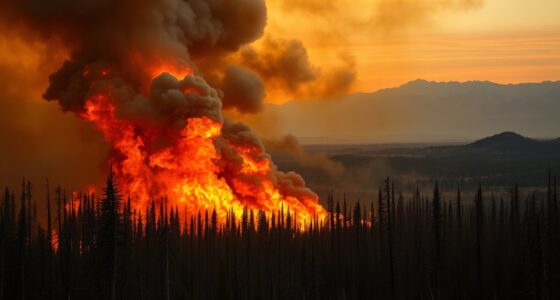
Think of the Earth as a living, breathing organism. Natural events like volcanic eruptions and forest fires can drastically alter the carbon cycle, releasing massive amounts of CO₂ into the atmosphere. These events can temporarily disrupt the balance, just as a sudden storm upsets calm waters. You should be aware that such occurrences remind us how fragile our planet’s climate system is and how human activities can make things worse.
Conclusion
You see, trees and oceans both breathe life into Earth’s climate, both store carbon, and both help regulate our planet’s temperature. You can protect forests and support sustainable ocean practices, knowing you’re helping to absorb carbon, to cool the atmosphere, and to sustain life. By caring for trees and oceans, you’re not just making a difference—you’re making a future. Because when they thrive, our planet thrives, and your actions truly matter.