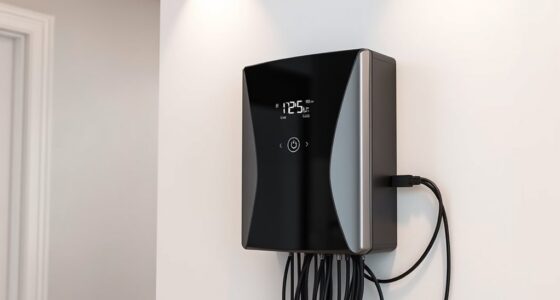
When selecting thermostats for greenhouses, the key is balancing precision, ease of use, and durability. The Inkbird ITC-308 stands out as the best overall choice thanks to its reliable dual-stage control, while the BioGreen TER2/US offers excellent seasonal flexibility for advanced growers. Many options trade off between simple temperature regulation and complex climate control features, making it vital to choose a model aligned with your specific needs. Budget, ease of installation, and expandability often influence the decision. Continue reading for a detailed breakdown of the best greenhouse thermostats and which one suits your setup.

Get garden gear delivered free — and shop member deals
- Fast, free delivery on millions of items
- Access to Prime Big Deal Days deals on October 6–7
- Prime Video, Amazon Music and more included
Complete the kit


Key Takeaways
- Dual-stage control models like the Inkbird ITC-308 provide more precise climate management for greenhouses with both heating and cooling needs.
- Build quality and ETL listing are vital for durability and safety, especially for outdoor or high-humidity environments.
- Advanced features such as WiFi connectivity and cyclic timing are more common in higher-priced models, offering greater automation.
- Simplicity favors beginners, but more complex models offer better long-term control for serious growers.
- Tradeoffs often involve cost versus control complexity; choosing a model with more features usually means a higher price and learning curve.


| thermostats for greenhouse | Temperature Range |
|---|---|
| WH2408 Temperature Controller | -58°F to 230°F (-50°C to 110°C) |
| Inkbird ITC-308 Digital Temper | — |
| K-Kontrol KJ16110-A Adjustable | 30°F to 110°F |
| Inkbird Temperature and Humidi | -40 to 212°F |
| Inkbird WiFi Temperature Contr | — |
| Dewenwils Digital Temperature | -40℉ to 210℉ |
| BN-LINK Reptile Thermostat Tem | 40–108 ºF |
| BioGreen TER2/US Thermo 2 Digi | -58°F to +210°F |
More Details on Our Top Picks
WH2408 Temperature Controller 10A 1200W Digital Thermostat Outlet Switch
This digital thermostat stands out for its broad application range, including greenhouses, reptile tanks, and aquariums, thanks to its adjustable temperature range from -58°F to 230°F and a control resolution of 0.1°F. Compared with the Inkbird ITC-308, the WH2408 offers a higher power rating, making it suitable for larger setups, but it lacks waterproofing, so the probe must be kept dry—an important consideration for greenhouse environments exposed to moisture. Its intuitive controls make setup straightforward, and safety features like fire-retardant construction add peace of mind. However, it requires separate safety devices for heating or cooling equipment and isn’t saltwater-proof, limiting direct application in certain contexts. This pick makes the most sense for users who want a flexible, high-power thermostat that can handle different heating and cooling devices with precise control, but not if waterproofing is critical.
Pros:- Wide temperature range from -58°F to 230°F
- High control resolution of 0.1°F
- Versatile for multiple applications including reptiles and aquariums
- Intuitive setup with clear controls
Cons:- Not waterproof—probe must be kept dry
- Requires additional safety devices for operation
- Limited saltwater compatibility
Best for: Greenhouse growers needing a versatile, high-power digital thermostat with precise control
Not ideal for: Greenhouse setups exposed to high humidity or moisture, where waterproofing is essential
- Power Rating:1200W (120V)
- Temperature Range:-58°F to 230°F (-50°C to 110°C)
- Ambient Temperature Range:-4°F to 140°F (-20°C to 60°C)
- Control Resolution:0.1°F
- Probe Length:1.5 inches
- Modes:Heating and Cooling
- Certifications:ETL
Our verdict“This thermostat is ideal for users who need precise, versatile control across various applications but can manage dry probe requirements.”
Inkbird ITC-308 Digital Temperature Controller 2-Stage Outlet Thermostat for Heating and Cooling
The Inkbird ITC-308 offers a reliable solution for maintaining greenhouse temperatures with its dual relays and clear LCD display, supporting up to 1100W at 110V. Compared with the WH2408, it is more straightforward to operate for users focused solely on small to medium greenhouses, thanks to its dedicated heating and cooling stages. Its alarms and safety features enhance peace of mind, but its maximum load of 1100W limits its use with high-power equipment—less ideal for larger setups. The plastic construction, while lightweight, may wear over time, especially in humid environments. This device makes the most sense for growers seeking an easy-to-use, safe, and affordable climate control solution, especially if their power needs stay below 1100W and they operate on 110V power.
Pros:- Dual relays for heating and cooling
- Easy-to-read LCD with alarms
- Supports customizable temperature settings
- Safety features included
Cons:- Limited to 1100W maximum load
- Requires 110V power—less compatible with 220V systems
- Plastic build may be less durable long-term
Best for: Small to medium greenhouse operators requiring straightforward dual-stage temperature control
Not ideal for: Large greenhouses with high-power equipment or those running on 220V systems due to wattage and voltage limits
- Controller Type:Push Button
- Display Type:LCD
- Temperature Control Type:Heating and Cooling
- Voltage:110 volts
- Wattage:1100 watts
- Maximum Output Load:1100 W
- Additional Features:Temperature Display, Buzzer Alarm, Dual Relay, Safety Features
Our verdict“This controller is perfect for budget-conscious growers needing reliable dual-stage control within modest power limits.”
K-Kontrol KJ16110-A Adjustable Line Voltage Thermostat
The K-Kontrol KJ16110-A provides manual, adjustable temperature regulation with a focus on safety and compatibility, suited for controlling heating systems up to 16 amps at 120, 208, or 240V. Compared with digital options like the Inkbird controllers, it offers a straightforward, manual control experience, which can be advantageous for users who prefer direct adjustment without relying on digital interfaces. Its UL listing underscores its safety, but the manual button operation makes it less convenient for those seeking remote or automated control. Its temperature range from 30°F to 110°F covers most greenhouse needs but lacks the programmability of digital controllers. This thermostat makes sense for users comfortable with manual adjustment, particularly in environments where simplicity and safety are priorities, but it’s less ideal for those wanting automation or remote monitoring.
Pros:- UL listed for safety and reliability
- Compatible with 120V, 208V, 240V
- Precise control with 2°F accuracy
- Manual button control for straightforward adjustments
Cons:- Limited to single-stage heating applications
- Requires manual operation—no automation
- No digital interface or remote features
Best for: Growers seeking manual, reliable temperature control with multi-voltage compatibility
Not ideal for: Automated greenhouse systems requiring remote control or programming features
- Voltage:120, 208, 240V
- Full load amps:16.0, 9.2, 8.0A
- Locked rotor amps:96.0, 55.2, 48.0A
- Temperature range:30°F to 110°F
- Control type:Button
Our verdict“This thermostat is best suited for users who prefer simple, manual control over automated systems, especially in multi-voltage contexts.”
Inkbird Temperature and Humidity Controller ITC-608T Dual Stage Thermostat, 120VAC, 15A, ETL Listed
The Inkbird ITC-608T offers comprehensive climate management, supporting both temperature and humidity regulation, ideal for greenhouses and grow tents. Its ability to support up to 1800W with a 15A load and include safety features like compressor delay makes it more versatile than single-function thermostats like the K-Kontrol. The calibration feature and support for Celsius or Fahrenheit add flexibility for precise adjustments. Compared to digital controllers limited to temperature alone, the 608T excels in environments requiring humidity regulation alongside temperature, such as mushroom cultivation or high-humidity greenhouses. Its setup complexity and the need for proper wiring are tradeoffs, but for multi-factor climate control, it provides a valuable all-in-one solution.
Pros:- Supports both temperature and humidity control
- Includes calibration and safety features
- Supports up to 1800W load
- Suitable for various applications like greenhouses and fermentation
Cons:- Requires proper wiring and setup
- Limited to 120V power supply
- No detailed user interface description
Best for: Growers needing combined temperature and humidity control for greenhouses or grow rooms
Not ideal for: Growers seeking simple, single-function thermostats or those with limited wiring experience
- Max Load:120V, 15A, 1800W
- Temperature Range:-40 to 212°F
- Humidity Range:5 to 99% RH
- Certifications:ETL
Our verdict“This dual-stage controller is ideal for growers who need combined climate regulation, accepting some setup complexity for greater control.”
Inkbird WiFi Temperature Controller ITC308 Reptile Freezer Thermostat Digital Heating and Cooling Heater Cooler Greenhouse Plug Outlet 2 Stage 1100W 110V
This WiFi-enabled thermostat introduces remote management, making it a strong choice for greenhouse operators who want to monitor and adjust conditions via their smartphones. Its dual relay outputs support both heating and cooling devices, comparable to the Inkbird ITC-308 but with added convenience for remote control. The ability to set high/low alarms and support for Celsius or Fahrenheit readings enhances usability. However, its dependence on WiFi means that connectivity issues could impact operation, and it’s limited to 110V power, restricting use in some regions or larger setups. Compared with the non-WiFi Inkbird models, this offers remote flexibility, but at the cost of increased reliance on network stability. This pick suits growers who prioritize remote access but have compatible power supplies and stable internet.
Pros:- Remote monitoring via smartphone app
- Supports both heating and cooling devices
- High/low temperature alarms
- Easy plug-and-play setup
Cons:- Limited to 110V power
- Requires WiFi for full functionality
- Potential connectivity issues
Best for: Greenhouse growers who want remote monitoring and control via smartphone apps
Not ideal for: Growers without reliable WiFi or those preferring purely manual or wired controls
- WiFi Support:Yes
- App Compatibility:Android & iOS
- Relay Output:Dual
- Maximum Output Load:1100W (110V)
- Voltage:110V
- Temperature Units:Celsius/Fahrenheit
- Alarm:High/Low temperature limit
Our verdict“This WiFi-enabled controller is perfect for growers who want to manage greenhouse conditions remotely, accepting the need for stable internet.”
Dewenwils Digital Temperature Controller, 15A/1800W Thermostat Outlet Plug with VA Display, -40℉ to 210℉, Cyclic Timing and Countdown for Greenhouse, Incubator, Homebrew
The Dewenwils Digital Temperature Controller stands out for its high power capacity and wide temperature range, making it suitable for large greenhouses or incubators that require precise and robust control. Compared to the BioGreen TER2/US, it offers more flexible functions like cyclic timing and countdown, but its setup involves understanding temperature calibration, which could challenge beginners. This model’s VA display ensures clear readings even in low light, a step above many basic controllers. However, it’s primarily designed for heating and cooling applications, limiting its use in more integrated climate systems. Overall, this pick makes the most sense for growers needing high wattage support and detailed timing options.Pros:- Supports appliances up to 1800W, suitable for large systems
- Clear VA display for easy reading in dark environments
- Wide temperature range from -40°F to 210°F
Cons:- Requires calibration knowledge for precise control
- Limited to specific applications like greenhouses and incubators
Best for: Greenhouse operators or hobbyists with high-power heating or cooling needs who want versatile control features.
Not ideal for: Beginners or those seeking smart, remotely accessible systems, as it lacks connectivity features.
- Power Output:15A/1800W
- Temperature Range:-40℉ to 210℉
- Display:VA display with self-illuminating font
- Modes:Heating, cooling, cyclic timing, countdown
- Features:Power memory, temperature calibration
Our verdict“Best suited for experienced users needing high power and extensive timing options in greenhouse environments.”
BN-LINK Reptile Thermostat Temperature Controller, Digital Heat Mat Thermostat for Seed Starting, Plant Germination, Greenhouse, Incubator, Brooder, Brewing, Reptile Tanks, 40-108°F, 1000W, ETL Listed
The BN-LINK Reptile Thermostat excels in straightforward applications like seed germination and reptile tanks, with an easy setup and clear digital display. Unlike the Dewenwils, it’s limited to heating only, making it less versatile for environments that require cooling or complex climate management. Its maximum load of 1000W is suitable for small to medium-sized setups, but it might fall short for larger greenhouses needing higher wattage. While it’s durable and ETL listed, its narrower temperature range (40–108°F) restricts use in more extreme conditions or for precise climate tweaking. This makes it ideal for hobbyists or small-scale growers prioritizing simplicity over advanced features.Pros:- Simple controls and bright display for easy operation
- Durable, ETL safety certification
- Effective for heating applications like seed mats and reptile tanks
Cons:- Limited to heating devices, no cooling support
- Maximum power of 1000W may be insufficient for larger setups
Best for: Gardeners or hobbyists needing a reliable, easy-to-use thermostat for seed starting or small reptile greenhouses.
Not ideal for: Large commercial growers or those requiring cooling and more precise temperature control over a broader range.
- Temperature Range:40–108 ºF
- Max Power:1000W
- Rated Voltage:120VAC 60Hz
- Max Load:8.3A
- Probe Length:4.92 ft
- Cord Length:3.94 ft
Our verdict“A dependable choice for small-scale and hobbyist greenhouse heating, prioritizing ease and safety.”
BioGreen TER2/US Thermo 2 Digital Greenhouse Thermostat with Summer/Winter Function
The BioGreen TER2/US Thermo 2 makes a compelling case for larger, more complex greenhouses thanks to its impressive 3000W capacity and broad temperature range from -58°F to +210°F. Compared with the Dewenwils, it offers more extensive climate options, including cooling, fans, and electric windows, making it suitable for maintaining optimal conditions across seasons. Its user interface is straightforward, but the complexity might overwhelm beginners unfamiliar with advanced thermostats. Its energy-saving features help reduce operational costs, yet it lacks integrated smart connectivity, meaning manual control remains the norm. This model clearly targets serious growers seeking comprehensive control over their greenhouse environment.Pros:- Extremely wide temperature range for all-season control
- High power capacity suitable for large equipment
- Easy-to-use digital interface with clear display
- Energy-saving features to lower operational costs
Cons:- No remote or smart connectivity options
- Potentially complex for users unfamiliar with advanced thermostats
Best for: Commercial or serious hobbyist growers managing large greenhouses with diverse climate control needs.
Not ideal for: Small-scale growers or beginners who prefer plug-and-play solutions without complex setup or advanced features.
- Temperature Range:-58°F to +210°F
- Power Capacity:3000 watts / 10,240 BTUs
- Warranty:2 years
Our verdict“Ideal for large-scale greenhouses requiring versatile, high-capacity climate management with precise control.”

How We Picked
These thermostats were selected based on their performance, build quality, usability, and versatility for greenhouse environments. I prioritized models with reliable temperature control, safety certifications like ETL, and features that support both heating and cooling. Ease of installation and user interface also influenced rankings, as complex controls can be a barrier for beginners. Cost-effectiveness was considered, but no sacrifices were made in core performance. The ranking reflects a balance between affordability and advanced functionality for different grower needs.Factors to Consider When Choosing Thermostats For Greenhouses
Choosing the right thermostat for your greenhouse involves understanding several key factors that impact climate control and ease of use. Not all models are created equal, and each has tradeoffs between features, complexity, and price. Evaluating these factors carefully can help you find a device that maintains optimal conditions without overcomplicating your setup or overspending.Control Type and Stages
Deciding between single-stage and dual-stage thermostats is crucial. Single-stage models control only heating or cooling, making them suitable for simple setups or small greenhouses. Dual-stage models can manage both heating and cooling simultaneously, offering more precise climate stability for larger or more sensitive environments. Think about your greenhouse’s size and whether you need independent control of temperature extremes to avoid stress on plants.
Connectivity and Automation
WiFi-enabled thermostats like the Inkbird ITC-308 WiFi model add convenience through remote monitoring and adjustments, especially for busy growers. However, these features come at a higher cost and may require more setup time. If you prefer straightforward manual control, simpler models without connectivity can be more reliable and easier to operate. Consider your comfort with technology and how often you’ll need remote access.
Build Quality and Certifications
Durability matters, particularly in outdoor or humid environments. Look for models with robust casing and safety certifications like ETL or UL listing. These ensure the thermostat can withstand environmental stresses and operate safely over time. Skipping certifications might save money initially but could lead to failures or safety hazards later, especially when managing high wattage loads or outdoor installations.
Ease of Installation and Use
Some thermostats are plug-and-play, ideal for beginners or temporary setups, while others require wiring and more technical skills. User interfaces with clear displays and simple controls reduce setup errors and frustration. If you’re new to climate control, prioritize models with straightforward installation and intuitive operation, but be aware that more advanced units may require a learning curve.
Price and Long-Term Value
Higher-priced models generally offer more features, better build quality, and longer durability, making them suitable for serious growers or commercial setups. Cheaper models might suffice for small hobby greenhouses but often lack advanced control options and can be less reliable. Balance your budget with your long-term needs—spending more upfront can save headaches and replacement costs down the line.
Frequently Asked Questions
Can I use a standard household thermostat for my greenhouse?
While a standard household thermostat might seem convenient, it often lacks the precision, safety features, and durability needed for greenhouse applications. Greenhouse thermostats are designed to handle higher loads and outdoor conditions, ensuring consistent climate control. Using the right type prevents temperature swings that could stress plants or damage equipment, making specialized greenhouse thermostats a smarter investment.
Do I need a dual-stage thermostat if I only have a heating system?
Not necessarily. If your greenhouse only requires heating, a single-stage thermostat may suffice, simplifying operation and reducing costs. However, if you are in an environment where temperatures can drop significantly or you want to prevent overheating, a dual-stage model can offer more precise control and safeguard your plants. Consider your climate and plant sensitivity before deciding.
How important is WiFi connectivity in a greenhouse thermostat?
WiFi connectivity can be very useful for remote monitoring, adjusting settings, and receiving alerts, especially if you manage multiple greenhouses or travel frequently. However, it introduces additional complexity and potential points of failure. If your setup is small or you prefer simplicity, a wired or manual thermostat may be more reliable, with less to go wrong during power or internet outages.
What safety features should I look for in a greenhouse thermostat?
Safety features such as overload protection, proper grounding, and certifications like ETL or UL listing are critical for protecting both your equipment and your plants. These features prevent overheating, electrical faults, and potential fire hazards. Always ensure that the thermostat is rated for the wattage of your heating or cooling devices and that it’s installed according to safety standards.
Are digital thermostats better than mechanical ones for greenhouses?
Digital thermostats typically provide more precise temperature control, easier programming, and additional features like digital displays and remote access. Mechanical thermostats can be simpler and more durable in some cases, but they usually lack the fine-tuning and automation options that digital models offer. For most greenhouse applications where consistency and automation matter, digital thermostats tend to be the better choice.
Conclusion
The best overall choice for most growers is the Inkbird ITC-308, thanks to its reliable dual-stage control and ease of use. For those prioritizing value, the BN-LINK Reptile Thermostat offers solid performance at a lower price. Growers with advanced needs or larger setups should consider the BioGreen TER2/US for its seasonal features and expandability. Beginners will find simple, plug-in models suitable, while experienced growers may prefer models with WiFi and automation features for greater control. Matching your specific needs and budget will ensure your greenhouse climate stays optimal year-round.
Fall yard work Picks
leaf blowers
As an affiliate, we earn on qualifying purchases.