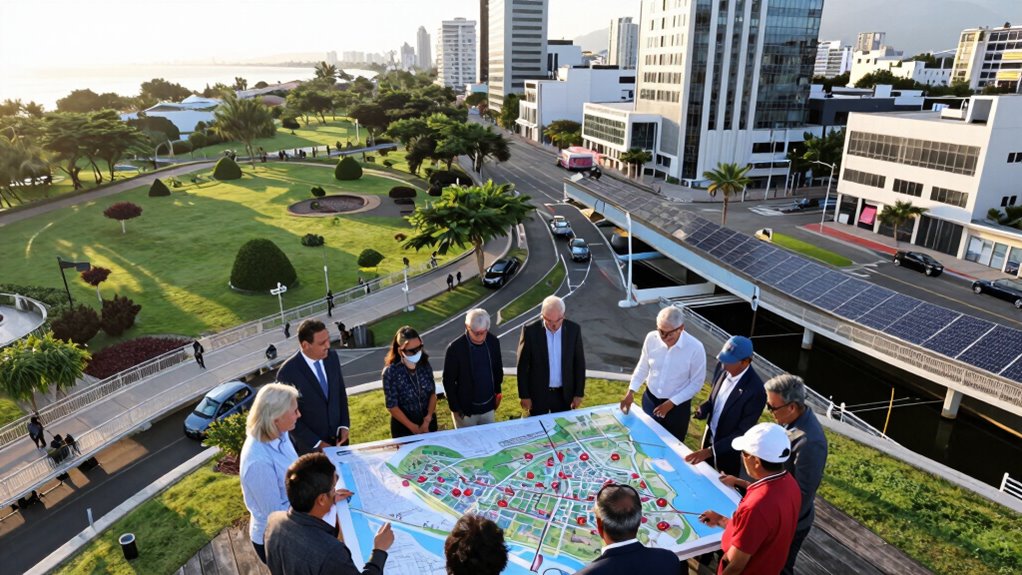

Local governments can support resilience planning by actively engaging their communities through surveys, town halls, and advisory committees to gather valuable insights. They should prioritize infrastructure upgrades, like improved drainage and reinforced structures, to reduce hazards. Engaging residents helps guarantee funding addresses actual needs and builds trust, while fostering collective responsibility. Supporting these efforts with advocacy and transparent decision-making strengthens resilience. Keep exploring to discover how you can make a difference in local resilience initiatives.

Get garden gear delivered free with Prime
- Fast, free delivery on millions of items
- Prime Video, Amazon Music and more included
- Member-only deals all year
Key Takeaways
- Facilitate active community engagement through town halls, surveys, and advisory committees to gather local insights and priorities.
- Invest in infrastructure upgrades like stormwater systems and resilient roads to reduce vulnerability to natural hazards.
- Allocate funds transparently based on community feedback, ensuring resilience projects address actual local needs.
- Promote public-private partnerships and grant opportunities to maximize resources for resilience initiatives.
- Support climate adaptation and resilience education programs to foster collective understanding and action.

Local governments are increasingly recognizing the importance of resilience planning to safeguard communities against natural disasters and climate change. As a community member, you play a vital role in shaping how your local authorities approach this challenge. One of the most effective ways they support resilience is by fostering community engagement. When residents actively participate in planning processes, local policymakers gain valuable insights into specific vulnerabilities and priorities. Your input helps identify high-risk areas, such as flood-prone neighborhoods or aging infrastructure that needs upgrade. By participating in town halls, surveys, or advisory committees, you guarantee that resilience strategies are rooted in real community needs. This participatory approach not only builds trust but also creates a shared sense of responsibility, motivating everyone to work together toward common goals. Recognizing the importance of community involvement, local governments are more likely to develop sustainable and effective resilience solutions.
Alongside engaging residents, local governments invest heavily in infrastructure improvements to bolster resilience. Upgrading roads, bridges, and drainage systems can considerably reduce the impact of storms, floods, and other natural hazards. You might notice new stormwater management systems or reinforced public facilities designed to withstand extreme weather events. These investments are essential because they directly protect lives and property while minimizing recovery costs after disasters. When local authorities prioritize infrastructure investment, they often seek federal grants or public-private partnerships to maximize resources. Supporting these initiatives through public engagement can help ensure that funding is allocated to projects that truly meet community needs. As a community member, supporting these initiatives, whether through advocacy or participation, helps guarantee that resilience becomes a top priority in local budgets. Additionally, incorporating community feedback into planning ensures that investments address actual needs and concerns of residents. Understanding how local infrastructure impacts community safety can further motivate you to advocate for resilient development projects, especially when it involves climate adaptation measures.
Popular right now

Hisense 55-Inch E6SR Series Hi-QLED 4K UHD Smart Roku TV (2026 Model)

KitchenAid 5.5-Qt Bowl-Lift Stand Mixer, Porcelain White (KSM55SXXX)

Hisense 40-Inch Class QD4SR Series Hi-QLED FHD Smart Roku TV (2026 Model)
As an affiliate, we earn on qualifying purchases.
Frequently Asked Questions
How Do Local Governments Prioritize Resilience Initiatives With Limited Budgets?
You prioritize resilience initiatives by carefully evaluating risks and focusing on projects with the greatest impact. With budget constraints, you optimize resource allocation by seeking grants, partnerships, and community support to stretch funds further. You also leverage existing assets and prioritize low-cost, high-impact measures. Engaging stakeholders and aligning initiatives with local needs ensures you make strategic decisions that enhance resilience without overextending limited budgets.
What Are Effective Ways to Involve Community Members in Resilience Planning?
You can boost community engagement by hosting participatory planning workshops where residents share their experiences and ideas. Use surveys and social media to reach diverse voices, making the process inclusive. Establish neighborhood committees to involve community members directly in decision-making. When you actively seek feedback and foster collaboration, residents feel more invested, strengthening resilience planning efforts. This approach guarantees that initiatives truly reflect local needs and build stronger, more connected communities.
How Can Local Policies Be Adapted for Climate Change Resilience?
You can adapt local policies for climate change by integrating climate adaptation strategies into existing frameworks. This involves updating building codes, land use planning, and infrastructure investments to prioritize resilience. You should also promote policy integration across departments to guarantee a cohesive approach to climate risks. By doing so, you make your community more prepared for climate impacts, fostering sustainable development and reducing vulnerability to future climate-related challenges.
What Partnerships Are Most Beneficial for Resilience Project Success?
Think of partnerships as the sturdy roots supporting your resilience tree. Public-private partnerships bring innovation and resources, like nourishing water, while interagency collaboration acts as the strong trunk, ensuring coordinated efforts. Together, these alliances create a resilient ecosystem where knowledge, funds, and expertise flow seamlessly. By nurturing these relationships, you build a robust foundation that helps your community withstand and adapt to climate challenges effectively.
How Do Local Governments Measure the Success of Resilience Efforts?
You measure the success of resilience efforts by developing specific metrics and success indicators that reflect your community’s goals. You track improvements in key areas like infrastructure durability, emergency response times, and community engagement levels. Regularly evaluating these metrics helps you identify progress and areas needing attention. By setting clear, measurable objectives, you ensure your resilience initiatives are effective and aligned with your community’s needs.
Conclusion
So, while you’re busy building flood barriers and updating emergency plans, remember: resilience isn’t just about bouncing back—it’s about bouncing smarter. Ironically, in trying to control nature’s chaos, you might just be inviting more surprises. But if you embrace adaptability now, future disasters might just find you better prepared—and maybe, just maybe, you’ll get to enjoy a calmer, more resilient community, instead of always playing catch-up. After all, isn’t that the real goal?