
Your building’s orientation considerably impacts your comfort by controlling how much sunlight and heat enter your space, which affects warmth in winter and cooling in summer. Proper placement of windows and openings based on wind patterns improves natural ventilation, keeping air fresh and reducing reliance on mechanical cooling. By understanding these factors, you can design a space that stays comfortable year-round and saves energy. Want to discover more ways orientation can enhance your comfort?
Key Takeaways
- Building orientation influences natural heating and cooling, affecting indoor temperature comfort throughout the year.
- Proper orientation enhances natural ventilation, improving airflow and indoor air quality.
- Strategic placement of windows and openings maximizes passive solar gains and reduces overheating.
- Orientation tailored to climate conditions reduces reliance on mechanical heating and cooling systems.
- It determines how effectively a building utilizes environmental factors for sustainable comfort.
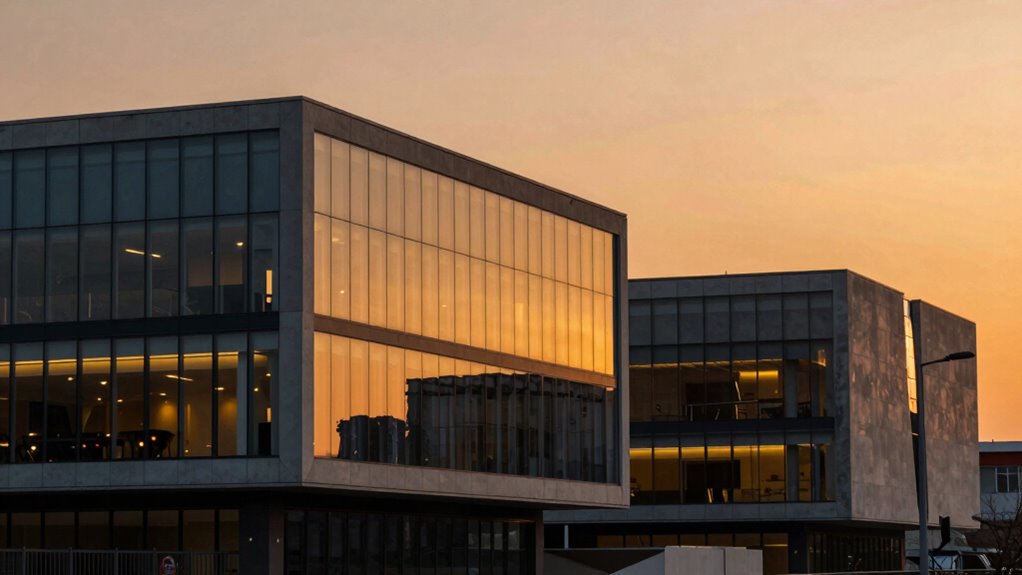
Have you ever wondered how the direction your building faces can influence its comfort? The orientation of a building plays an essential role in how it interacts with the environment, directly affecting your daily experience inside. When a building is positioned thoughtfully, it can maximize benefits like solar gain and ventilation efficiency, making your space more comfortable and energy-efficient. For instance, facing windows toward the sun can increase solar gain during colder months, naturally warming your interior without relying heavily on heating systems. This passive solar design not only keeps you cozy but also reduces energy costs. Conversely, avoiding excessive sun exposure during summer can prevent overheating, which is why shading devices or strategic orientation are vital. By understanding how the sun moves across the sky, you can optimize your building’s placement to harness its warmth when needed and block it when it’s too intense. Proper building orientation can also improve the effectiveness of natural ventilation by aligning openings with prevailing wind directions, further enhancing comfort and energy savings. Additionally, being aware of local climate conditions can help tailor your building’s orientation for maximum comfort in different seasons. Recognizing the importance of local wind patterns can further refine how you position openings for optimal airflow. Ventilation efficiency is another key factor influenced by building orientation. Proper positioning allows for better air flow, helping to keep indoor spaces fresh and comfortable. For example, aligning windows and vents to catch prevailing breezes can enhance cross-ventilation, reducing the need for mechanical cooling and improving air quality. When your building is oriented to maximize natural ventilation, you benefit from a consistent flow of fresh air, which can markedly cut down on energy consumption and create a healthier environment. Additionally, the placement of openings in relation to wind patterns influences how effectively air moves through your space. By orienting your building with an eye on local wind directions, you ensure that cool air enters and warm air exits efficiently, maintaining a comfortable atmosphere without the constant use of fans or air conditioning. Incorporating passive design principles based on local environmental factors can further optimize your building’s long-term comfort and efficiency.

VANTROPHIX 3.6W 5V Solar Panel for Motorized Blinds and Shades
- High-Efficiency Solar Cells: Delivers 720mA with 23% conversion rate
- Universal Dual-Port Compatibility: Includes USB-C and Micro USB adapters
- Suitable for Various Devices: Compatible with smart shades and lithium motors
As an affiliate, we earn on qualifying purchases.
As an affiliate, we earn on qualifying purchases.
Frequently Asked Questions
How Does Building Orientation Affect Indoor Air Quality?
Building orientation greatly impacts indoor air quality by influencing indoor airflow and ventilation patterns. When your building faces prevailing winds or open spaces, fresh air circulates better, reducing indoor pollutants. Proper orientation helps create effective ventilation, which expels stale air and brings in cleaner, outdoor air. As a result, you experience improved indoor air quality, lower risks of airborne contaminants, and a healthier, more comfortable indoor environment.
Can Orientation Influence Noise Levels Inside a Building?
Yes, orientation can influence noise levels inside a building. By positioning the building to minimize exposure to exterior noise sources, you can enhance sound insulation. For example, facing away from busy streets reduces exterior noise intrusion, creating a quieter indoor environment. Proper orientation helps you control sound infiltration, making spaces more comfortable and peaceful. This strategic placement ensures that exterior noise doesn’t compromise your indoor tranquility.
What Role Does Climate Play in Optimal Building Orientation?
Climate greatly influences your building’s ideal orientation. You’ll want to maximize solar gain in colder climates by facing windows toward the sun, while minimizing it in hotter areas to reduce cooling needs. Wind flow also matters; aligning your building to capture prevailing breezes can enhance natural ventilation. By considering these factors, you improve comfort and energy efficiency, ensuring your space remains cozy or cool, depending on your climate’s demands.
How Does Orientation Impact Energy Costs During Different Seasons?
Your building’s orientation directly impacts energy costs across seasons by influencing solar gain and wind flow. In winter, facing south maximizes solar gain, reducing heating needs, while in summer, shading and proper orientation minimize unwanted heat. Good orientation also directs wind flow to naturally cool the building, lowering cooling costs. By strategically positioning your building, you can optimize energy efficiency year-round, saving money and enhancing comfort through better management of solar gain and wind flow.
Are There Cultural or Aesthetic Considerations Related to Building Orientation?
Building orientation is like a dance of cultural symbolism and aesthetic harmony, shaping your space’s identity. You consider cultural meanings behind directions—like honoring ancient traditions—and craft a design that feels visually balanced. By aligning your building thoughtfully, you create a space that resonates deeply, blending cultural stories with beauty. This mindful orientation not only honors heritage but also elevates your environment’s aesthetic appeal, making it both meaningful and enthralling.
Conclusion
By paying attention to building orientation, you subtly invite greater comfort into your space. Small adjustments can lead to a more harmonious environment where natural light and breezes gently nurture your well-being. Embracing these changes isn’t just about comfort—it’s about nurturing a space that softly supports your daily life. Sometimes, the key to a more pleasant experience lies in quiet, thoughtful shifts that remind us comfort is often a gentle, ongoing journey.