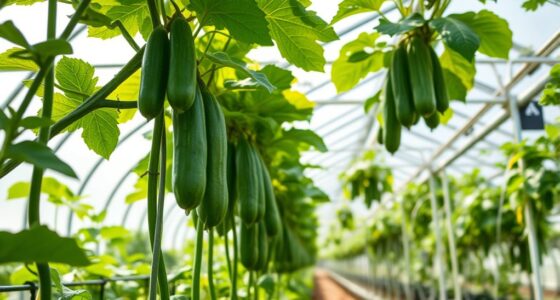
A truly suitable greenhouse for year-round food growing maintains a stable environment with proper insulation, efficient heating, and cooling to regulate temperature and humidity. It relies on natural sunlight supplemented by adjustable grow lights, ensuring your plants get enough light year-round. Water and nutrient delivery systems like hydroponics keep your crops healthy and fast-growing, while automated ventilation prevents excess moisture and pests. Keep exploring to discover how all these elements work together for successful year-round farming.
Key Takeaways
- Effective climate regulation maintains optimal temperatures and humidity for consistent plant growth year-round.
- Adequate lighting, combining natural sunlight and grow lights, supports continuous photosynthesis.
- Advanced water and nutrient delivery systems ensure healthy crops with minimal environmental impact.
- Proper air circulation and ventilation prevent disease and ensure even distribution of heat and light.
- Integrated pest management strategies protect crops without harmful chemicals, ensuring sustainable production.
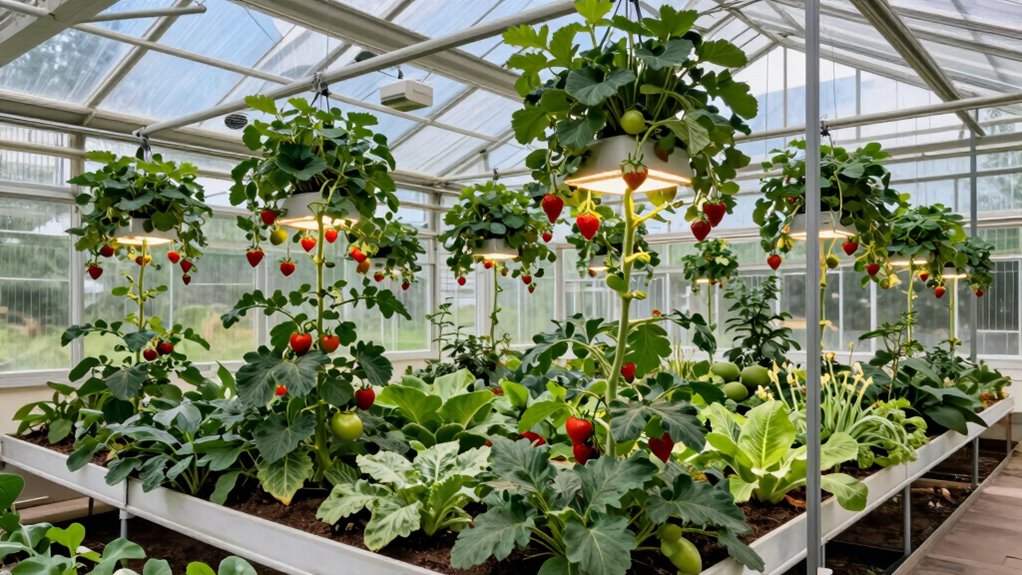
Have you ever wondered how to cultivate fresh vegetables and herbs all year long, regardless of the season? A truly suitable greenhouse makes this possible by creating an ideal environment where plants thrive regardless of outside weather. One key factor is climate regulation; you need a structure that can maintain stable temperatures and humidity levels, preventing frost in winter and excessive heat in summer. Proper insulation, combined with efficient heating and cooling systems, ensures your greenhouse remains consistently favorable for plant growth.
Next, consider lighting. Natural sunlight is essential, but it’s often not enough, especially in winter months. Installing supplemental grow lights ensures your plants receive adequate light for photosynthesis year-round. These lights should be adjustable to mimic natural day-night cycles, promoting healthy growth. With reliable lighting and climate regulation, you’re setting the stage for continuous harvests.
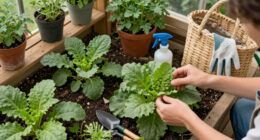
Another critical aspect is water and nutrient delivery systems. Hydroponic systems are increasingly popular because they allow you to grow plants without soil, using nutrient-rich water solutions. This method not only conserves space but also accelerates plant growth and simplifies pest management. Since hydroponic setups are contained, you can better prevent pests and diseases, reducing the need for pesticides and chemicals. This integration ensures healthier produce and less environmental impact.
Air circulation and ventilation are equally vital. Proper airflow prevents the buildup of excess humidity and reduces the risk of mold and fungal diseases. Automated ventilation systems can be programmed to maintain ideal air quality, which is essential for healthy plant development. Good airflow also helps distribute heat and light evenly throughout your greenhouse, ensuring every plant gets what it needs. Implementing air circulation strategies can significantly enhance overall plant health and productivity. Additionally, incorporating climate regulation technologies such as automated sensors and controllers can further optimize environmental conditions, making year-round cultivation more feasible and consistent. Investing in environmental controls can greatly improve the efficiency and stability of your greenhouse environment.
Lastly, a well-designed greenhouse considers pest management strategies. While the controlled environment minimizes pest problems, it’s wise to include physical barriers like screens and filters, especially around vents and doors. Regular monitoring, combined with integrated pest management practices, keeps pests at bay without relying heavily on chemicals. This approach preserves the integrity of your crops and aligns with sustainable growing practices. Proper pest management methods are essential for maintaining a healthy and productive greenhouse environment.
In short, a greenhouse suitable for year-round food growing combines effective climate regulation, supplemental lighting, advanced hydroponic systems, proper ventilation, and smart pest management. When these elements work together seamlessly, you create a resilient environment where your vegetables and herbs flourish, no matter the season outside.

BIBISTORE Solar Automatic Window Opener for Greenhouse Heat Sensitive Auto Greenhouse Vent Opener Greenhouse Accessories Hothouse Roof Vent Kit-Lifts 15 Lbs
- Durable Powder-Coated Frame: Rust-resistant black finish
- Solar Powered Operation: Eco-friendly, zero operating cost
- Easy Installation: Includes clamps and screws
As an affiliate, we earn on qualifying purchases.
As an affiliate, we earn on qualifying purchases.
Frequently Asked Questions
How Do I Choose the Best Location for My Year-Round Greenhouse?
You should choose a location with ideal sunlight, ideally south-facing, to maximize photosynthesis. Consider your garden design to guarantee easy access and proper airflow, which keeps plants healthy. Water management is essential—place your greenhouse near a reliable water source and ensure proper drainage. Avoid shaded areas or spots prone to strong winds or frost. A well-chosen location boosts productivity and creates a sustainable environment for year-round food growing.
What Are the Most Cost-Effective Heating Options for Winter?
Heating hassles? Consider cost-effective solar solutions and superb thermal insulation. Solar heating captures the sun’s sustainable, steady warmth, saving money over time. Pair it with thermal insulation to trap that heat inside, reducing energy loss and keeping your greenhouse cozy. This dynamic duo guarantees efficient, eco-friendly warmth during winter, lowering costs and maximizing plant growth potential. You’ll enjoy a warmer, greener garden without breaking the bank.
How Can I Optimize Natural Light Inside My Greenhouse?
To optimize natural light inside your greenhouse, use solar shading to control excess heat and glare, ensuring better light distribution. Install light reflectors on the interior surfaces to bounce sunlight deeper into the space, maximizing light exposure for your plants. Position your greenhouse to maximize sunlight during the day, and keep windows clean for unobstructed light entry. These steps help create a bright, efficient environment for year-round food growing.
What Pest Control Methods Are Suitable for Continuous Growing?
For continuous growing, you should implement integrated pest control methods like biological controls and regular monitoring, combined with effective composting strategies to reduce pest habitats. Practice plant disease management by removing infected plants promptly and maintaining proper airflow. Rotate crops regularly to prevent pest buildup, and keep your greenhouse clean. These proactive steps help keep pests and diseases at bay, ensuring your plants stay healthy and productive year-round.
How Do I Maintain Consistent Humidity Levels Year-Round?
You can maintain consistent humidity levels year-round by focusing on humidity management and ventilation strategies. Did you know that proper ventilation can reduce humidity by up to 20%, preventing mold and plant stress? Use exhaust fans, adjustable vents, and humidifiers to control moisture. Regularly monitor humidity with a hygrometer, and adjust ventilation accordingly. This balance keeps your greenhouse environment stable, supporting healthy, continuous food growth throughout the year.
Conclusion
To create a greenhouse that truly supports year-round food growing, you must master the art of balancing insulation, ventilation, and lighting. Think of your greenhouse as a nurturing sanctuary—where every element works in harmony, like a symphony that plays in perfect tune. When you optimize these factors, you’re not just growing food; you’re cultivating a resilient oasis, a proof to your dedication and nature’s endless bounty, no matter the season.