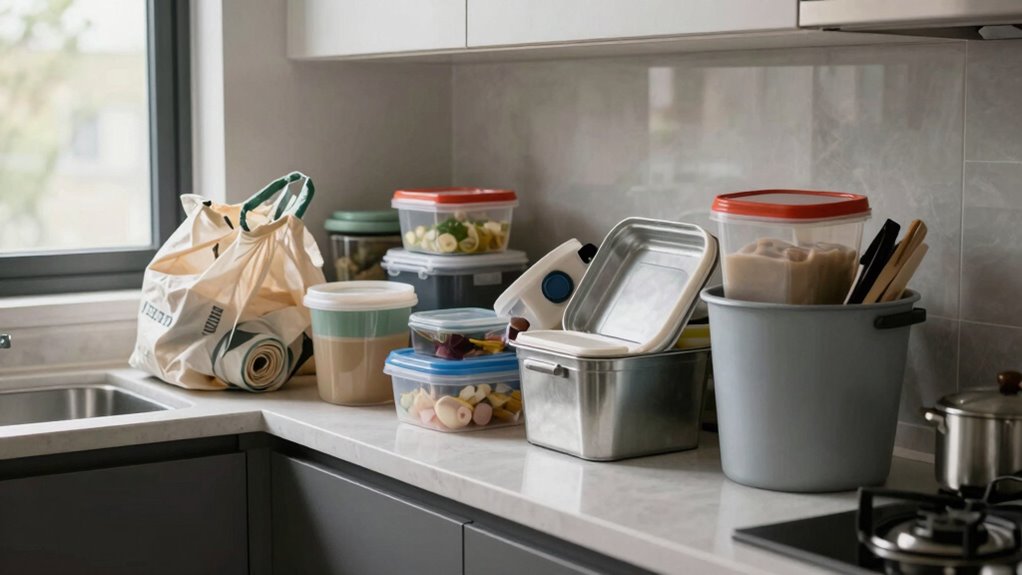

Without convenience, reuse systems often fail because they’re difficult or time-consuming to use, discouraging your participation. Complex processes or hidden resources make it hard to integrate reuse into your daily routine, leading to neglect. Lack of proper infrastructure and clear communication creates physical and organizational barriers, stopping your efforts. Social support and incentives are also essential, but without an easy system in place, sustained engagement drops off. Keep going to discover how thoughtful design can turn this around.

Get garden gear delivered free with Prime
- Fast, free delivery on millions of items
- Prime Video, Amazon Music and more included
- Member-only deals all year
Key Takeaways
- Lack of convenience discourages user participation, leading to low reuse system adoption.
- Complex or time-consuming processes cause users to abandon reuse efforts.
- Insufficient infrastructure makes reuse options inaccessible or inconvenient.
- Poor communication and unclear procedures create confusion, reducing ongoing engagement.
- Without integration into daily routines, reuse systems fail to become habitual or sustainable.

Reuse systems often falter because they lack convenience, making it harder for people to adopt sustainable habits. When systems aren’t easy to use or seamlessly integrated into daily routines, behavior change becomes an intimidating challenge. You might want to do your part by recycling or reusing, but if the process is complicated or time-consuming, it’s easier to ignore it altogether. The key to successful reuse initiatives isn’t just about having the right ideas; it’s about making those ideas accessible and straightforward enough to fit into everyday life. That’s where infrastructure support plays a crucial role. Without proper infrastructure—like conveniently located collection points, clear signage, or accessible reuse stations—people won’t feel motivated to participate. It’s not enough to tell someone to reuse; you need to give them the means to do so efficiently.
Think about it: if reusable containers or bins are hidden away or require multiple steps to access, you’re less likely to bother. Convenience reduces friction, making it more attractive for you to make sustainable choices without feeling burdened. When infrastructure is thoughtfully designed, it acts as a facilitator for behavior change. For example, having curbside pickup for reusable items or providing easy-to-use drop-off stations encourages consistent participation. When these systems are integrated into your routine and require minimal effort, reuse becomes habitual instead of optional. Without this support, even the most motivated individuals will find it hard to sustain these habits over time. Infrastructure support is also essential in overcoming physical and organizational barriers that might otherwise discourage participation. A user-centered design approach ensures that systems are tailored to actual user needs, increasing the likelihood of ongoing engagement.
Convenient access and seamless integration turn reuse into a habitual, effortless part of daily life.
Moreover, the failure of reuse systems isn’t solely about physical infrastructure; it also involves social and organizational support. Clear communication, incentives, and education help reinforce the habit. If you’re unsure where to drop off a reusable item or if the process isn’t well-publicized, you might give up before even trying. Infrastructure support bridges this gap by making the process intuitive and accessible, consequently reinforcing positive behavior change. Without it, people are left to navigate confusing or inconvenient procedures, which discourages ongoing participation. Additionally, a well-designed system considers behavioral psychology to better motivate and sustain user engagement.
Ultimately, the success of reuse initiatives hinges on how well systems are designed to support behavior change through convenience. When infrastructure is thoughtfully implemented, it aligns with your daily habits, making reuse a natural part of your routine. Convenience isn’t a luxury—it’s a necessity for widespread adoption. Without it, even the most well-intentioned efforts fall flat, and reuse systems remain ineffective. To truly promote sustainability, systems must prioritize ease and accessibility, ensuring that everyone can participate effortlessly.
reusable container drop-off stations
As an affiliate, we earn on qualifying purchases.
As an affiliate, we earn on qualifying purchases.
Frequently Asked Questions
How Can Reuse Systems Be Integrated Into Daily Routines Effectively?
You can integrate reuse systems into your daily routine by making it a habit. Start small, like carrying reusable bags or bottles, and set behavioral incentives, such as rewarding yourself for consistent use. Use reminders or cues to trigger your actions, and gradually, these actions become second nature. The key is to stay consistent and find motivation, turning reuse into an effortless part of your everyday life.
What Are the Costs Associated With Implementing Reuse Systems?
Implementing reuse systems involves some “investment in innovation,” which means facing recycling challenges and conducting a thorough cost analysis. You’ll need to take into account initial setup costs, ongoing maintenance, and education efforts. While these expenses might seem significant upfront, they often lead to long-term savings and sustainability benefits. By understanding these costs, you can better plan and guarantee your reuse system becomes a seamless part of daily life.
How Do Cultural Differences Impact Reuse System Adoption?
Cultural barriers and adoption resistance considerably impact reuse system adoption. You might face skepticism or discomfort if reuse norms clash with local traditions or values, making people hesitant to change habits. To succeed, you need to address these cultural differences by fostering awareness and showing benefits that resonate locally. Overcoming resistance involves engaging communities, respecting customs, and demonstrating how reuse aligns with their beliefs, encouraging more widespread acceptance.
What Role Does Government Policy Play in Promoting Reuse?
Government policy acts like a guiding compass, steering reuse systems toward success. Policy incentives encourage you to participate, making reuse easier and more appealing. Conversely, regulatory barriers create hurdles, like tangled vines blocking your path. When policies are clear and supportive, they foster a culture of reuse, transforming waste into resources. You’ll find it easier to embrace reuse practices, helping the environment and building sustainable communities.
How Can Businesses Measure the Success of Reuse Initiatives?
You can measure the success of reuse initiatives by tracking changes in consumer behavior and analyzing incentive structures. Monitor how often customers opt for reusable options and gather feedback on their experiences. Use incentive-based metrics, like discounts or rewards, to see if they boost participation. If reuse rates increase and customer engagement improves, your initiatives are working. Regularly evaluate these indicators to refine your strategies and promote sustainable habits effectively.
Conclusion
So, next time you hesitate to reuse because it feels like a hassle, remember: convenience is the real hero—or villain. Ironically, the very system designed to save resources fails when it’s not easy enough to embrace. Your effort to be eco-friendly might be thwarted by a tiny inconvenience, proving that sometimes, the simplest way out is just to stick with the wasteful norm. Convenience isn’t just a luxury; it’s the secret ingredient for change—or its demise.
Fall yard work Picks
leaf blowers
As an affiliate, we earn on qualifying purchases.