TL;DR

Get garden gear delivered free with Prime
- Fast, free delivery on millions of items
- Prime Video, Amazon Music and more included
- Member-only deals all year
Gardening Know How recommends five October tasks to prepare clematis for winter: prune only dead, diseased or damaged growth, secure loose stems, remove powdery mildew, water before the ground freezes and mulch. The report cautions that pruning needs depend on the vine’s flowering group, and it does not provide region-specific timing or advice for every climate.
Gardening Know How has published a five-task October checklist for preparing clematis vines for winter, advising gardeners to make only limited cuts, secure loose stems, remove mildew-affected foliage, water the soil and add mulch. The guidance matters because fall pruning can remove growth that would otherwise flower next year, and the appropriate pruning approach depends on the clematis variety.
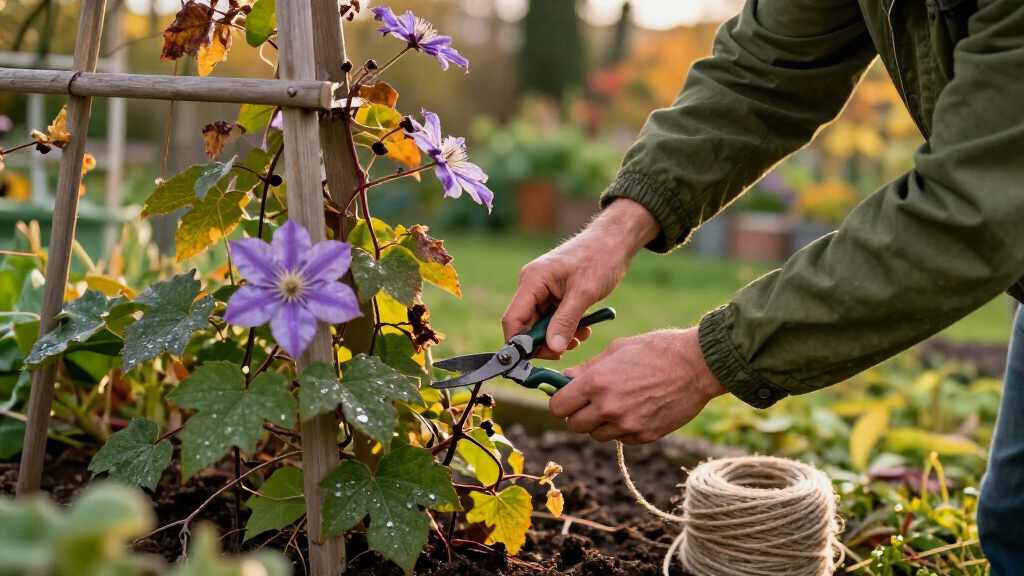
The report’s first recommendation is a restrained health check with pruners: remove dead, diseased or damaged stems, along with growth that is causing a practical problem. It warns against heavily pruning clematis in October without first identifying its flowering group. Group 1 varieties bloom on old wood in spring, while Group 2 varieties flower on old and new growth; cutting their stems now can reduce later blooms. Group 3 varieties flower on new growth and can tolerate a light fall trim, but the report says to leave their main structural pruning until February or March.
The second task is to tie loose stems to their support and check that existing ties are secure. The report says exposed or poorly secured vines may be vulnerable to strong winds and snapped stems. Its third recommendation is to inspect leaves for powdery mildew, which appears as a dusty white coating. It advises removing affected foliage, collecting infected plant material from the ground and disposing of it rather than adding it to compost. It also recommends disinfecting pruners with isopropyl alcohol after handling diseased foliage.
The remaining tasks are to water the soil before it freezes and mulch around the plant. The source describes these as part of preparing the vine for winter, but the supplied report text does not give a watering volume, mulch depth or specific timing by climate. It also suggests deadheading sweet autumn clematis after flowering if gardeners want to limit self-seeding, since the plant can spread through seed.
Protecting Next Season’s Flowers
The checklist focuses on reducing avoidable winter damage while preserving the growth that produces flowers. Knowing the clematis group is central to pruning: a broad autumn cut may remove buds or stems needed for a spring display on varieties that flower on old wood. For late-flowering Group 3 clematis, a light tidy is different from the larger cutback the report schedules for late winter.
Securing stems and removing diseased leaves are practical maintenance steps, but the article does not promise a particular survival rate or flowering result. Its central point is that care should be limited and matched to the plant, rather than applying the same pruning schedule to every clematis.
As an affiliate, we earn on qualifying purchases.
Pruning Depends on Flowering Group
The Gardening Know How report divides clematis into three broad pruning groups. Group 1 blooms in spring on the previous year’s growth; examples named include montana and armandii. The report says major pruning for these plants should take place after flowering in late spring or early summer, not as a heavy October cut.
Group 2 flowers in May and June, sometimes with another flush later in summer, on both old and new growth. The source names ‘Nelly Moser’ and ‘Josephine’ and says pruning at this point could reduce the first flush. Group 3 clematis bloom from mid-summer into fall on new growth; jackmanii and tangutica are examples in the report. For these, it describes a light autumn trim as acceptable while reserving the main cutback, to about 8 to 12 inches above the ground, for February or March.
“While no clematis should be heavily pruned in fall, it’s never a bad idea to do the 3-Ds trim, cutting back dead, diseased or damaged stems.”
— Gardening Know How
Local Conditions Affect the Schedule
The supplied report does not state a publication date, identify an author or provide separate guidance for particular regions. It gives broad seasonal timing but does not specify how to adjust watering and mulching for soil type, rainfall, plant age or local freeze dates. It also does not give a mulch depth or explain how gardeners should identify an unknown variety beyond its flowering period. Those details may affect how readers apply the checklist.
The recommendations are general gardening guidance, not a guarantee that a vine will survive winter or flower well the following year. The right pruning choice remains dependent on the clematis group; where that is unknown, the report’s warning against heavy fall pruning is relevant.
Check the Vine Through Winter
Gardeners following the report can start by identifying when their clematis flowers, then remove only clearly dead, diseased or damaged growth in October. They can secure loose stems, clear mildew-affected material, water before the ground freezes and mulch the soil. Group 3 growers should leave the main cutback until February or March, while major pruning for Group 1 is timed after spring flowering, according to the report.
Further care will depend on local weather and the plant’s condition. The source does not announce a follow-up study or a later update; its immediate advice is to revisit the vine as winter approaches and use the appropriate seasonal pruning window.
Key Questions
Should all clematis be pruned in October?
No. The report advises against heavy autumn pruning. Remove dead, diseased or damaged stems, and identify the plant’s flowering group before making larger cuts.
How can I tell which clematis pruning group I have?
The report uses flowering time as a guide: spring-flowering vines are generally Group 1, May-to-June bloomers that may flower again are Group 2, and mid-summer-to-fall bloomers are Group 3. If you are unsure, avoid a heavy fall cut until you can identify the variety or confirm its flowering pattern.
What should I do about powdery mildew on clematis?
Gardening Know How recommends removing affected leaves, collecting fallen infected material and disposing of it rather than composting it. Disinfect pruners with isopropyl alcohol after cutting affected foliage, the report says.
When should Group 3 clematis get its main prune?
The report says Group 3 vines can receive a light autumn trim, but the main structural cutback should wait until February or March. It describes cutting stems to about 8 to 12 inches above the ground.
Source: rss
Halloween Picks
halloween
As an affiliate, we earn on qualifying purchases.