TL;DR

Get garden gear delivered free with Prime
- Fast, free delivery on millions of items
- Prime Video, Amazon Music and more included
- Member-only deals all year
Grow Organic has published a guide to growing olive trees at home, focusing on climate, drainage, suitable varieties and care from planting through harvest. It says gardeners should check local cold conditions and pollination needs, and use tested food-preservation instructions before eating or storing cured olives.
Grow Organic’s olive-growing guide explains how home gardeners can plant and care for olive trees, while warning that keeping a tree alive does not guarantee a reliable fruit harvest. The report identifies climate, soil drainage, cultivar choice and pollination as factors that can affect whether trees flower and set fruit.
The guide describes the edible olive, Olea europaea, as an evergreen tree whose small flowers develop into fleshy fruits containing a hard stone. Olives form on growth from the previous season, so heavy pruning can remove wood needed for a future crop. The report recommends choosing a fruiting cultivar rather than a fruitless ornamental tree and checking its mature size, ripening period, table or oil qualities, and pollen compatibility.
Olives generally suit full sun and well-drained soil. Grow Organic advises gardeners to check expected winter lows and local temperature swings rather than relying only on a broad climate label. Cold tolerance varies with the cultivar, the tree’s age and its acclimation. In areas with warm winters, insufficient winter chilling can also limit flowering, according to the guide.
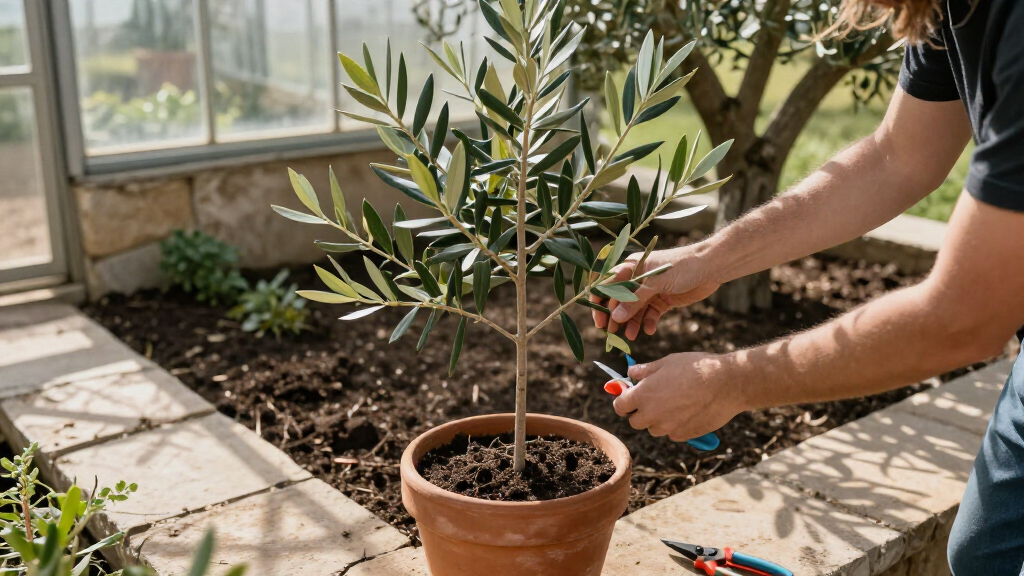
For planting, the report recommends waiting until the risk of severe frost has passed, digging a hole no deeper than the root ball, and keeping the root flare near the soil surface. Water young trees regularly as their roots establish, then let soil drain between deep waterings. Container-grown trees need pots with drainage holes and a freely draining mix; they may dry more quickly in hot or windy conditions. The guide advises testing soil or leaves and consulting local guidance before changing fertilizer, since excess nitrogen can favor leafy growth over fruit.
Getting Fruit From a Garden Olive
The guide’s main practical point is that olive survival and olive production are different outcomes. A tree may remain alive through dry conditions yet produce poorly if it faces unsuitable winter temperatures, wet soil, inadequate light, or pollination limits. That distinction matters to gardeners deciding whether to plant an olive in the ground or invest in a container and a particular cultivar.
Pollination can affect harvest expectations. The report says some cultivars can set fruit alone, while others may benefit from a compatible second cultivar that blooms at the same time. Olives are wind-pollinated; two trees of the same cultivar do not provide genetic diversity. Gardeners should check cultivar-specific descriptions and seek local Extension advice before selecting trees, especially where space or climate limits their options.
Harvesting also requires care beyond growing the tree. Olives are intensely bitter when fresh and need appropriate curing before eating. Grow Organic advises following a tested university or government preservation recipe, including its specified proportions, acidity or salt requirements, processing times and storage directions. The report warns against assuming homemade brine alone makes olives safe for shelf-stable storage.
olive tree fertilizer for home garden
As an affiliate, we earn on qualifying purchases.
As an affiliate, we earn on qualifying purchases.
From Site Choice to Harvest
The report frames olive growing as a sequence of decisions, beginning with the garden site. Mediterranean regions offer the familiar pattern of warm, dry summers and cool winters, but the guide says local extremes matter more than a general climate description. Gardeners are directed to consider winter lows, summer conditions and cultivar-specific hardiness; the source also refers readers in colder regions to its separate Zone 7 guidance.
Once established, olive trees can tolerate drought, but the guide distinguishes drought tolerance from the water needed for dependable fruit production. Young trees need moisture while roots spread. Water deeply, check soil moisture during the growing season and allow drainage before watering again rather than following a fixed calendar. Pruning should remain restrained: remove dead or crossing branches and unwanted shoots while preserving fruiting growth and allowing light into the canopy.
The guide also covers monitoring and propagation. Olive fruit fly larvae can tunnel into fruit where the pest occurs, while Verticillium wilt may cause branch decline; drought or root trouble can produce similar symptoms. It recommends local diagnosis before treatment and says pesticides should be used only when labeled for olives and the identified problem. For seed propagation, it cites Royal Horticultural Society advice to abrade fresh, untreated seed, soak it for 24 hours, and sow it about three-quarters of an inch deep in moist, not waterlogged, mix kept at 65–70°F. Seedlings may differ from the parent tree.
““Keeping a tree alive does not always mean it will bear well.””
— Grow Organic guide
Local Conditions Shape Results
The supplied report does not identify a single cultivar or care schedule that will work for every home garden. Cold tolerance, flowering and fruit set vary by cultivar and local conditions, and the source provides no location-specific forecasts or planting recommendations for an individual reader’s yard. It also does not state the publication date, report any measured harvest outcomes, or give a universal watering or fertilizing schedule.
Some risks depend on location: olive fruit fly is relevant where the pest occurs, and symptoms attributed to Verticillium wilt may have other causes. The report recommends contacting an Extension office for diagnosis rather than treating suspected disease without confirmation. It does not specify a particular curing method or preservation recipe; readers must select tested instructions suited to the olives and storage method they plan to use.
Check Conditions Before Planting
For gardeners considering an olive, the guide’s next steps are to check local winter temperatures and summer conditions, confirm that the planting site drains well, and select a fruiting cultivar suited to the area. Review whether it needs a compatible pollinator and whether there is room for its mature size. After planting, monitor soil moisture, preserve fruiting wood when pruning, and record flowering and harvest dates to inform care in later seasons.
Before eating or storing a harvest, identify an appropriate tested preservation recipe and follow its complete instructions. Where pests, disease symptoms or local hardiness remain uncertain, seek advice from a regional Extension service or other qualified local source.
Key Questions
Do olives grow on trees or vines?
Olives grow on evergreen trees, specifically Olea europaea. Their flowers develop into fleshy fruit with a hard stone inside.
Can one olive tree produce fruit?
Some cultivars can set fruit on their own, while others may need pollen from a compatible cultivar with overlapping bloom. Check the requirements for the specific variety.
How should I water a young olive tree?
Water deeply while its roots establish, then let the soil drain before watering again. Check moisture during the growing season instead of relying on a fixed schedule; containers may dry faster.
Can fresh olives be eaten straight from the tree?
The guide says fresh olives are intensely bitter and need appropriate curing. For preservation, follow a tested university or government recipe and its full ingredient, processing and storage directions.
Will an olive tree grown from seed match its parent?
Not necessarily. The guide says seedlings may differ from the parent, while named nursery plants offer more predictable fruit traits.
Source: rss
Halloween Picks
halloween
As an affiliate, we earn on qualifying purchases.