
TL;DR

Get garden gear delivered free — and shop member deals
- Fast, free delivery on millions of items
- Access to Prime Big Deal Days deals on October 6–7
- Prime Video, Amazon Music and more included
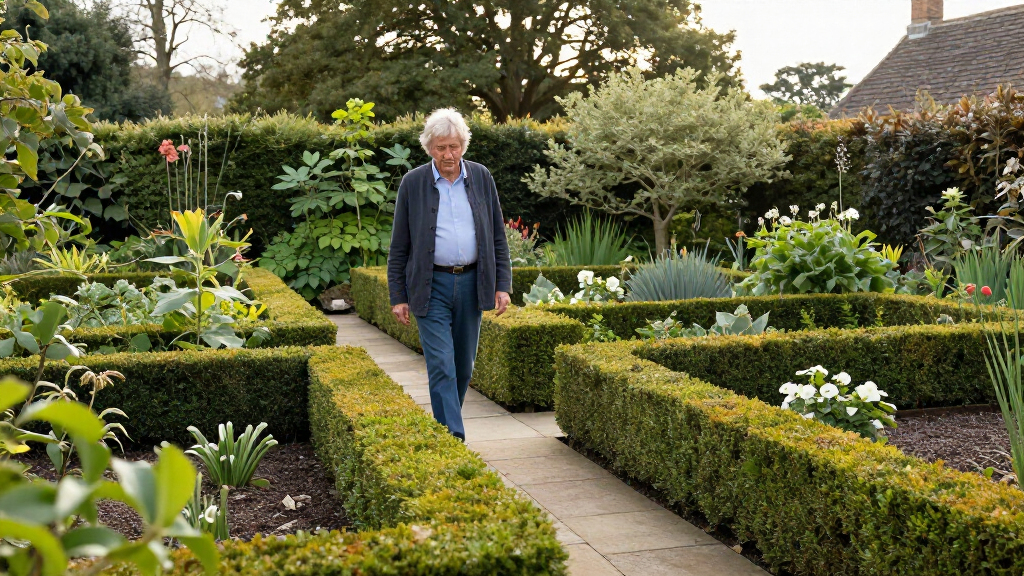
Richard E. Grant’s garden uses repeated topiary hedges to distinguish areas such as a seating space while keeping the overall garden visually connected. Garden designers say hedging can add year-round structure and shelter, but it takes time to establish and needs regular trimming.
Richard E. Grant’s garden uses repeated topiary hedges to separate areas, including a seating space, while keeping the outdoor design connected. An Ideal Home report presents the approach as an example of garden zoning that can provide structure and evergreen colour, while noting that hedges take time to grow and require maintenance.
The report describes a garden with topiary hedging used as a recurring boundary between different areas. Rather than applying a different divider in each section, the repeated planting gives the garden distinct “rooms” without making them feel disconnected. The article also mentions eclectic decorations, including baubles in trees, alongside evergreen planting.
Garden designer Michael Wheat, founder of Ponds by Michael Wheat, says using one repeated material helps the garden read as a unified space. He describes the approach as one that can age well because it does not rely on a trend-specific feature. The report does not provide measurements, a planting plan or details about the hedge species in Grant’s garden.
Horticultural expert Richard Barker, commercial director of LBS Horticulture, says evergreen plants help the garden stay green throughout the year. He also points to trade-offs: hedges can take years to reach their full height and are less straightforward to move than some other dividers if a garden’s layout changes.
How Hedges Shape Garden Rooms
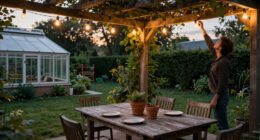
The example matters to homeowners because garden zoning can give different parts of an outdoor space clear purposes without relying on solid fencing. A low hedge can mark a boundary while leaving views open; a taller, denser hedge can create more separation and privacy. The report says zones might be set aside for seating, growing or wildlife, with paths linking them.
Wheat argues that dividing a garden can make a small plot feel more engaging by encouraging people to move through it rather than taking in one uninterrupted view from the house. That is an expert’s design view, not a measured claim about how much larger a garden will feel. The underlying practical point is that a boundary can help define where activities belong, including placing dining areas to suit sunlight or screening a working area.
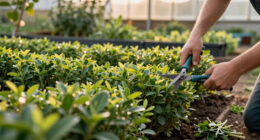
Hedges can also contribute to shelter for birds and insects, and dense planting may help buffer noise and wind, according to the report. Those benefits depend on the plants, their maturity and site conditions. Evergreen varieties can retain visual structure through winter, but they do not remove the time and upkeep involved in establishing and shaping a hedge.
As an affiliate, we earn on qualifying purchases.
The Trade-Off Behind Topiary
The Ideal Home article places Grant’s hedging within a wider discussion of garden design, rather than reporting a new installation or announcement by the actor. It describes the garden as highly personalised, with features such as wisteria and decorative baubles, and focuses on how repeated hedges bring order to that eclectic setting.
According to Wheat, yew is a traditional topiary choice, but it takes years rather than a single growing season to reach the desired size and may need cutting once or twice a year to retain a crisp form. He says box can establish more quickly, but box blight and box moth have made it a risk. He suggests hornbeam as an option that can establish sooner and retain brown leaves over winter, offering screening even when it is not green.
The article also describes hedging as a natural alternative to fencing, while acknowledging that it is not as easy to relocate if the layout changes. Trellis with climbing plants and freestanding privacy screens are mentioned as alternatives for people who want boundaries without committing to maintained hedges. The source does not compare their costs or performance.
“He has used one material to do the dividing rather than a different treatment in every area, so the garden reads as one place with rooms in it, not as a set of unrelated patches.”
— Michael Wheat, garden designer and founder of Ponds by Michael Wheat
What the Garden Report Leaves Open
The source does not state when the report was published, when Grant’s hedges were planted or what species are used in his garden. It also does not provide a direct comment from Grant about the planting or confirm whether he designed or installed the hedging himself.
Claims about how zoning affects the perceived size or usefulness of a garden are attributed to Wheat, while the environmental and wildlife benefits are presented as expert comments. The report provides no measurements or study data to quantify those effects. The time required for a hedge to establish will also vary with species and growing conditions; no specific timetable is given for Grant’s planting.
Choosing a Boundary for Your Plot
The article offers no announced next step from Grant. For readers considering a similar layout, the practical next decision is whether they want a living hedge that will take time to establish, or a more flexible boundary such as trellis or a privacy screen. The report advises weighing the desired height and year-round appearance against growth time and trimming needs.
Anyone choosing plants would need to check which species suit their site and local conditions, then plan for ongoing care. The report does not give planting instructions or a maintenance schedule beyond Wheat’s general advice that yew may need cutting once or twice a year.
Key Questions
How does Richard E. Grant use hedges in his garden?
The report says repeated topiary hedges divide the garden into distinct areas, including a seating space, while keeping the design visually consistent.
Can garden zoning work in a small space?
Wheat says zoning can be useful in a small garden by creating separate areas and encouraging movement through the plot. This is a design perspective, not a guarantee that a garden will feel larger.
What are the drawbacks of topiary hedges?
Hedges can take years to reach their full height and need trimming to maintain a neat shape. They are also harder to move than temporary screens if the layout changes.
Which hedge plants does the report discuss?
Wheat identifies yew as a classic choice, notes risks affecting box, including blight and box moth, and says hornbeam can establish sooner and retain brown leaves over winter. The report does not specify which species are planted in Grant’s garden.
What can I use instead of hedging to divide a garden?
The article mentions trellis with climbing plants and decorative privacy screens as alternatives for creating boundaries without maintaining a hedge.
Source: rss
Fall yard work Picks
leaf blowers
As an affiliate, we earn on qualifying purchases.