TL;DR

Get garden gear delivered free with Prime
- Fast, free delivery on millions of items
- Prime Video, Amazon Music and more included
- Member-only deals all year
A Rural Sprout article makes the case for growing amaranth, a flowering annual in the Amaranthus genus, as both an ornamental and an edible plant. It describes eating the sprouts, leaves and seeds, and says the plant can self-seed; growing conditions, yields and nutritional comparisons are not detailed in the supplied material.
Rural Sprout has published a guide arguing that amaranth can serve as both a garden ornamental and a food crop, with edible sprouts, leaves and seeds. The article focuses on plants in the genus Amaranthus and says they can also self-seed, potentially reducing the need to sow them again in later seasons.
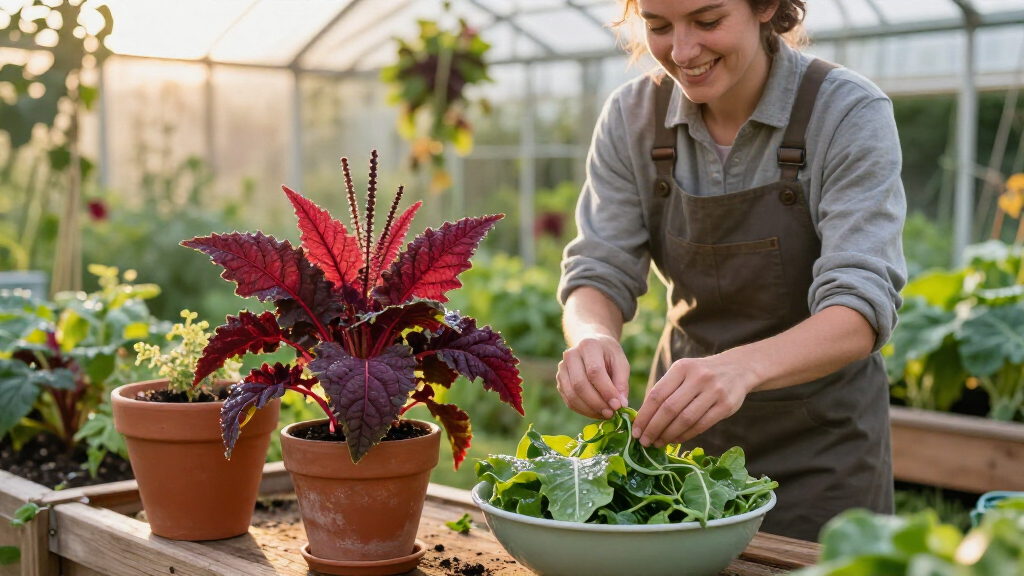
The report presents amaranth as an edible ornamental, or “edimental”: a plant grown for appearance as well as food. It describes amaranth’s summer flowers and foliage as decorative, while emphasizing that several parts of the plant can be harvested at different points in its annual growth cycle.
According to the article, sprouts and young leaves can be eaten raw, with the leaves used in salads, sandwiches or pesto. It says older leaves can be cooked in soups, stir-fries and curries, though they become tougher as they mature. Both green- and red-leaf forms are described as edible.
The article also points to the plant’s seeds as a food crop and describes amaranth as a prolific seed producer. It gives an estimate of 100,000 to 200,000 seeds per plant, but the supplied excerpt does not identify the conditions behind that range or provide a method for harvesting and processing the seeds. The report’s title promises five reasons, but the source material provided here details only three.
One Plant, Several Harvests
For home gardeners, the main practical appeal in the report is that amaranth can offer ornamental color and edible harvests from the same planting. A gardener may use young leaves as greens, leave some plants to flower, and collect seeds later, rather than growing separate plants for each purpose.
The report’s description of self-seeding also matters to gardeners planning repeat crops. If plants drop seeds that germinate the following season, they may return without deliberate replanting. The article treats this as a convenience, though gardeners who do not want volunteer seedlings may need to manage where plants set seed.
The claims are presented as practical gardening guidance, not as results from a trial. The material supplied does not compare amaranth’s yield, nutrition, cost or ease of cultivation with other crops. Readers should treat the article as an introduction to possible uses rather than a quantified assessment of performance.
As an affiliate, we earn on qualifying purchases.
Amaranth Is Not Globe Amaranth
The report distinguishes Amaranthus from globe amaranth, whose scientific name is Gomphrena globosa. Despite the shared common name, globe amaranth belongs to a different genus and is not the plant discussed in the guide. The distinction is useful when selecting seeds or plants, particularly because the article’s food claims refer to Amaranthus.
The piece says amaranth is a tender annual that sprouts in spring, grows leaves, flowers in summer and sets seed in fall. It also places the plant’s historical use in Central and South America, saying it was cultivated as food by Indigenous civilizations, including the Incas, Maya and Aztecs. The report further says colonial authorities banned its cultivation and seed saving, but the supplied material does not provide detailed sourcing for that historical account.
““Pretties we can eat.””
— Rural Sprout report
Yield and Growing Conditions Unspecified
The supplied source excerpt does not state which amaranth species or cultivars are best for leaves, seeds or ornamental use, nor does it give planting instructions, climate requirements or harvest timing beyond a broad seasonal outline. Its estimate of 100,000 to 200,000 seeds per plant is not accompanied by a cited study or growing conditions.
The title refers to five reasons, but only three are developed in the material provided. The report’s nutritional descriptions are not accompanied by nutrient figures or comparisons with other foods. Readers also should not assume every plant sold under a similar common name is the edible Amaranthus covered in the article; the excerpt specifically warns that globe amaranth is a different plant.
Check the Plant Before Sowing
Readers interested in growing the plant can use the report as a starting point, then check seed packets or nursery labels for the plant’s scientific name and intended use. The source material does not provide a planting calendar or detailed cultivation directions, so local growing guidance will be needed to determine sowing dates and care.
For eating, the article describes using young leaves raw and mature leaves cooked, while treating seeds as a separate harvest. The next practical step is to consult reliable, species-specific food and gardening guidance on identification, harvesting and preparation. No further reporting or update is specified in the material provided.
Key Questions
Which plant does the article mean by amaranth?
It refers to plants in the Amaranthus genus, not globe amaranth, which is Gomphrena globosa.
Which parts of amaranth does the report say are edible?
The report describes eating sprouts, leaves and seeds. It says young leaves can be used raw and larger leaves are better cooked because they become tougher with age.
Does amaranth return every year?
The article calls it a tender annual and says it can self-seed, so new plants may appear in the same area in later seasons. It does not say that the same plant lives for multiple years.
How many seeds does one amaranth plant produce?
The report estimates 100,000 to 200,000 seeds per plant. The supplied material does not state the conditions behind that estimate or cite supporting data.
Is globe amaranth the same edible plant?
No. The report distinguishes Gomphrena globosa, or globe amaranth, from the Amaranthus plants it discusses.
Source: rss
Halloween Picks
halloween
As an affiliate, we earn on qualifying purchases.