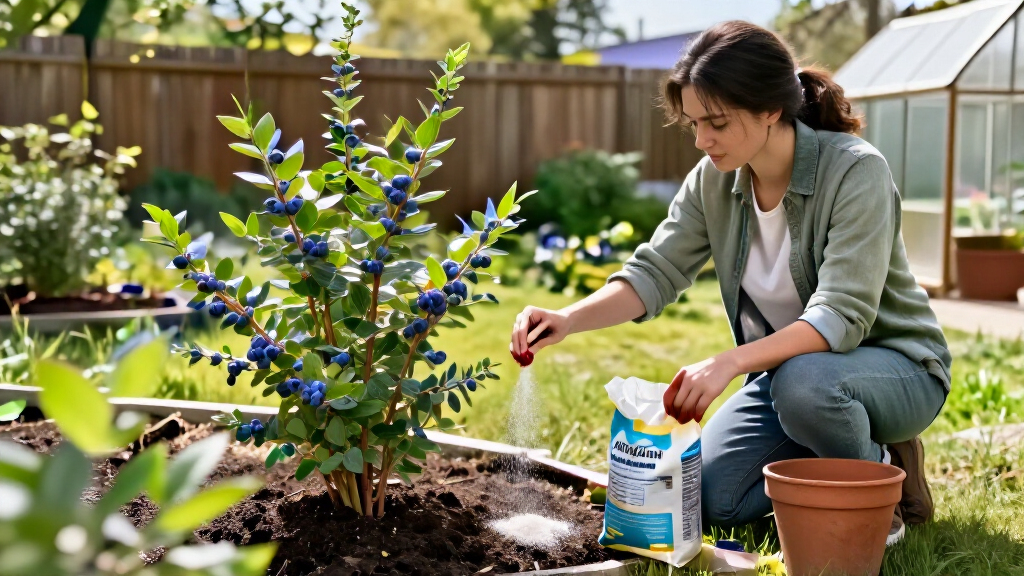
The best blueberry plant fertilizers support acid-loving bushes without making feeding more complicated than it needs to be. My best overall pick is Down To Earth Organic Acid Mix 4-3-6, which pairs a blueberry-suited nutrient profile with a practical middle-size bag; Espoma Berry-tone is a straightforward granular alternative, while Perfect Plants Liquid Blueberry Fertilizer suits gardeners who prefer a liquid routine. The main tradeoffs are granular versus liquid application, targeted blueberry formulas versus broader acid-loving plant foods, and small packages versus bulk quantities. A fertilizer alone cannot correct every soil-pH or watering problem, so matching the product to your growing setup matters. Read on for the full comparison and guidance on choosing the right fit.

Get garden gear delivered free with Prime
- Fast, free delivery on millions of items
- Prime Video, Amazon Music and more included
- Member-only deals all year
Complete the kit


Key Takeaways
- Down To Earth Organic Acid Mix, 5 lb earns the overall spot for balancing a blueberry-oriented 4-3-6 formula with a more manageable quantity than the 25 lb bag.
- Espoma Berry-tone and True Organic Berry Food offer granular berry-focused options, while Holly-Tone is broader and intended for several acid-loving plant types.
- The two Down To Earth sizes contain the same 4-3-6 formula; the 25 lb bag makes more sense for multiple bushes or repeated seasonal use than for a single small planting.
- Liquid products such as Perfect Plants, HiThrive, and TPS Nutrients may suit container growers and measured feeding routines, but require preparation and repeat applications according to their labels.
- Jobe’s Soil Acidifier has a different role from a complete fertilizer: use an acidifier to address a pH need, not as a stand-in for a product that supplies a full nutrient blend.




| blueberry plant fertilizer | Brand | Form | Target plants |
|---|---|---|---|
| Jobe’s Organics Soil Acidifier | Jobe’s Organics | Granules | Blueberries and hydrangeas |
| Espoma Organic Holly-Tone 4-3- | Espoma | Powder | Acid-loving plants, including blueberries, azaleas, rhododendrons, and evergreens |
| ASTEVORA 8-4-8 Acidic Fertiliz | GARDENWISE | Granules | — |
| Down To Earth Organic Acid Mix | Down To Earth | Granules and powder | — |
| Espoma Berry-tone Organic Plan | Espoma | Granules | Blueberries, strawberries, raspberries, and blackberries |
| Down To Earth Organic Acid Mix | Down To Earth All Natural Fertilizers | Granules | Acid-loving plants, including blueberries |
| TATAWORM Organic Berry Fertili | TATAWORM | Concentrated liquid | — |
| Perfect Plants Liquid Blueberr | Perfect Plants | Liquid | Berries and other acid-loving plants |
| Dr. Earth Natural Wonder Fruit | Dr. Earth | Granules | Fruit trees, berries, and fruiting vines |
| Espoma Organic Berry-Tone Fert | Espoma | Granules | Berry plants |
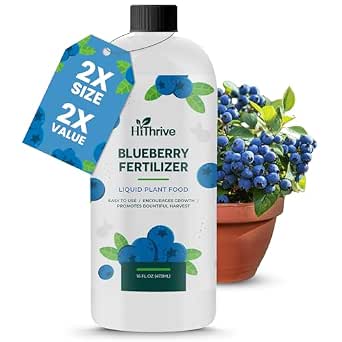
| HiThrive Blueberry Plant Ferti | HiThrive | Liquid | Blueberries, including Highbush, Rabbiteye, Blueray, and Duke |
| TPS Nutrients Blueberry Liquid | TPS Nutrients | Liquid | — |
| Bloom City Acid-Loving Plant F | Bloom City | Liquid | Blueberries, azaleas, rhododendrons, grapes, raspberries, hydrangeas, and gardenias |
| Bloom City Organic Berry Ferti | Bloom City | Liquid | Blueberries, strawberries, raspberries, and other berries |
| True Organic Berry Food Fertil | True Organic | Granules | — |
More Details on Our Top Picks
Jobe’s Organics Soil Acidifier for Blueberries and Hydrangeas, 6 lb
This is the lineup’s pH-focused pick: its job is to lower soil pH with sulfur, rather than provide a complete nutrient feed. That makes it a useful companion for blueberry growers whose soil test shows the growing medium is not acidic enough. The OMRI-listed granules are straightforward to measure, and the 6-pound bag offers more material than ASTEVORA’s 12-ounce package. Unlike Espoma Holly-Tone, though, this product is primarily an amendment, not the stronger choice when you want a slow-release fertilizer supplying a balanced nutrient analysis. Plan for two to three applications per year, and test soil before applying; using an acidifier without checking pH can push soil in the wrong direction. I’d choose it to address measured pH needs, not as a stand-alone answer to every blueberry feeding need.
Pros:- Made for acid-loving plants, including blueberries
- OMRI listed for organic gardening
- Granules are easy to measure and apply
- Six-pound package provides more product than ASTEVORA’s 12-ounce bag
Cons:- Needs reapplication two to three times per year
- Soil testing is recommended before use
- Primarily addresses soil acidity rather than serving as a complete fertilizer
Best for: Blueberry growers whose soil test shows pH needs lowering and who want an OMRI-listed granular amendment.
Not ideal for: Growers seeking a complete seasonal nutrient fertilizer or anyone unwilling to test soil and track repeat applications.
- Brand:Jobe’s Organics
- Weight:6 lb
- Form:Granules
- Target plants:Blueberries and hydrangeas
- Primary function:Lowers soil pH and supplies sulfur
- Organic certification:OMRI listed
- Recommended use:At planting, with reapplication two to three times per year
Our verdict“Choose Jobe’s when a soil test points to high pH and you want a dedicated organic-listed acidifier rather than a general blueberry feed.”
Espoma Organic Holly-Tone 4-3-4 Natural & Organic Evergreen & Azalea Plant Food, 4 lb Bag (Pack of 2)
Holly-Tone stands out for sustained feeding of blueberries and other acid-loving plants, with a 4-3-4 analysis, 5% sulfur, and slow-release organic nutrients. The ready-to-use powder is sprinkled over the root zone and watered in, so there is no liquid mixing step. Its two 4-pound bags suit gardeners feeding several shrubs or keeping a supply on hand; compared with ASTEVORA, it offers a larger total quantity and a familiar organic formula, though ASTEVORA lists magnesium, iron, manganese, and beneficial microbes. Holly-Tone is less tailored to berries than Espoma Berry-tone, which names common fruiting berries as its target plants. The powder can be messy, and the listing provides no specific application frequency. I’d pick it for broad acid-plant feeding, but favor Berry-tone when berry-specific targeting matters more.
Pros:- 4-3-4 analysis with 5% sulfur
- Slow-release organic nutrients provide a longer-lasting feeding approach
- Ready to use without mixing
- Two 4-pound bags suit multi-plant feeding
Cons:- Powder can be messy to spread
- Less berry-specific than Espoma Berry-tone
- No application frequency is provided in the supplied product details
Best for: Organic gardeners feeding multiple blueberry bushes alongside azaleas, rhododendrons, or evergreens who prefer slow-release nutrients.
Not ideal for: Berry growers who want a product focused specifically on fruiting berries, or anyone who wants a clean liquid application.
- Brand:Espoma
- Fertilizer analysis:4-3-4
- Sulfur content:5%
- Pack size:Two 4 lb bags
- Form:Powder
- Target plants:Acid-loving plants, including blueberries, azaleas, rhododendrons, and evergreens
- Application:Sprinkle over root zone and water thoroughly
- Organic gardening:Certified
Our verdict“Pick Holly-Tone for slow-release organic feeding across blueberries and other acid-loving plants, but choose Berry-tone for a more berry-focused formula.”
ASTEVORA 8-4-8 Acidic Fertilizer, 12 oz
ASTEVORA packs a broad nutrient feature set into a small bag: alongside its 8-4-8 analysis, it lists magnesium, iron, manganese, and beneficial microbes. Those additions make it distinct from Jobe’s soil acidifier, which focuses on lowering pH, and from Espoma Holly-Tone’s 4-3-4 slow-release feed. The granules are worked gently into the soil and watered, with three feedings per year; that schedule gives blueberry growers a clear routine, but adds hands-on steps compared with Holly-Tone’s sprinkle-and-water application. The 12-ounce size is its main limitation, particularly for gardeners tending several mature bushes. Because it is intended for acidic-soil plants, this is not a general-purpose fertilizer. I’d choose it for a small planting when the listed trace nutrients appeal, while larger berry beds may be better served by a bigger package.
Pros:- 8-4-8 fertilizer analysis
- Lists magnesium, iron, manganese, and beneficial microbes
- Slow-release granules are intended to feed over time
- Three feedings per year provide a defined schedule
Cons:- 12-ounce package may not stretch far across multiple plants
- Granules must be mixed gently into soil and watered
- Suitable only for plants adapted to acidic soil
Best for: Gardeners with a few blueberry plants who want a granular acid-loving-plant fertilizer that lists several trace nutrients and beneficial microbes.
Not ideal for: People feeding a large berry patch or growers who want a simple surface application without mixing granules into soil.
- Brand:GARDENWISE
- Nutrient analysis:8-4-8
- Net weight:12 oz
- Form:Granules
- Listed additions:Magnesium, iron, manganese, and beneficial microbes
- Recommended plants:Blueberries and other acid-loving plants
- Feeding frequency:Three times per year
- Application:Apply around plants, mix gently into soil, and water
Our verdict“Choose ASTEVORA for a small blueberry planting if its trace-nutrient blend is a priority, but look to a larger package for several bushes.”
Down To Earth Organic Acid Mix Fertilizer, 4-3-6, 5 lb
Down To Earth Acid Mix is the most seasonally flexible pick here: its 4-3-6 formula is intended for spring, bloom time, and fall applications, letting growers match feeding to plant growth and root development across the year. The 5-pound package also gives it more reach than ASTEVORA’s 12-ounce bag. Unlike Jobe’s acidifier, this is a slow-release fertilizer for acid-loving plants, not simply a tool for lowering soil pH. Its broad list includes blueberries, raspberries, and strawberries, so it fits mixed berry gardens, though Espoma Berry-tone is more directly centered on berry plants and offers a ready-to-use granular format. Its tradeoff is a narrower soil fit: it is intended for acid-loving plants, not crops that prefer neutral or alkaline conditions. Choose it for a varied acid-plant bed and a multi-season feeding plan.
Pros:- 4-3-6 analysis suited to acid-loving plants
- Slow-release formula supplies nutrients over time
- Suitable for blueberries and several other berry crops
- Spring, bloom-time, and fall applications support a seasonal feeding plan
Cons:- Not suited to plants that prefer neutral or alkaline soil
- Seasonal use can mean several applications to manage
- Does not serve as a dedicated soil acidifier like Jobe’s
Best for: Gardeners managing blueberries alongside other acid-loving berries and shrubs who want one organic fertilizer for several seasonal applications.
Not ideal for: Growers whose plants prefer neutral or alkaline soil, or those looking for a product dedicated specifically to changing soil pH.
- Brand:Down To Earth
- Fertilizer analysis:4-3-6
- Weight:5 lb
- Form:Granules and powder
- Suitable plants:Blueberries, raspberries, strawberries, and other acid-loving plants
- Formula:All-natural, slow-release fertilizer
- Suggested timing:Spring, when blooms appear, and fall
- Item count:1
Our verdict“Choose Down To Earth Acid Mix for a multi-season organic feeding plan across blueberries and other acid-loving plants, not for pH correction alone.”
Espoma Berry-tone Organic Plant Food, 4-3-4, 4 lb
Berry-tone is the most berry-specific choice in this group, naming blueberries, strawberries, raspberries, and blackberries as its targets. Its 4-3-4 analysis, 5% sulfur, and Bio-tone ingredients make it a ready-to-use organic granular food for gardeners who want one product across several berry types. Compared with Espoma Holly-Tone, it narrows the focus from a wide range of acid-loving plants to fruiting berries; Down To Earth Acid Mix, by contrast, offers a 4-3-6 analysis and describes spring, bloom-time, and fall timing. Berry-tone’s recommended early- and late-spring feeding schedule is simple, but it gives less flexibility for gardeners seeking a fall application. The product data also lists a 4-pound weight and a pack count of two, so check the package details when estimating how much you need. I’d choose it for a mixed berry planting, not for pH correction alone.
Pros:- Specifically targets blueberries and several other berry crops
- 4-3-4 analysis with 5% sulfur
- Granular and ready to use without mixing
- Approved for organic gardening
Cons:- Recommended feeding is limited to early and late spring
- Not a dedicated soil pH amendment like Jobe’s acidifier
- Supplied details list both a 4-pound weight and a pack count of two, which may require checking package configuration
Best for: Organic gardeners feeding blueberries together with strawberries, raspberries, or blackberries on a simple twice-yearly schedule.
Not ideal for: Growers who need a dedicated soil acidifier, want fall feeding guidance, or are feeding mostly non-berry acid-loving plants.
- Brand:Espoma
- Fertilizer analysis:4-3-4
- Sulfur content:5%
- Form:Granules
- Listed weight:4 lb
- Listed pack count:2
- Target plants:Blueberries, strawberries, raspberries, and blackberries
- Feeding schedule:Early and late spring
- Organic gardening:Approved
Our verdict“Pick Berry-tone for convenient organic feeding across a mixed berry garden, but use a separate acidifier if soil testing shows pH correction is needed.”
Down To Earth Organic Acid Mix – 4-3-6 (25 lb)
The 25-pound bag gives growers with multiple blueberry bushes a purpose-made granular option without needing a separate formula for each acid-loving plant. Its 4-3-6 analysis has more potassium than the 4-3-4 Espoma Organic Berry-Tone, making this a useful choice for gardeners who want one feed for blueberries alongside rhododendrons or azaleas. The listed application windows—spring, bloom, or fall—also give it more seasonal flexibility than Espoma’s twice-yearly guidance.
The tradeoff is handling: a full-size bag can be awkward to lift and store, especially for a small patio setup. It is also a poor fit for plants that prefer neutral or alkaline soil. I’d choose this for a substantial acid-loving garden, but favor the smaller Dr. Earth Natural Wonder Minis for a compact planting where buying in bulk would be inconvenient.
Pros:- Formulated for blueberries and other acid-loving plants
- 4-3-6 analysis provides a higher potassium proportion than Espoma Organic Berry-Tone’s 4-3-4
- Granular format can be applied during several listed seasonal windows
- All-natural ingredients without synthetic chemicals
Cons:- The 25-pound bag may be difficult to lift, store, and spread for small gardens
- Not suited to plants that prefer neutral or alkaline soils
Best for: Gardeners feeding several blueberry bushes and other acid-loving plants who want a large granular supply for seasonal use.
Not ideal for: Container growers with only one or two plants, or gardeners whose plants prefer neutral or alkaline soil; the 25-pound bag is cumbersome and the formula has a narrow plant fit.
- Brand:Down To Earth All Natural Fertilizers
- Model number:DTE03227
- Form:Granules
- NPK ratio:4-3-6
- Target plants:Acid-loving plants, including blueberries
- Package weight:25 lb
- Coverage:Medium
- Part number:03227
Our verdict“Choose this large-bag granular feed for a multi-bush blueberry patch with other acid-loving plants, but not for a small container garden.”
TATAWORM Organic Berry Fertilizer, Liquid Kelp, 2 oz
TATAWORM takes a different route from the granular feeds in this lineup: its Maine-sourced kelp concentrate is aimed at supporting root development and nutrient uptake, rather than supplying a stated NPK ratio. That makes it a distinctive fit for organic berry growers who want a liquid product they can use across blueberries, strawberries, and raspberries. The 2-ounce bottle makes up to 12 gallons, so a small package stretches across repeated applications when mixed as directed.
Compared with Perfect Plants Liquid Blueberry Fertilizer, which lists an 8-8-8 analysis, TATAWORM’s product details do not give an NPK figure, so I would not treat it as a clearly specified complete fertilizer. It also needs reapplication every two to three weeks during active growth, and the marine scent may not suit every application setting. Pick it for a kelp-based organic routine, not for low-effort feeding.
Pros:- OMRI Listed for organic use and made without synthetic additives
- One 2-ounce bottle makes up to 12 gallons when mixed as directed
- Can be used with blueberries, strawberries, and raspberries
- Uses Maine-sourced North Atlantic rockweed
Cons:- Requires mixing and application every two to three weeks during active growth
- Has a marine scent
- No NPK ratio is provided in the product details
Best for: Organic berry growers who want a concentrated kelp liquid for several berry types and are comfortable measuring and reapplying it during active growth.
Not ideal for: Gardeners seeking a granular, less frequent feeding routine or a product with a stated NPK analysis; this concentrate requires regular mixing and its details do not list an NPK ratio.
- Brand:TATAWORM
- Form:Concentrated liquid
- Volume:2 oz
- Source:Maine-sourced North Atlantic rockweed (Ascophyllum nodosum)
- Organic status:OMRI Listed
- Mixing rate:1 teaspoon per gallon of water
- Application frequency:Every 2–3 weeks during active growth
- Stated coverage:Makes up to 12 gallons
Our verdict“Choose TATAWORM for a concentrated, organic kelp-based berry supplement if frequent liquid applications suit your routine.”
Perfect Plants Liquid Blueberry Fertilizer, 8 oz
Perfect Plants gives liquid-feed users a clear nutrient figure: its 8-8-8 formula is listed for blueberries and several other berry crops, as well as other acid-loving plants. The instructions are straightforward—2 teaspoons per gallon of water—and the bottle is described as lasting multiple growing seasons. Compared with TATAWORM’s kelp concentrate, this is the more direct choice for buyers who want a labeled NPK fertilizer rather than a product focused on kelp and root support.
That clarity does not make it as convenient as a ready-to-use granular product such as Espoma Organic Berry-Tone: this liquid still needs dilution before application. The product information also omits exact coverage, so it is harder to plan how much a larger planting will require. I’d pick it for measured liquid feeding across a few berry types, but skip it if you want stated coverage or minimal prep.
Pros:- Lists an 8-8-8 NPK ratio
- Suitable for berries and other acid-loving plants
- Simple dilution instruction of 2 teaspoons per gallon
- Bottle is designed to last multiple growing seasons
Cons:- Must be diluted before use
- Exact coverage is not specified
- Liquid measuring and mixing add preparation compared with Espoma Organic Berry-Tone granules
Best for: Blueberry and mixed-berry growers who prefer liquid feeding, want a stated 8-8-8 analysis, and can measure dilutions.
Not ideal for: Gardeners who want a ready-to-use feed or need exact coverage information to plan applications across a large planting.
- Brand:Perfect Plants
- Form:Liquid
- NPK ratio:8-8-8
- Volume:8 fluid ounces
- Mixing rate:2 teaspoons per gallon of water
- Target plants:Berries and other acid-loving plants
- Country of manufacture:USA
- Package weight:8 ounces
Our verdict“Choose this liquid if a stated 8-8-8 ratio matters more to you than ready-to-use application or precise coverage details.”
Dr. Earth Natural Wonder Fruit Tree Fertilizer Minis, 5-5-2, 1 lb
Dr. Earth’s one-pound granular package is a practical scale for a small backyard or container planting, with a listed coverage area of 15 square feet. Its 5-5-2 formula is intended for fruit trees, berries, and fruiting vines, so it suits a mixed edible garden better than Down To Earth Organic Acid Mix, which is specifically aimed at acid-loving plants. The 100% organic blend and Trubiotic probiotic package add to its appeal for gardeners choosing an organic fruiting-plant feed.
The compromise is that this is not a blueberry-only formula, and its listed coverage is limited. Espoma Organic Berry-Tone is more directly focused on berry plants and comes in a two-bag pack, while Dr. Earth makes more sense when a small amount needs to serve several kinds of fruiting plants. Check the application directions for the growing situation before buying; this small package is not the economical fit for a broad planting.
Pros:- 100% organic granular blend
- Suitable for berries, fruit trees, and fruiting vines
- Listed coverage of 15 square feet helps small-space growers gauge package scale
- Includes Dr. Earth’s Trubiotic probiotic package
Cons:- One-pound package covers only 15 square feet
- Broad fruiting-plant formulation is less specifically targeted to blueberries than Down To Earth Organic Acid Mix
Best for: Container gardeners and small backyard growers feeding a few berry plants alongside fruit trees or fruiting vines.
Not ideal for: Growers with many blueberry bushes who need a berry-specific feed in larger quantities; the package covers only 15 square feet and targets several fruiting-plant types.
- Brand:Dr. Earth
- Model:70656
- Form:Granules
- NPK ratio:5-5-2
- Package weight:1 lb (16 oz)
- Coverage:15 sq. ft.
- Target plants:Fruit trees, berries, and fruiting vines
- Organic status:100% organic
Our verdict“Pick Dr. Earth for a small, mixed fruiting garden, but choose a larger or more blueberry-focused option for a substantial patch.”
Espoma Organic Berry-Tone Fertilizer, 4-3-4, 4 lb, Pack of 2
Espoma Organic Berry-Tone is the straightforward choice for gardeners who want a berry-specific granular fertilizer without mixing a liquid. Its 4-3-4 formula includes 5% sulfur and Bio-tone, and the product is approved for organic gardening. The two 4-pound bags provide a substantial supply for a berry-focused planting, while the ready-to-use format removes the measuring step required by Perfect Plants Liquid Blueberry Fertilizer and TATAWORM.
The feeding guidance calls for applications in early and late spring, so this is less flexible across the season than Down To Earth Organic Acid Mix, whose description lists spring, bloom, and fall use. Its formula is also focused on berries rather than the broader mix of fruit trees and vines covered by Dr. Earth Natural Wonder. I’d choose Espoma for simple, scheduled feeding across several berry types, but not if you want a liquid routine or a product intended for a wider range of fruiting plants.
Pros:- Ready-to-use granules require no mixing
- Suitable for blueberries, strawberries, raspberries, and blackberries
- 4-3-4 formula includes 5% sulfur and Bio-tone
- Approved for organic gardening
Cons:- Recommended feeding schedule is limited to early and late spring
- Berry-focused use is less broad than Dr. Earth Natural Wonder’s fruit-tree and vine coverage
Best for: Berry gardeners who want a ready-to-use organic granular feed for blueberries and other berry plants, with a twice-yearly spring schedule.
Not ideal for: Growers who prefer liquid feeding, want more seasonal application flexibility, or need one fertilizer for fruit trees and vines as well as berries.
- Brand:Espoma
- Form:Granules
- Fertilizer analysis:4-3-4
- Sulfur:5%
- Package size:Two 4 lb bags
- Target plants:Berry plants
- Application:Ready to use; no mixing required
- Recommended feeding:Twice yearly, in early and late spring
- Organic gardening status:Approved
Our verdict“Choose Espoma for low-prep organic feeding across a berry patch, but look elsewhere for liquid application or broader fruiting-plant use.”
HiThrive Blueberry Plant Fertilizer, 16 oz
For blueberry growers who prefer a liquid routine, HiThrive combines macronutrients with calcium, magnesium, and zinc in a formula made for several blueberry varieties. Its 16-ounce bottle makes 16 gallons, giving it more stated coverage than the 8-ounce TPS Nutrients Blueberry Liquid Fertilizer. The tradeoff is a more involved schedule: apply every 1–2 weeks during the growing season, then every four weeks in fall and winter. That calls for regular measuring and seasonal adjustments, rather than the simpler monthly rhythm of True Organic Berry Food. Choose HiThrive for variety-specific liquid feeding and broad nutrient coverage; skip it if you want a ready-to-use product or prefer fewer applications to track.
Pros:- Formulated for blueberries, including Highbush, Rabbiteye, Blueray, and Duke
- Includes nitrogen, phosphorus, potassium, calcium, magnesium, and zinc
- One 16-ounce bottle makes 16 gallons of mixed fertilizer
Cons:- Must be diluted with water before use
- Frequent growing-season applications and a separate cool-season schedule require tracking
Best for: Growers with multiple blueberry varieties who want a liquid feed with listed macro- and micronutrients and can keep up with seasonal applications.
Not ideal for: Gardeners who want a one-step, ready-to-apply fertilizer or do not want to adjust their feeding routine by season.
- Brand:HiThrive
- Form:Liquid
- Volume:16 fluid ounces
- Coverage:Makes 16 gallons
- Target plants:Blueberries, including Highbush, Rabbiteye, Blueray, and Duke
- Item weight:1.3 pounds
- Growing-season frequency:Every 1–2 weeks
- Fall and winter frequency:Every 4 weeks
Our verdict“Choose HiThrive if you want a blueberry-specific liquid with broad listed nutrients and are comfortable following a seasonal feeding schedule.”
TPS Nutrients Blueberry Liquid Fertilizer, 8 fl oz
TPS Nutrients is a compact liquid option for blueberry growers who want to feed plants in containers, raised beds, or garden soil. Its stated mix is 2 tablespoons, or 1 ounce, per gallon of water, so the application is clearly defined even though the product lists only medium coverage. Compared with HiThrive, the 8-ounce bottle offers less total mixed volume, but its targeted use across small-space setups makes it a practical fit for a few bushes rather than a larger planting. It is described as supporting flowering, fruit set, and root development, while Bloom City Acid-Loving Plant Fertilizer serves a broader group of acid-loving plants. Pick TPS for a small blueberry-focused setup; a larger planting may call for more coverage.
Pros:- Formulated for blueberry bushes and other fruiting plants
- Listed as supporting flowering, fruit set, and root development
- Can be used in garden beds, raised beds, and containers
- Provides a stated mixing rate of 2 tablespoons or 1 ounce per gallon
Cons:- The 8-ounce bottle has only medium stated coverage
- Requires dilution before application
Best for: Container gardeners and homeowners with a few blueberry bushes who want a liquid feed with a specified dilution rate.
Not ideal for: Growers managing many bushes or a large bed who need clearly stated, high total coverage from one bottle.
- Brand:TPS Nutrients
- Form:Liquid
- Unit count:8 fluid ounces
- Item weight:8 ounces
- Target species:Blueberries
- Coverage:Medium
- Mixing ratio:2 tablespoons or 1 ounce per gallon of water
- Made in:USA
Our verdict“Choose TPS Nutrients for a few blueberries in containers or small beds when a defined mixing rate matters more than high bottle coverage.”
Bloom City Acid-Loving Plant Fertilizer, Liquid Soil Acidifier and Nutrient Formula, 32 oz
If blueberries share space with azaleas, rhododendrons, or hydrangeas, Bloom City offers a broader acid-loving-plant focus than TPS Nutrients, which is specifically presented for blueberries. The 32-ounce liquid bottle suits gardeners who want one product for several compatible plant types, and the description lists support for root development, balanced growth, and foliage. Its key limitation is practical: the mixing ratio is not provided, so buyers cannot plan dilution or coverage from the supplied product details. HiThrive, by comparison, states both its total mixed volume and application frequency. Bloom City makes more sense when flexibility across a mixed planting matters more than a fully specified feeding routine; blueberry-only growers may prefer a formula with clearer directions.
Pros:- Formulated for blueberries and a range of acid-loving plants
- Suitable for garden beds and containers
- Listed as supporting root development, balanced growth, and vibrant foliage
- Larger 32-ounce bottle than the 8-ounce TPS Nutrients option
Cons:- Mixing ratio is not specified in the product information
- The broad target-plant list makes it less blueberry-specific than HiThrive or TPS Nutrients
Best for: Gardeners growing blueberries alongside azaleas, rhododendrons, hydrangeas, or other listed acid-loving plants who want one liquid formula for the group.
Not ideal for: Blueberry growers who need a stated dilution rate and predictable mixed coverage before choosing a fertilizer.
- Brand:Bloom City
- Form:Liquid
- Volume:32 fluid ounces (1 quart)
- Weight:2 pounds
- Target plants:Blueberries, azaleas, rhododendrons, grapes, raspberries, hydrangeas, and gardenias
- Pack count:1
- Made in:USA
- Mixing ratio:Not specified
Our verdict“Choose Bloom City when you want one liquid fertilizer for blueberries and other acid-loving plants and can confirm application directions before use.”
Bloom City Organic Berry Fertilizer, 32 oz
Bloom City Organic Berry Fertilizer is the lineup’s organic liquid pick for mixed berry plantings, covering blueberries, strawberries, raspberries, and other berries. That wider crop range makes it a more natural fit for a berry patch than Bloom City Acid-Loving Plant Fertilizer, which targets a broader set of acid-loving plants rather than berries as a group. Its 32-ounce bottle works for garden beds, raised beds, and containers, and the product description points to root development, plant vitality, and fruit production. The tradeoff is missing detail: no nutrient analysis, application amount, or feeding frequency is supplied. HiThrive gives a more defined use schedule and nutrient list, while this option puts its emphasis on organic berry-focused feeding. Choose it for a mixed berry garden, not for precise nutrient planning.
Pros:- Organic liquid plant food formulated for multiple berry crops
- Suitable for garden beds, raised beds, and containers
- Listed as supporting root development, plant vitality, and fruit production
- 32-ounce bottle offers more volume than the 8-ounce TPS Nutrients option
Cons:- Nutrient analysis is not provided
- Application amounts and feeding frequency are not specified
Best for: Organic-minded gardeners growing blueberries alongside strawberries or raspberries in beds, raised beds, or containers.
Not ideal for: Gardeners who want a listed nutrient analysis, measured application rate, or set feeding schedule.
- Brand:Bloom City
- Form:Liquid
- Volume:32 fluid ounces
- Weight:2 pounds
- Type:Organic plant food
- Target plants:Blueberries, strawberries, raspberries, and other berries
- Made in:USA
- Application details:Feeding frequency and application amounts not specified
Our verdict“Choose Bloom City Organic Berry Fertilizer for a mixed berry garden if organic formulation matters more to you than a fully detailed feeding plan.”
True Organic Berry Food Fertilizer for Acid-Loving Plants, 4 lb
True Organic is the lineup’s granular choice for gardeners who want a monthly feed rather than repeated liquid mixing. Its 4-5-4 blend includes seabird guano, shrimp and crab shell meal, and sulfur; the sulfur is intended to help lower soil pH, a relevant feature for acid-loving blueberries. One bag covers up to 58 square feet, and the product can be used in ground or container gardens. Compared with Bloom City Organic Berry Fertilizer, this option offers a stated analysis, application schedule, and coverage, though it requires spreading granules instead of pouring a liquid. The limitation is its narrower fit: it is intended for berries and other acid-loving plants, not general-purpose feeding. Choose it for a measurable, monthly organic routine suited to that plant group.
Pros:- Granular organic fertilizer formulated for berries and other acid-loving plants
- Sulfur is included to help lower soil pH
- Provides a 4-5-4 analysis and monthly growing-season schedule
- Suitable for in-ground and container plants, with coverage up to 58 square feet
Cons:- Requires monthly application during the growing season
- Intended for acid-loving plants, limiting its use across a general garden
- Granules are less suited to gardeners who prefer liquid feeding
Best for: Organic gardeners with blueberry beds or containers who want a granular feed with a stated analysis, monthly schedule, and coverage.
Not ideal for: Growers seeking a liquid application, a fertilizer for a wide range of unrelated plants, or an option without recurring monthly feeding.
- Brand:True Organic
- Form:Granules
- Weight:4 pounds
- Coverage:Up to 58 square feet
- Analysis:4-5-4
- Application:Monthly during the growing season
- Suitable for:Berry plants and other acid-loving plants
- Use:In-ground and container plants
- Ingredients:Seabird guano, shrimp and crab shell meal, and sulfur
Our verdict“Choose True Organic for blueberry and other acid-loving plantings when you want a granular organic feed with stated coverage and a monthly schedule.”

How We Picked
I compared each option by how clearly its stated purpose fits blueberry care, the usefulness of its listed nutrient approach, its application format, and the quantity offered. I gave extra weight to products explicitly formulated for berries or acid-loving plants, while distinguishing complete plant foods from products positioned as soil acidifiers or supplemental liquids. Package size matters too: a small container can suit a few pots, while a bulk bag may be more practical for several established bushes.
The ranking favors products that combine a clear blueberry-relevant use with a workable format and quantity for a broad range of home growers. That puts Down To Earth’s 5 lb Acid Mix ahead of its 25 lb counterpart for most readers, while the larger bag remains the better scale choice for extensive plantings. Berry-tone and True Organic Berry Food rank as accessible granular alternatives; liquid formulas are useful for gardeners who prefer that routine but can involve more measuring and repeated feeding. I did not treat fertilizer as a substitute for soil testing, correct pH, or sound watering.
| blueberry plant fertilizer | Form |
|---|---|
| Jobe’s Organics Soil Acidifier | Granules |
| Espoma Organic Holly-Tone 4-3- | Powder |
| ASTEVORA 8-4-8 Acidic Fertiliz | Granules |
| Down To Earth Organic Acid Mix | Granules and powder |
| Espoma Berry-tone Organic Plan | Granules |
| Down To Earth Organic Acid Mix | Granules |
| TATAWORM Organic Berry Fertili | Concentrated liquid |
| Perfect Plants Liquid Blueberr | Liquid |
| Dr. Earth Natural Wonder Fruit | Granules |
| Espoma Organic Berry-Tone Fert | Granules |
| HiThrive Blueberry Plant Ferti | Liquid |
| TPS Nutrients Blueberry Liquid | Liquid |
| Bloom City Acid-Loving Plant F | Liquid |
| Bloom City Organic Berry Ferti | Liquid |
| True Organic Berry Food Fertil | Granules |
Factors to Consider When Choosing Best Blueberry Plant Fertilizers
Choosing a blueberry fertilizer starts with the growing conditions, not the most prominent label claim. I would first identify whether the real need is routine feeding, a pH adjustment, or an easier application method; those jobs are not interchangeable.
Match the product to the job
Blueberry fertilizers and soil acidifiers address related but different needs. A complete plant food supplies a blend of nutrients, while an acidifier is meant to influence soil acidity and may not provide a balanced feeding on its own. Before buying, check your soil or potting mix rather than assuming poor growth means the pH is too high. Applying an acidifier when acidity is already suitable can create a new problem instead of solving the old one. If a test points to a nutrient issue rather than a pH issue, choose a fertilizer whose label supports that purpose. This distinction is why Jobe’s acidifier should be judged differently from berry foods such as Berry-tone.
Choose granular or liquid based on your routine
Granular products are generally easier to store and apply around plants without mixing a solution, making them appealing for garden beds and several bushes. Liquid formulas can offer a measured application that fits container care, but they add mixing steps and may call for more frequent use under the label directions. Neither format is automatically stronger or more suitable for blueberries; application instructions and the growing setup matter more. A common mistake is choosing liquid for convenience, then neglecting the repeated schedule it may require. Gardeners who want fewer preparation steps may prefer a granular option, while those comfortable with a watering-can routine may find liquid easier to manage. Follow the product label rather than combining schedules from different fertilizers.
Scale package size to the number of bushes
A small bag or bottle can be a sensible fit for one or two plants, especially when you are still learning how often your bushes need feeding. Larger quantities can reduce the chance of running short across a bigger planting, but they take storage space and may sit unused if your needs are modest. The two Down To Earth Acid Mix sizes illustrate this choice: the formula is the same, but the 5 lb bag is less of a commitment than the 25 lb bag. Check the label’s application rate before comparing package sizes, since a container’s weight alone does not tell you how many feedings it provides. Keep fertilizers sealed and dry as directed so leftover product stays usable. For a small patio collection, buying bulk simply because it is available can be a poor fit.
Read the nutrient analysis in context
The numbers on a fertilizer label describe the proportions of its primary nutrients, not a guarantee that one formula suits every blueberry bush. A 4-3-6 product and a 4-3-4 product differ in their listed nutrient balance, but that difference matters alongside the soil, plant age, and label directions. More nutrients are not automatically better; overfeeding can stress plants and obscure the cause of weak growth. Avoid selecting a product based only on the largest first number or a claim that sounds more specialized. Compare the stated use, directions, and nutrient analysis together, and avoid stacking multiple products unless their labels support that approach. A soil test can help prevent feeding for a deficiency that is not present.
Account for containers, beds, and plant age
Container blueberries have a smaller volume of growing medium than bushes in garden beds, so application accuracy and drainage deserve extra attention. A liquid product may fit a container watering routine, but the format does not remove the need to follow dilution and frequency instructions. In-ground plants have a larger soil area, and granular foods may be convenient to apply around several bushes. Young plants also have different needs from established shrubs, so do not assume that a mature-bush rate is appropriate for a newly planted specimen. Check the product label for plant-size guidance and avoid applying fertilizer against stems or leaves unless directions say otherwise. When the growing setup changes, such as moving a bush into a larger pot, reassess the rate rather than carrying over the old routine automatically.
Decide when a specialist formula is worth it
A blueberry-specific label can make product selection simpler, but a broader acid-loving plant fertilizer may also fit when you grow azaleas, hollies, or other compatible plants. Shared use can reduce the number of products in storage, though it may be less tailored to a blueberry-only planting. A specialist formula is most useful when its directions and nutrient profile match your particular routine, not just because the packaging names blueberries. If you keep only a few bushes, a general acid-loving plant food could be a practical choice; a larger berry planting may favor a clearly berry-oriented product and a suitable bag size. Compare the intended plants and rates before using one product across different species. Do not assume every acid-loving plant has identical feeding requirements.
Frequently Asked Questions
Can a blueberry soil acidifier replace a blueberry fertilizer?
Not necessarily. A soil acidifier is intended to address soil acidity, while a fertilizer supplies nutrients according to its formulation. Some products may combine those roles, but you should check the label rather than infer that from the product name. A soil test can help determine whether pH adjustment is needed before applying an acidifier. If the soil pH is already appropriate, adding more acidifying material may be unhelpful or harmful.
Should I choose a liquid or granular fertilizer for blueberries in pots?
Either format may work if the product is labeled for your plants and container use. Liquid products can fit into a regular watering routine, but they require accurate measuring and may call for repeated applications. Granular products avoid mixing at each feeding, though rates need to suit the smaller amount of growing medium in a pot. Check the directions for container-grown plants and avoid using an in-ground rate by default. The best fit is the format you can apply consistently and correctly.
Is the 25 lb Down To Earth Acid Mix better than the 5 lb bag?
The two sizes list the same 4-3-6 formula, so the main difference is how much product you receive. The 25 lb bag can suit a larger planting or gardeners who expect to use the product over time according to its label. For a few bushes, the 5 lb size is easier to store and avoids committing to a large quantity. Compare the label’s application rate with the number and size of your plants before choosing. Store any remaining fertilizer as directed.
Can I use Holly-Tone on blueberries if it is labeled for several acid-loving plants?
Holly-Tone is presented as food for evergreens and azaleas, so its broader acid-loving plant positioning may appeal to gardeners with mixed plantings. That does not mean every rate or use is automatically appropriate for blueberries. Read the label to confirm the listed plants and application directions before using it on blueberry bushes. A berry-focused option such as Berry-tone or True Organic Berry Food makes the intended use more explicit. Avoid applying multiple plant foods at once unless the directions support it.
What should I do if my blueberry bush is growing poorly despite regular feeding?
Do not respond by automatically increasing fertilizer. Poor growth can relate to soil pH, drainage, watering, light, root conditions, or nutrient availability, and extra feeding may not correct those causes. Check soil conditions and review the plant’s watering and growing environment before changing the dose. Follow the fertilizer label and consider a soil test if the cause remains unclear. This can help distinguish a genuine nutrient need from a problem that fertilizer cannot fix.
Conclusion
For most home growers, I recommend Down To Earth Organic Acid Mix 4-3-6 in the 5 lb size as the best overall balance of blueberry-relevant use, granular application, and manageable quantity. The best value by scale is the 25 lb version for gardeners feeding several bushes, while Espoma Berry-tone is a practical beginner pick for someone who wants a familiar granular berry food. For a liquid routine, consider Perfect Plants Liquid Blueberry Fertilizer; choose Jobe’s Soil Acidifier only when acidity is the specific issue you need to address. I would reserve broader options such as Holly-Tone for mixed acid-loving plantings, and match every choice to soil conditions, plant size, and the label directions.
Fall yard work Picks
leaf blowers
As an affiliate, we earn on qualifying purchases.