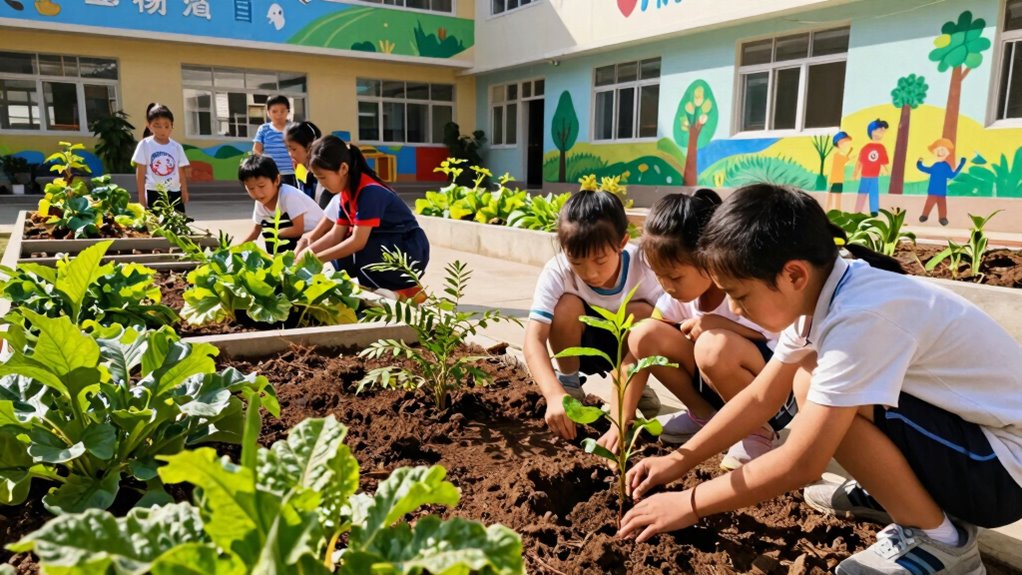

Green schools build culture beyond the classroom through strong leadership that models sustainable practices and inspires everyone to participate. They implement eco-friendly policies in daily routines, like sourcing local food and reducing waste, which students see and emulate. Active community involvement, like gardening and clean-up events, reinforces shared responsibility. Sustainability becomes part of daily life, fostering a positive environment where everyone feels empowered. Keep exploring to discover how these elements shape lasting green school communities.

Get garden gear delivered free with Prime
- Fast, free delivery on millions of items
- Prime Video, Amazon Music and more included
- Member-only deals all year
Key Takeaways
- Leadership exemplifies eco-friendly practices, inspiring staff and students to adopt sustainable behaviors beyond classroom lessons.
- Implementing comprehensive policies influences daily routines, reinforcing a culture of sustainability throughout the school community.
- Engaging families and local communities in environmental activities fosters collective responsibility and shared purpose.
- Hands-on projects like gardens and clean-up events promote teamwork and deepen environmental understanding.
- Integrating sustainability into daily life creates a cohesive, inclusive atmosphere rooted in shared environmental values.
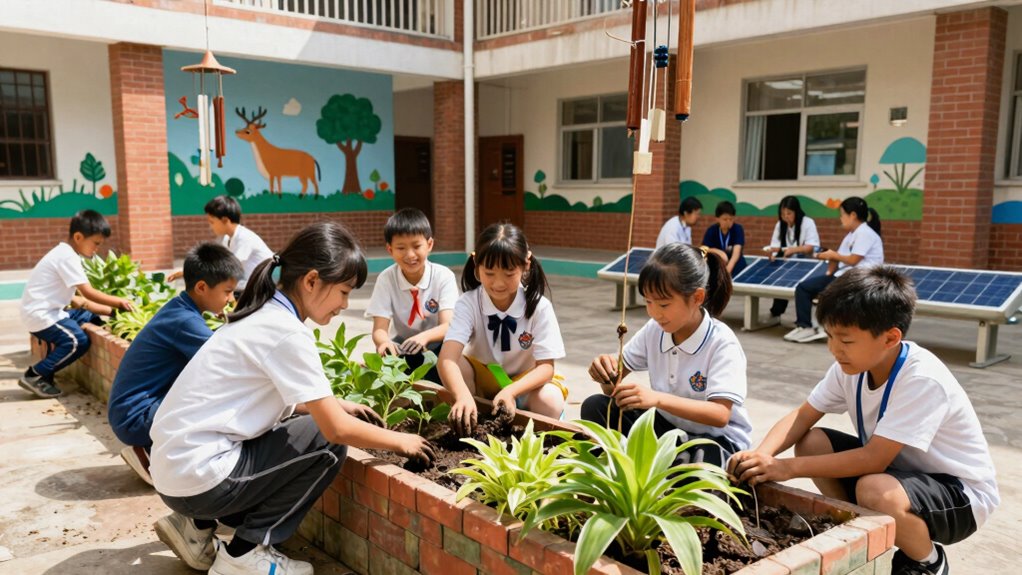
Have you ever wondered how green schools foster a sense of community and shared purpose? It’s more than just teaching students about environmental issues; it’s about embedding a culture that values sustainability at every level. These schools actively promote sustainable leadership, encouraging students, staff, and families to take ownership of their environment. Leaders in green schools don’t just implement eco friendly policies—they embody them, setting examples through their actions. This kind of leadership inspires others to participate and makes sustainability a core part of the school’s identity. When you see administrators and teachers living the principles of sustainability, it motivates everyone else to follow suit. This shared commitment builds a cohesive community bound by common values.
Green schools foster community through leadership and shared commitment to sustainability.
Eco friendly policies are at the heart of this cultural shift. They go beyond simple recycling bins or energy-saving lights; they influence the daily routines and decision-making processes across the school. For example, schools might prioritize sourcing locally produced foods or reduce waste by promoting composting and minimal packaging. These policies demonstrate that sustainability isn’t just a buzzword—it’s a tangible part of the school’s operations. When students witness how these policies are put into practice, they internalize the importance of making eco-conscious choices. Over time, these practices become second nature, strengthening the culture of sustainability within the school community. Recognizing the importance of biodiversity helps reinforce the connection between local ecosystems and sustainability efforts. Additionally, fostering an understanding of environmental literacy ensures that students are equipped to make informed decisions about their impact on the planet. A focus on community engagement further amplifies this effect by encouraging active participation from all members. Moreover, cultivating a sense of environmental responsibility encourages students to think critically about their role in preserving the planet for future generations.
Building this culture isn’t solely about policies and leadership; it’s about creating opportunities for meaningful engagement. Students and staff collaborate on projects like school gardens, energy audits, or clean-up events. These activities foster teamwork and give everyone a sense of purpose. Participating in these initiatives helps develop a deeper appreciation for sustainable practices that can be carried into everyday life. As people work together to implement eco friendly policies, they develop a shared identity rooted in environmental stewardship. This collective effort nurtures a sense of pride, making sustainability a fundamental part of the school’s ethos. Encouraging ongoing education and awareness campaigns also plays a vital role in maintaining this cultural shift.
In green schools, the culture extends beyond classroom lessons. It becomes woven into the day-to-day lives of everyone involved. When sustainable leadership is practiced consistently, and eco friendly policies are embraced wholeheartedly, a community forms that values environmental responsibility. This shared purpose not only benefits the environment but also creates a positive, inclusive atmosphere where everyone feels empowered to make a difference. That’s how green schools build culture beyond the classroom—by fostering genuine commitment through leadership, policies, and collective action.
As an affiliate, we earn on qualifying purchases.
Frequently Asked Questions
How Do Green Schools Involve Local Communities in Their Initiatives?
You can involve local communities in green school initiatives through active community engagement and cultural integration. Encouraging community members to participate in environmental projects fosters a sense of ownership and shared responsibility. Hosting workshops, inviting local leaders to speak, and collaborating on sustainability events help bridge the gap between the school and its surroundings. This approach not only strengthens relationships but also promotes a culture of environmental consciousness that extends beyond the classroom.
What Challenges Do Green Schools Face in Maintaining Sustainability Efforts?
You might find it challenging to sustain green initiatives, even with renewable energy and waste reduction efforts. Funding often limits upgrades, and maintaining community engagement can be tough over time. Additionally, balancing new practices with existing structures requires constant effort. Despite these hurdles, committed schools discover innovative solutions, like energy-efficient upgrades and all-encompassing waste programs, proving that perseverance keeps sustainability initiatives alive and thriving in the long run.
How Is Student Leadership Fostered Through Green School Programs?
You foster student leadership through green school programs by encouraging active student engagement in sustainability projects. As students take on roles like project coordinators or environmental ambassadors, they develop leadership skills and a sense of responsibility. These programs promote teamwork, critical thinking, and initiative, helping students realize their potential to influence change. By empowering students in real-world initiatives, you cultivate confident, environmentally-minded leaders who can inspire their peers and community.
What Funding Sources Support Green School Sustainability Projects?
You can secure funding for green school sustainability projects through various sources. Green grants are a primary option, providing dedicated funds for eco-friendly initiatives. Additionally, forming sustainable partnerships with local businesses, nonprofits, or government agencies can offer financial support and resources. These collaborations not only fund projects but also foster community engagement, helping you build a lasting green culture within your school and beyond.
How Do Green Schools Measure Their Cultural Impact Beyond Academics?
You might think green schools only track test scores, but they measure their cultural impact through environmental awareness and cultural integration. They observe student behaviors, community engagement, and sustainability initiatives, proving that eco-conscious values extend beyond textbooks. Ironically, their true success lies in fostering a culture where caring for the planet becomes second nature, transforming the school environment into a living example of environmental responsibility.
Conclusion
So, as you’ve seen, green schools don’t just teach sustainability—they live it, shaping a culture that’s truly transformative. Ironically, in trying to prepare students for the future, these schools often remind us that the greatest lessons are learned beyond textbooks. They prove that fostering a community rooted in green values isn’t just good for the planet, but also for nurturing responsible, conscious citizens. After all, isn’t that the ultimate lesson we all want to pass on?
Halloween Picks
halloween
As an affiliate, we earn on qualifying purchases.