Community teach-ins still matter because they let you engage directly with local issues and connect with others face-to-face, which builds trust and a sense of shared purpose. You get to ask questions, participate actively, and gain a clearer understanding of complex topics. These gatherings strengthen community bonds and empower you to influence change. If you keep exploring, you’ll discover how these in-person interactions keep democracy alive and foster a more involved society.

Get garden gear delivered free with Prime
- Fast, free delivery on millions of items
- Prime Video, Amazon Music and more included
- Member-only deals all year
Key Takeaways
- Foster direct personal engagement that enhances understanding and trust within the community.
- Strengthen local connections and civic awareness through face-to-face dialogue.
- Promote active participation, counteracting misinformation with factual, community-based discussions.
- Support democratic processes by encouraging collaborative problem-solving and collective action.
- Maintain relevance in the digital age by cultivating shared purpose and grassroots involvement.
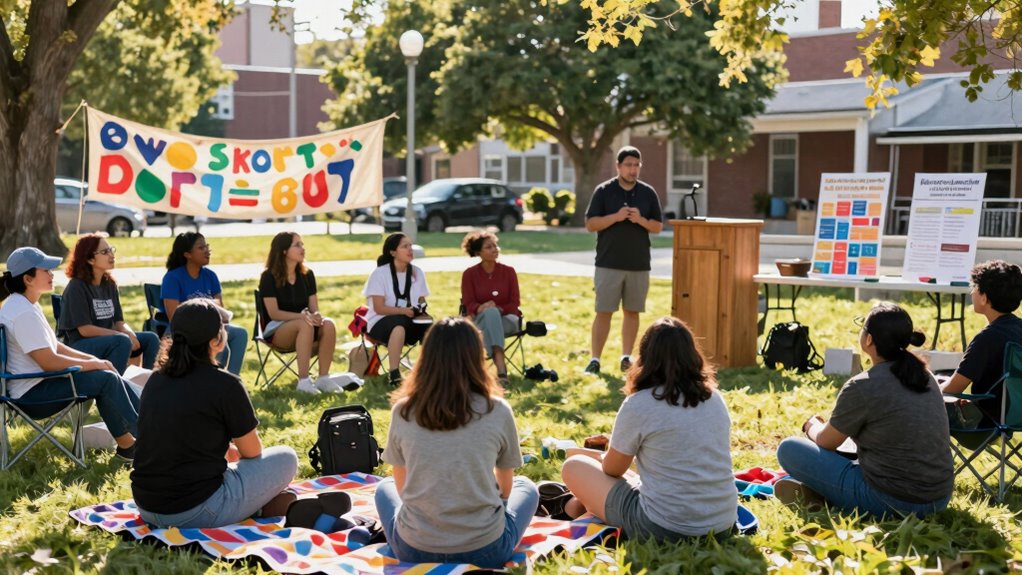
Even in an age dominated by digital information, community teach-ins remain an essential way to foster understanding and civic engagement. These gatherings serve as a powerful reminder that face-to-face interactions are indispensable for building grassroots engagement. When you attend a teach-in, you’re not just passively absorbing information—you actively participate in discussions, ask questions, and connect with others who share your interests or concerns. This direct engagement helps deepen your understanding of complex issues and encourages you to think critically about the information presented. The personal aspect of teach-ins makes them uniquely effective at cultivating civic awareness, as they create a space where community members can come together, exchange ideas, and develop a shared sense of purpose.
Community teach-ins foster direct engagement, deepen understanding, and build shared purpose through face-to-face dialogue and local connection.
Unlike online articles or social media posts, teach-ins foster a sense of community and trust. When you’re in a room with others dedicated to learning and dialogue, you’re more likely to feel motivated to get involved. These events often highlight local issues, giving you a clearer understanding of how policies and decisions impact your neighborhood or city. They also offer an opportunity for you to hear from experts, activists, or local officials directly, which can provide insights that are often missing from digital sources. This personal connection amplifies your ability to engage with civic matters meaningfully. Additionally, grassroots engagement is often strengthened through these face-to-face interactions, making them vital for meaningful societal change. Building a strong community network can help sustain ongoing efforts for local improvements and environmental conservation.
Community teach-ins also serve as a bridge between grassroots engagement and broader societal change. They empower individuals like you to take active roles in shaping your community’s future. By participating in these events, you’re helping to build a more informed citizenry that’s capable of advocating for policies rooted in shared values and collective needs. This kind of civic awareness is essential for strengthening democracy, especially in times when misinformation spreads quickly online. Teach-ins remind you that meaningful change happens when people come together, share their perspectives, and work collaboratively toward solutions.
In the end, community teach-ins matter because they keep the democratic process alive at the local level. They reinforce the importance of direct, personal engagement over passive consumption of information. As you become more involved, you’re not just learning—you’re contributing to a resilient, informed community that values grassroots engagement. This is how community teach-ins continue to make a difference, fostering civic awareness and empowering citizens to participate actively in shaping their society.
As an affiliate, we earn on qualifying purchases.
Frequently Asked Questions
How Can I Organize a Successful Community Teach-In?
To organize a successful community teach-in, start by identifying key topics that resonate with your community. Use engagement strategies like interactive discussions and local guest speakers to keep attendees involved. Secure funding sources through grants, local businesses, or donations to support logistics. Promote widely via social media and flyers. Guarantee accessibility and clear communication so participants feel valued. With planning and community support, your teach-in can make a meaningful impact.
What Topics Resonate Most With Diverse Community Audiences?
Imagine a tapestry woven with vibrant threads—your topics should reflect that diversity. You’ll find that issues like cultural awareness and social justice resonate deeply with community audiences. These discussions create a shared understanding, breaking down barriers and fostering inclusion. Focus on local stories, experiences, and struggles to make the topics relevant. When your teach-in addresses these powerful themes, you inspire engagement and spark meaningful change in your community.
How Do Teach-Ins Impact Local Policy Change?
You see that teach-ins directly influence local policy change by fueling policy advocacy and grassroots mobilization. When community members learn and discuss issues, they become more engaged, which encourages collective action. This heightened awareness and participation pressure policymakers to address community needs. By empowering residents through education, teach-ins turn passive listeners into active advocates, making them an essential tool for driving meaningful, local policy shifts.
What Is the History Behind Community Teach-Ins?
You should know that community teach-ins have historical roots in the anti-war social movements of the 1960s and 1970s. These events emerged as grassroots efforts to educate and mobilize people against policies like the Vietnam War. They promote community engagement and awareness, often serving as catalysts for social change. As part of larger movements, teach-ins empower individuals to question authority and advocate for their rights.
How Can Virtual Platforms Enhance Community Teach-Ins?
Virtual platforms boost community teach-ins by broadening your reach and building bonds through digital outreach. You can leverage live streaming, interactive polls, and chat features to engage participants actively. Virtual engagement makes sharing stories, sparking discussions, and strengthening solidarity simple and seamless across distances. By embracing digital tools, you transform traditional teach-ins into dynamic, inclusive dialogues that inspire collective action and create lasting community connections.
Conclusion
You see, community teach-ins remain essential because they bring people together to share knowledge and spark change. Imagine this: over 80% of participants report feeling more empowered and informed after attending, turning awareness into action. These gatherings create a ripple effect, inspiring ongoing conversations and community-led solutions. So, don’t underestimate their power—you have the ability to be part of this ongoing movement, shaping a more informed and engaged society one teach-in at a time.
Halloween Picks
halloween
As an affiliate, we earn on qualifying purchases.