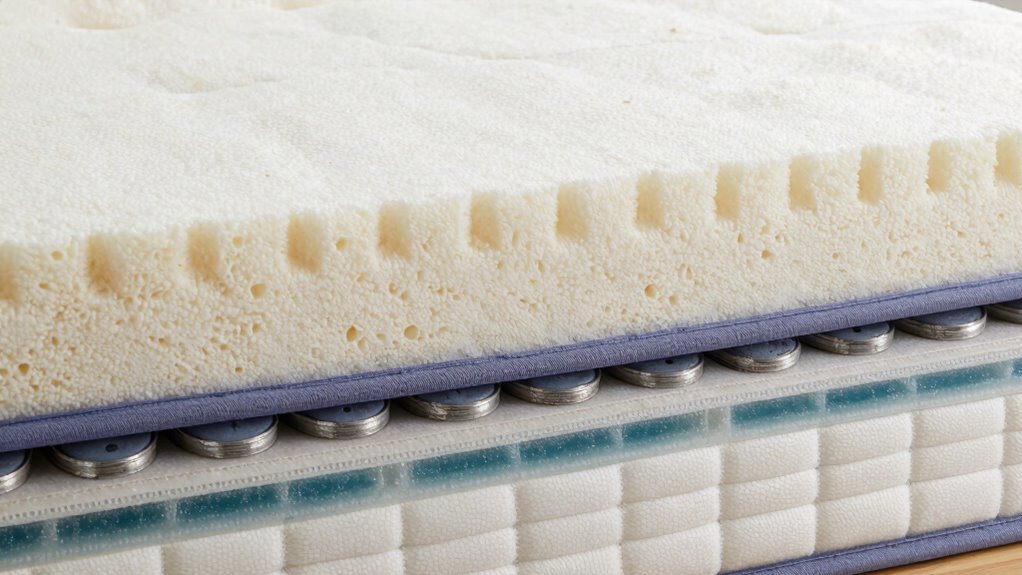
You might notice a mattress’s initial comfort, but the materials truly matter for long-term support, durability, and your health. Quality materials resist sagging, mold, and allergens, helping your mattress stay supportive and comfortable over time. They also regulate temperature and prevent wear, saving you money in the long run. Choosing the right materials guarantees better sleep and well-being. Keep exploring to uncover how your mattress’s composition can impact your nightly rest for years.
Key Takeaways
- Durable materials maintain support and comfort over time, ensuring long-term sleep quality.
- Material composition affects resistance to mold, allergens, and wear, impacting health and longevity.
- High-quality materials prevent sagging and breakdown, reducing the need for frequent mattress replacements.
- Breathable and eco-friendly materials improve temperature regulation and lessen environmental impact.
- Proper material selection supports spinal alignment, pressure relief, and overall sleep comfort beyond initial impressions.
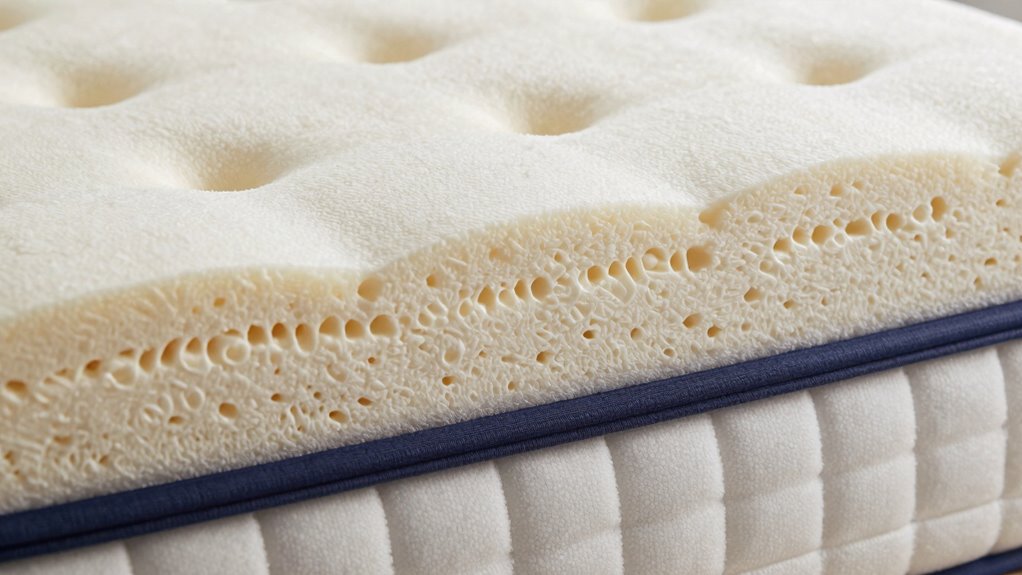
Choosing the right mattress can substantially impact your sleep quality, and the materials used in its construction play a vital role. While the initial look and feel might seem promising, understanding what makes mattress materials matter goes beyond first impressions. The choice of materials directly influences sleep comfort and durability factors, both of which determine how well your mattress supports you over time.
Choosing the right mattress materials is essential for long-lasting comfort and support.
When you consider sleep comfort, the materials used in a mattress determine how well it conforms to your body’s shape, relieves pressure points, and maintains consistent support. Memory foam, for example, molds to your body, offering personalized comfort and minimizing tossing and turning. Latex provides a resilient surface that’s both bouncy and supportive, ideal for those who prefer a more responsive feel. Innerspring mattresses rely on coils, but the comfort depends on the quality of the springs and the padding materials surrounding them. The materials’ properties influence how comfortable you feel during sleep, affecting everything from spinal alignment to temperature regulation.
Durability factors are equally critical when evaluating mattress materials. A mattress that loses its shape or support after a few years becomes a poor investment. High-quality materials like dense memory foam or natural latex tend to last longer because they resist sagging and breakdown. The density of foam, the gauge of coils, and the quality of padding all contribute to a mattress’s lifespan. Cheaper materials might initially feel soft and plush but often degrade quickly, leading to uneven support and discomfort. Selecting durable materials not only enhances longevity but also ensures that your investment remains worthwhile over time. Choosing durable materials ensures that your mattress maintains its supportive qualities over years of use, preventing the need for frequent replacements. Additionally, understanding the material composition helps consumers make better informed decisions about longevity and care. Furthermore, selecting long-lasting materials can reduce the environmental impact by decreasing the frequency of mattress replacements.
Additionally, the materials influence how well a mattress manages wear and tear. Natural latex, for instance, is resistant to mold, dust mites, and allergens, making it a healthier option for long-term use. Conversely, synthetic materials may be more prone to degradation and might not stand up to the rigors of daily use. The breathability of materials also affects durability; poorly ventilated foams can trap heat and moisture, accelerating material breakdown and leading to sagging sooner. Incorporating sustainable materials can also contribute to a more environmentally friendly and long-lasting mattress.
Ultimately, what makes mattress materials matter beyond first impressions is their ability to deliver consistent sleep comfort and withstand the test of time. High-quality materials enhance your sleep experience by providing proper support and pressure relief, while also standing strong against daily wear. When you look beyond initial softness or firmness, you’ll find that investing in the right materials ensures your mattress remains a reliable foundation for restful nights for years to come.
memory foam mattress for support
As an affiliate, we earn on qualifying purchases.
As an affiliate, we earn on qualifying purchases.
Frequently Asked Questions
How Do Mattress Materials Affect Long-Term Durability?
Mattress materials directly impact your mattress’s long-term durability. High-quality materials like memory foam or latex tend to have longer mattress lifespan because they resist sagging and maintain support over time. Proper material maintenance, such as rotating your mattress and keeping it clean, extends its life further. Cheaper or low-quality materials wear out faster, leading to reduced support and comfort sooner. Choosing durable materials and caring for them guarantees your mattress stays supportive longer.
Are Eco-Friendly Mattress Materials Safer for Health?
Eco-friendly mattress materials are generally safer for your health because they produce fewer chemical emissions, reducing your exposure to potentially harmful substances. If you have allergen sensitivity, these materials often contain fewer allergens, helping you breathe easier and sleep more comfortably. By choosing eco-friendly options, you minimize health risks associated with chemical off-gassing and allergens, making your sleep environment healthier and more sustainable.
Do Different Materials Regulate Body Temperature Differently?
Different mattress materials act like a thermostat, with some better at regulating your body temperature. Breathability comparison reveals that latex and gel-infused foams promote airflow, keeping you cool. Meanwhile, memory foam tends to trap heat, leading to discomfort. Moisture regulation varies too—materials like wool wick away sweat effectively. Choosing the right material means your mattress can help you stay cool and dry all night, ensuring restful sleep.
How Do Mattress Materials Influence Motion Transfer?
Mattress materials greatly influence motion transfer. Spring support tends to transmit movement more easily, causing disturbances if your partner shifts. Foam density plays a vital role too; higher-density foams absorb motion better, minimizing transfer. When choosing a mattress, consider materials that reduce movement transfer, especially if you share a bed. Opting for dense foam or a hybrid with quality spring support can give you a quieter, more restful sleep.
Can Specific Materials Alleviate Common Sleep Issues?
You might think your mattress can’t solve sleep issues, but materials like latex foam and organic cotton actually can. Latex foam provides responsive support, reducing pressure points, while organic cotton keeps you cool and comfortable all night. Ironically, the very materials that seem simple can enhance sleep quality, alleviate discomfort, and promote better rest — proving that the right mattress choice truly makes a difference beyond first impressions.
Conclusion
Choosing the right mattress materials isn’t just about initial comfort; it’s about long-term health, durability, and sleep quality. When you prioritize quality, you invest in better rest and overall well-being. So, aren’t you worth a mattress that supports you through countless nights? Remember, the materials beneath you shape your sleep experience far beyond first impressions—making it a decision that truly matters.