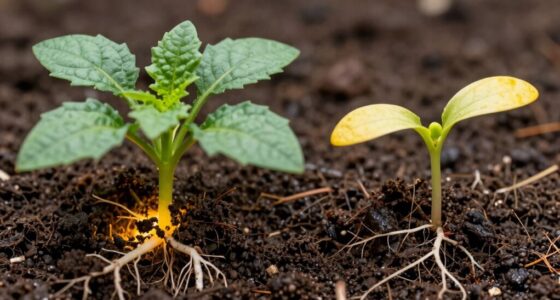
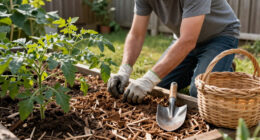
To maximize your greenhouse cucumber yield, regularly prune dead or yellowing leaves and remove side shoots beneath the main stems to focus energy on larger fruits. Use strong trellises or cages to support the vines, which improves airflow and makes harvesting easier. Gently tie or clip stems to the supports, keeping vines off the ground. Proper pruning and trellising promote healthier plants and higher quality cucumbers, so keep learning more for best results.

Get garden gear delivered free — and shop member deals
- Fast, free delivery on millions of items
- Access to Prime Big Deal Days deals on October 6–7
- Prime Video, Amazon Music and more included
Key Takeaways
- Regularly prune dead or yellow leaves to prevent disease and improve airflow around cucumber plants.
- Use sturdy vertical trellises or cages to support vines and keep fruits off the ground.
- Gently tie or clip stems to support structures to guide growth and facilitate harvest.
- Focus pruning on side shoots beneath main stems to promote larger, quality cucumbers.
- Maintain proper watering and airflow to support healthy growth and reduce pest and disease risks.
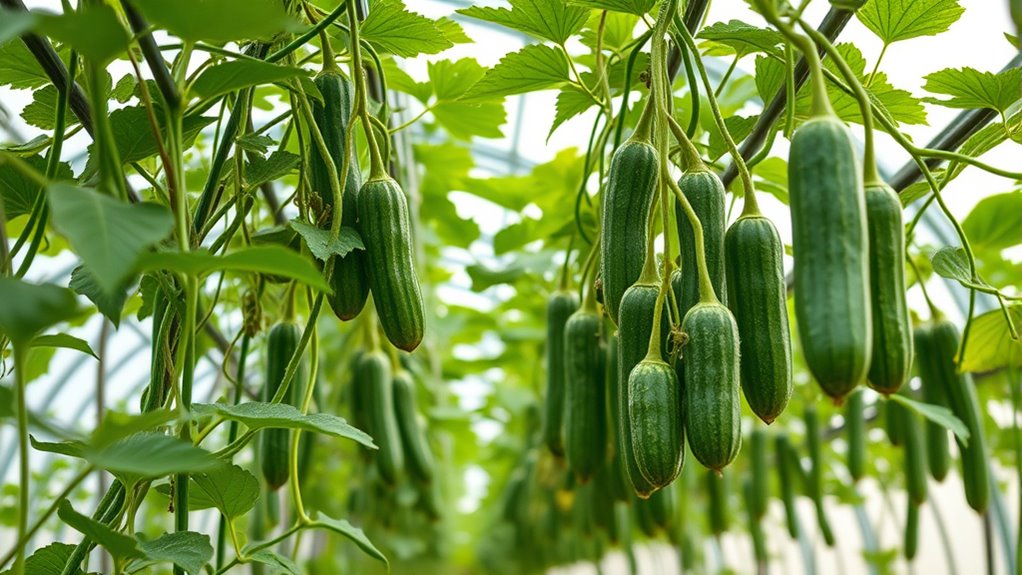
Greenhouse cucumbers offer a reliable way to enjoy fresh, crisp produce year-round, regardless of outdoor weather conditions. To maximize your harvest and keep your plants healthy, proper pruning and trellising are essential. But equally important are establishing a consistent watering schedule and managing pests effectively, as these factors directly influence the plant’s growth and fruit quality.
When it comes to pruning, start by removing any dead or yellowing leaves promptly. This prevents disease spread and improves airflow around the plants. As your cucumber vines grow, prune side shoots that develop beneath the main fruiting stems. This focuses the plant’s energy on producing larger, better-quality cucumbers rather than wasting resources on excessive foliage. Regular pruning also helps you monitor pest activity more easily, making pest management simpler and more effective.
Trellising plays a key role in supporting your cucumber plants, especially in a greenhouse environment. Use strong, vertical trellises or cages to keep the vines off the ground. This not only saves space but also improves air circulation, reducing the risk of fungal diseases. As you train the vines upward, gently tie or clip the stems to the support structure, ensuring they’re secure but not constricted. Proper trellising also makes harvesting easier and keeps fruits cleaner and less prone to rot.
A consistent watering schedule is essential to healthy cucumber growth. Cucumbers need evenly moist soil; too little water causes bitterness and reduces yield, while overwatering can lead to root rot. Check your plants daily, especially during warmer periods, and water thoroughly when the top inch of soil feels dry. Incorporate mulch around your plants to help retain soil moisture and reduce watering frequency. Maintaining this balance prevents stress on the plants, promoting steady growth and high-quality fruit.
Pest management in a greenhouse involves vigilant monitoring and early intervention. Common pests like aphids, cucumber beetles, and spider mites can quickly damage your crop. Regularly inspect the undersides of leaves and stems for signs of pests or eggs. Use integrated pest management techniques such as introducing beneficial insects, applying organic insecticidal soaps, or manually removing pests when detected early. Keeping your greenhouse clean and free of debris also minimizes hiding spots for pests, making your pest management efforts more effective.
As an affiliate, we earn on qualifying purchases.
Frequently Asked Questions
How Often Should I Prune Greenhouse Cucumber Plants?
You should prune your greenhouse cucumber plants weekly to support proper growth regulation. Regular pruning encourages healthy development, prevents disease, and increases yield. Use pruning techniques like pinching off the tips of vines and removing dead or overcrowded leaves. This routine ensures airflow and sunlight penetration, promoting vigorous growth. Keep an eye on the plant’s development, and adjust pruning frequency as needed to maintain ideal health and productivity.
What Type of Trellis Is Best for Greenhouse Cucumbers?
The best greenhouse supports for cucumber trellis options include trellis nets, espalier, or vertical stakes, which keep plants upright and improve airflow. These options make harvesting easier and prevent disease. Choose sturdy, adjustable supports that suit your space and plant size. Trellising helps maximize your greenhouse’s productivity and keeps cucumbers clean. Overall, select the cucumber trellis options that provide stability, promote healthy growth, and are easy to maintain.
How Do I Prevent Diseases When Trellising Cucumbers?
Think of your cucumbers as knights guarding a castle. To prevent diseases, choose disease-resistant varieties and keep your trellis clean, removing any fallen leaves or debris that could harbor pests. Use organic pest control methods to ward off invaders without harming your plants. Guarantee good airflow around your cucumbers, avoiding overcrowding. Regularly inspect your plants and prune when needed, creating a strong defense against diseases and promoting healthy growth.
Can I Prune Cucumbers to Increase Fruit Size?
Yes, you can prune cucumbers to increase fruit size by using effective pruning techniques. Focus on removing excess vines and side shoots to direct the plant’s energy toward developing larger fruits. Regularly prune the lower leaves and unproductive growth to improve air circulation and sunlight exposure. This targeted pruning encourages the plant to concentrate nutrients into fewer, larger cucumbers, ultimately increasing your fruit size and overall yield.
What Is the Ideal Humidity for Greenhouse Cucumber Growth?
You should aim for an ideal humidity of 85-90% in your greenhouse for cucumber growth. Proper humidity control helps balance plant transpiration, preventing stress and promoting healthy development. Too high humidity can lead to fungal issues, while too low can cause dehydration. Monitor humidity levels regularly, especially during flowering and fruiting, to make certain your cucumbers stay healthy and produce quality fruit.
Conclusion
By pruning and trellising your greenhouse cucumbers, you guarantee healthy growth and higher yields. Some might worry it’s time-consuming, but the effort pays off with better fruit quality and easier harvesting. Plus, these practices help prevent diseases and keep your plants manageable. So, don’t skip these steps — they’re essential for a successful cucumber season. With consistent care, you’ll enjoy fresh, crisp cucumbers straight from your greenhouse all season long.
Fall yard work Picks
leaf blowers
As an affiliate, we earn on qualifying purchases.