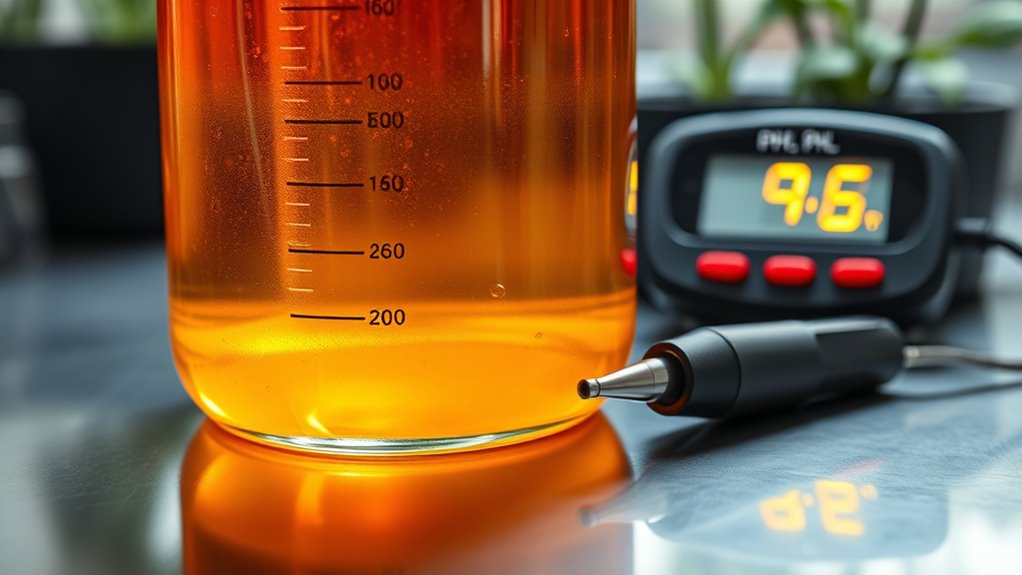

To manage nutrient solutions effectively, regularly check and adjust pH to stay between 5.5 and 6.5, as this guarantees nutrients are available and accessible. Keep an eye on EC levels to balance nutrient concentration—use a meter to prevent deficiencies or salt buildup. Stable pH and EC promote healthy growth and prevent issues, so consistent monitoring and adjustments are key. If you want to master these practices, you’ll find more useful tips here.
Prime for Young Adults — start your free trial
Fast free delivery, streaming and member deals for eligible 18–24 year olds.
As an affiliate, we earn on qualifying purchases.
Key Takeaways
- Regularly test and adjust pH to keep it within 5.5-6.5 for optimal nutrient availability.
- Use pH up/down solutions to fine-tune acidity or alkalinity as needed.
- Monitor EC levels to ensure proper nutrient concentration, avoiding deficiencies or salt buildup.
- Adjust nutrient concentrations based on EC readings, diluting or supplementing accordingly.
- Maintain balanced pH and EC to promote healthy nutrient uptake and prevent plant stress.

Nutrient solutions are specially formulated mixtures that provide essential nutrients to plants, ensuring healthy growth and development. To maximize their effectiveness, you need to pay close attention to two critical factors: pH adjustment and electrical conductivity (EC). Both play a vital role in how plants absorb nutrients and thrive.
First, understanding pH adjustment is crucial. The pH level of your nutrient solution influences the availability of nutrients to your plants. Most plants prefer a slightly acidic to neutral pH, typically between 5.5 and 6.5. If the pH drifts outside this range, certain nutrients become less soluble and harder for plants to absorb. Regularly testing and adjusting the pH guarantees your plants access all the nutrients they need. Using pH up or pH down solutions, you can fine-tune the acidity or alkalinity of your mix. Remember, even small shifts in pH can considerably impact nutrient uptake, so it’s worth checking your solution daily, especially in hydroponic systems or during rapid growth phases.
Regularly check and adjust pH to ensure optimal nutrient availability for healthy plant growth.
Electrical conductivity (EC) measures the total amount of soluble salts or nutrients in your solution. It’s like a nutrient concentration indicator, helping you gauge whether your plants are getting too much or too little nourishment. Maintaining the right EC level is essential; too high, and you risk salt buildup that can damage roots, inhibit water uptake, and cause nutrient imbalances. Too low, and your plants may not get enough nutrients to support vigorous growth. To manage EC effectively, you should regularly test it with a reliable meter and adjust your nutrient concentrations accordingly. If your EC is too high, dilute your solution with water. Conversely, if it’s too low, add more nutrients to reach the desired level.
Additionally, understanding how HEPA filtration captures small particles can help you appreciate the importance of maintaining proper nutrient balance, as excess salts and particles can adversely affect plant health. Balancing pH adjustment and EC management requires ongoing attention. As plants grow, their nutrient needs change, making it necessary to adjust your solution periodically. Proper pH guarantees nutrients are available, while correct EC levels assure your plants receive the right amount of nourishment. Both factors are interconnected; incorrect pH can affect nutrient solubility, impacting EC readings and overall plant health. When preparing your nutrient solution, start with recommended formulations, then fine-tune pH and EC based on your plants’ responses and environmental conditions. Keeping these parameters within ideal ranges helps prevent deficiencies and toxicities, promoting healthy, vigorous growth.
pH up and pH down solutions for plants
As an affiliate, we earn on qualifying purchases.
As an affiliate, we earn on qualifying purchases.
Frequently Asked Questions
How Do Temperature Fluctuations Affect EC and Ph Levels?
Temperature effects can cause fluctuations in EC and pH levels, impacting nutrient stability. As temperatures rise, EC may increase due to faster nutrient uptake, while cooler temps can slow this process. Temperature changes also influence pH, often causing it to drift higher or lower. You need to observe these fluctuations closely because maintaining stable EC and pH ensures your plants receive consistent nutrients, preventing stress and promoting healthy growth.
What Are the Signs of Nutrient Imbalance in Plants?
You’ll notice nutrient imbalances when your plants show yellowing leaves, stunted growth, or leaf curling, indicating a nutrient deficiency. Dark or burnt leaf edges can signal toxic salt buildup. If growth slows despite proper watering, or if you see uneven coloration, it’s a sign to check your nutrient levels and adjust EC and pH to restore balance, preventing deficiencies or toxicities from harming your plants.
How Often Should Nutrient Solutions Be Replaced?
You should replace your nutrient solutions every one to two weeks to maintain ideal nutrient concentration and guarantee solution freshness. Regular replacement prevents the buildup of salts and contaminants that can harm your plants. Monitor your solution’s EC and pH levels frequently, and if they drift outside ideal ranges, consider replacing the solution sooner. Consistent solution changes promote healthy growth and prevent nutrient imbalances.
Can Over-Application of Nutrients Harm Plant Roots?
Yes, over-application of nutrients can harm your plant roots. Excess nutrients can cause root damage by creating nutrient toxicity, which stresses and weakens roots. This can lead to reduced nutrient uptake and overall plant health decline. To prevent this, monitor your nutrient levels carefully, avoid over-fertilizing, and guarantee proper EC and pH management. Keeping these in check helps protect your roots from toxicity and damage, promoting healthy plant growth.
What Are the Best Tools for Measuring EC and Ph Accurately?
Measuring EC and pH accurately is like using a precise scale for weight. Digital meters are your best tools, offering quick and reliable readings. To guarantee accuracy, you must regularly calibrate them using proper calibration techniques with standard solutions. This keeps your measurements consistent, helping you maintain ideal nutrient levels and healthy plants. Invest in quality digital meters and stay diligent with calibration for the best results.
Conclusion
By mastering EC and pH management, you hold the power to transform your plants’ health and yield beyond your wildest dreams. Think of your nutrient solution as the secret sauce—when perfectly balanced, it’s like giving your plants a superpower boost. Don’t underestimate the impact of small tweaks; they can turn your garden into a lush paradise that outshines even the most vibrant rainforests. Keep fine-tuning, and watch your plants thrive like never before!
Fall yard work Picks
leaf blowers
As an affiliate, we earn on qualifying purchases.