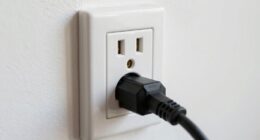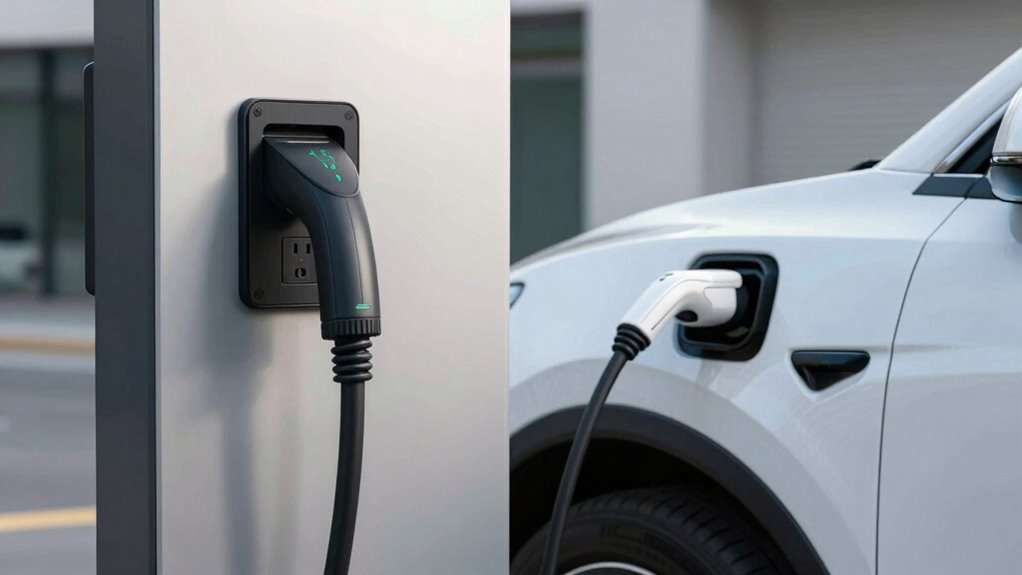

When choosing between hardwired and plug-in EV chargers, you should consider installation ease, cost, and durability. Hardwired units offer a sleek look and are more durable but require professional installation and higher upfront costs. Plug-in chargers are easier to set up, often less expensive initially, and easier to move or upgrade. However, their cords and outlets may wear over time. Understanding these differences helps you avoid the outlet trap and find the best fit for your needs.
Key Takeaways
- Hardwired chargers offer a sleek appearance and durability but require professional installation and higher upfront costs.
- Plug-in chargers are easier to install, flexible, and less expensive initially, making them suitable for temporary or upgrading needs.
- Hardwired units eliminate plug wear and exposure, potentially providing longer-lasting performance with less maintenance.
- Plug-in chargers can be unplugged easily, allowing for mobility and simple relocation, but may be more susceptible to wear and damage.
- Total costs and convenience depend on installation complexity, future flexibility, and preference for aesthetics and maintenance.
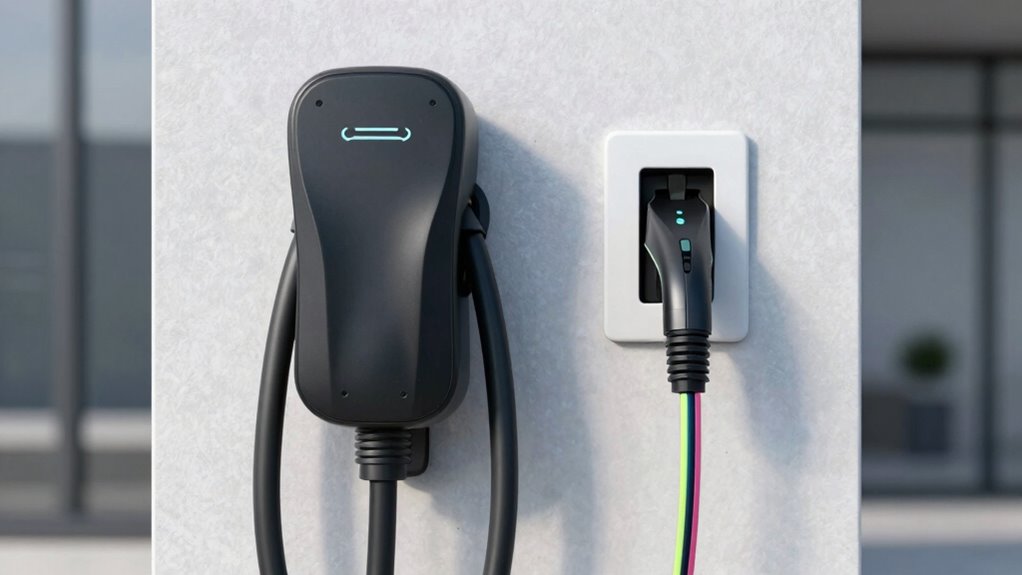
When choosing an electric vehicle (EV) charger, understanding the difference between hardwired and plug-in options is essential. Your decision impacts installation considerations, ongoing maintenance, and overall convenience. Hardwired chargers are permanently connected directly to your electrical system, which means the wiring is built into the wall or mounted securely with no removable cord. This setup often requires professional installation, as it involves wiring directly into your home’s electrical panel, and might need permits or inspections depending on local codes. Because of the complexity, the initial installation cost for a hardwired charger tends to be higher, but it can be more streamlined and neater in appearance, offering a seamless look that many homeowners prefer.
On the other hand, plug-in chargers come with a cord and a standard outlet plug, allowing you to easily connect and disconnect the charger as needed. This flexibility makes them ideal if you want to move the charger between different locations or prefer a less invasive installation process. The installation considerations for plug-in chargers are generally simpler, often requiring just a dedicated outlet, which can be installed by a qualified electrician at a lower upfront cost compared to hardwired units. Because they use standard outlets, the cost comparison favors plug-in chargers when initial expenses are considered, especially if your electrical system already has suitable outlets. Plus, if you ever need to relocate or upgrade your charger, unplugging and moving a plug-in unit is straightforward and inexpensive.
Additionally, the ease of maintenance for plug-in chargers can be advantageous, as replacing a worn cord or plug is typically simpler than servicing a hardwired system. However, it’s important to weigh the long-term implications of each choice. Hardwired chargers tend to be more durable and often have fewer components that could fail since they lack a removable cord. They also eliminate the risk of damage or wear to the plug and cord, which can be a concern with plug-in models over time. Conversely, plug-in chargers offer a level of convenience that can be appealing, especially if you’re renting or planning to change locations. Yet, they might require more maintenance, as the cord and plug are exposed to potential wear and tear.
In terms of cost comparison, the initial investment for a hardwired charger usually exceeds that of a plug-in unit once installation labor and materials are included. Still, the added durability and integrated look of hardwired options might justify the expense for many homeowners. Conversely, if budget constraints are a priority or you prefer a flexible setup, a plug-in charger presents a more affordable and adaptable option. Ultimately, your choice hinges on your specific installation considerations, future plans, and how much you’re willing to invest upfront versus down the line.
Frequently Asked Questions
Are Hardwired Chargers More Cost-Effective Than Plug-In Options?
Hardwired chargers are generally more cost-effective over time due to lower maintenance and fewer connection issues, but their initial installation complexity can be higher. You might pay more upfront for professional installation, but you’ll save on potential outlet replacement or damage. Plug-in options are easier and cheaper to install but could lead to higher costs if outlets wear out or require repairs. Consider your long-term needs and installation environment for the best choice.
Can I Upgrade From a Plug-In to a Hardwired Charger Later?
Yes, you can upgrade from a plug-in to a hardwired charger later, but you’ll need to verify charger compatibility first. Most hardwired chargers require specific electrical upgrades to handle higher power loads, so consulting an electrician is essential. They can ensure your electrical system is ready, and help you make the switch smoothly, avoiding potential safety issues or code violations. Planning ahead makes the upgrade easier and more efficient.
Which Charger Type Offers Better Safety Features?
Hardwired chargers generally offer better safety features because they’re connected directly to your electrical system, reducing the risk of loose connections or faulty outlets. They often include advanced ground fault protection and surge protection, which help prevent electrical shocks and damage. Plug-in chargers may lack some of these integrated safety features, making hardwired options a safer choice, especially for long-term use and higher charging demands.
Do Hardwired Chargers Increase Home Insurance Premiums?
Hardwired chargers can potentially increase your home insurance premiums because of insurance implications related to installation requirements. Insurance companies might see hardwired setups as riskier if not installed properly, which could lead to higher premiums. To avoid this, guarantee you follow all installation requirements and work with certified professionals. Proper installation minimizes risks, reassuring your insurer and helping you maintain your current insurance rates.
Are There Restrictions on Installing Plug-In Chargers in Certain Areas?
You might think installing a plug-in charger is as simple as plugging in your coffee machine, but some areas have strict installation restrictions and zoning regulations that could turn your plans into a bureaucratic maze. Certain neighborhoods or building codes might restrict where you can place these chargers, or require permits. Always check local rules first—otherwise, you could find yourself facing unexpected legal hurdles that make your EV dreams stall in the driveway.
Conclusion
Ultimately, choosing between hardwired and plug-in EV chargers depends on your needs and nuances. Consider convenience, compliance, and consistency to avoid costly complications. By weighing your options wisely, you’ll ward off woes and wield a well-wired wonder that works seamlessly. Whether you favor flexibility or fixed functionality, making a mindful decision guarantees your EV experience remains smooth, safe, and satisfying. Remember, a well-wired choice is a wise and worthwhile investment.