
Climate justice shifts your focus to addressing social inequalities in environmental policies. It emphasizes prioritizing vulnerable communities that face the worst impacts of climate change, ensuring they get fair access to clean air, water, and safe housing. It also encourages investments in underserved areas, creating jobs and improving resilience. By considering social factors, policies become more inclusive and effective. If you want to understand how this approach shapes broader policy changes, keep exploring these ideas further.

Get garden gear delivered free with Prime
- Fast, free delivery on millions of items
- Prime Video, Amazon Music and more included
- Member-only deals all year
Key Takeaways
- Climate justice shifts policy focus toward addressing social vulnerabilities and prioritizing marginalized communities’ needs.
- It emphasizes equitable resource allocation for climate adaptation and mitigation efforts.
- Policies incorporate community participation and local knowledge to ensure inclusive decision-making.
- Climate justice promotes moral responsibility, integrating social and environmental health in policy development.
- It encourages investments that create economic opportunities in underserved areas, fostering resilience and fairness.
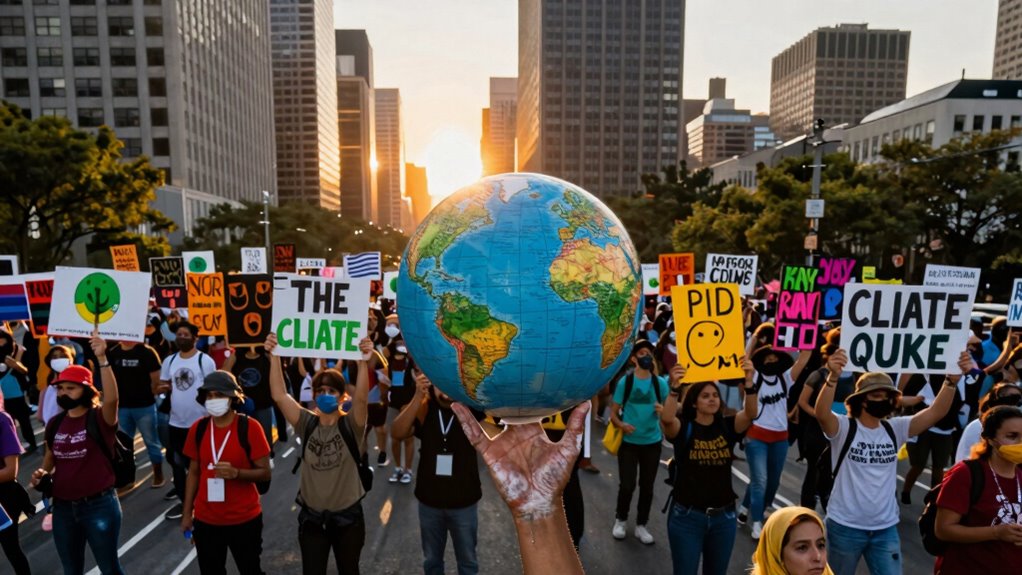
Have you ever wondered how climate change impacts different communities unevenly? When you look closely, you realize that marginalized groups often bear the brunt of environmental crises while having the least resources to cope. This disparity highlights the importance of environmental equity, which calls for policies that address these injustices directly. Climate justice emphasizes that those least responsible for emissions—low-income communities, Indigenous peoples, and communities of color—deserve prioritized support to ensure they aren’t left behind as we develop solutions. Recognizing this shifts policy priorities from solely reducing carbon emissions to also tackling social vulnerabilities, fostering social resilience.
Addressing social vulnerabilities through climate justice ensures marginalized communities receive prioritized support and resources.
Incorporating environmental equity into policy means focusing on vulnerable communities’ needs, ensuring they have access to clean air, water, and safe housing. It pushes policymakers to move beyond generic climate solutions and tailor interventions that uplift those disproportionately affected. This approach doesn’t just promote fairness; it strengthens social resilience by empowering communities to adapt and recover from climate impacts. When policies prioritize environmental equity, they foster inclusive decision-making processes, giving affected communities a voice. This inclusion helps create more effective, sustainable solutions because they’re rooted in local knowledge and real needs.
Climate justice also influences policy by shifting the conversation from a technical challenge to a moral imperative. It demands that policymakers recognize the interconnectedness of environmental health and social well-being. As you watch these changes take shape, you see that social resilience becomes a cornerstone of climate policies—building capacity within communities to withstand storms, floods, and droughts. This resilience isn’t just about infrastructure; it involves education, economic opportunities, and access to healthcare, which all contribute to a community’s ability to bounce back. Recognizing environmental health and social well-being as interconnected is essential for creating comprehensive climate policies. Additionally, understanding the disproportionate impacts of climate change helps shape more equitable solutions that prioritize the most vulnerable populations. By integrating environmental justice principles, policymakers can develop more holistic and equitable strategies that address root causes and social determinants of vulnerability.
Furthermore, prioritizing environmental equity encourages investments in underserved areas, creating jobs and stimulating local economies. It promotes equitable distribution of resources for climate adaptation and mitigation, ensuring that no community is left behind. This approach is supported by the growing recognition of climate-related disparities, which underscores the need for targeted efforts to address inequality. To effectively address these issues, policymakers are increasingly considering social determinants of vulnerability in their planning. As policies evolve, you notice a shift toward holistic approaches that recognize the social dimensions of climate change. These strategies acknowledge that climate justice isn’t just about protecting the environment but about fostering fairness, safety, and resilience across all communities. Ultimately, by integrating these principles into policy, you help pave the way for a more just, resilient, and sustainable future for everyone.
Popular right now

Ninja Flip Toaster Oven and Air Fryer, 8-in-1, Stainless Steel, SP151

Ninja DualZone Air Fryer 10 Qt Smart 6-in-1 Grey (DZ950)

Vitamix Propel Series 510 Professional-Grade Blender, 3 Programs, Black
As an affiliate, we earn on qualifying purchases.
Frequently Asked Questions
How Does Climate Justice Impact International Policy Agreements?
Climate justice influences international policy agreements by emphasizing climate equity, ensuring vulnerable communities aren’t left behind. You see, it shifts global negotiations to prioritize fair resource distribution and accountability. This means negotiations now focus more on supporting developing nations and addressing historical emissions. As a result, policymakers incorporate justice principles, fostering more inclusive, equitable solutions that balance environmental needs with social fairness across nations.
What Role Do Marginalized Communities Play in Climate Justice Movements?
You play a crucial role in climate justice movements by bringing community voices to the forefront. Your participation in grassroots activism helps highlight the specific challenges marginalized communities face due to climate change. By organizing and advocating locally, you push for policies that address these inequities, ensuring that those most affected are heard and included in decision-making processes. Your involvement empowers others and drives meaningful change in climate policy.
How Is Climate Justice Integrated Into Economic Policy Decisions?
You see that climate justice is integrated into economic policy decisions through a focus on equity considerations and social inclusion. Policymakers prioritize fair resource distribution, ensuring marginalized communities don’t bear the brunt of environmental impacts. They promote inclusive economic growth, support green jobs in underserved areas, and embed social equity into climate strategies. This approach aims to create a more just economy that benefits all, especially those most vulnerable to climate change.
What Are the Main Challenges in Implementing Climate Justice Policies?
You face challenges like balancing equity concerns and ensuring meaningful community engagement. Resistance from stakeholders worried about economic impacts can slow progress. Limited resources and political will also hinder implementation. You need to navigate diverse perspectives and foster trust to create inclusive policies. Addressing these issues requires persistent effort to prioritize vulnerable communities and actively involve them in decision-making, ultimately making climate justice policies more effective and equitable.
How Does Climate Justice Influence Funding for Renewable Energy Projects?
Imagine a world where every dollar spent on renewable energy is a brushstroke painting fairness across communities. Climate justice influences funding by emphasizing equity integration, ensuring resources are allocated to marginalized groups. This shift pushes policymakers to prioritize projects that address disparities, making clean energy accessible to all. As a result, funding becomes a tool not just for sustainability but for social equity, transforming the landscape of renewable energy initiatives.
Conclusion
As you stand at the crossroads of change, remember that climate justice is the compass guiding our path. It’s the fragile seedling breaking through concrete, a beacon piercing the thick fog of indifference. Your voice can stir the winds, shift the tides, and turn the compass toward equity and sustainability. Embrace this shift, for in your hands lies the power to nurture a world where justice blooms amid the storm, illuminating a brighter, fairer horizon.