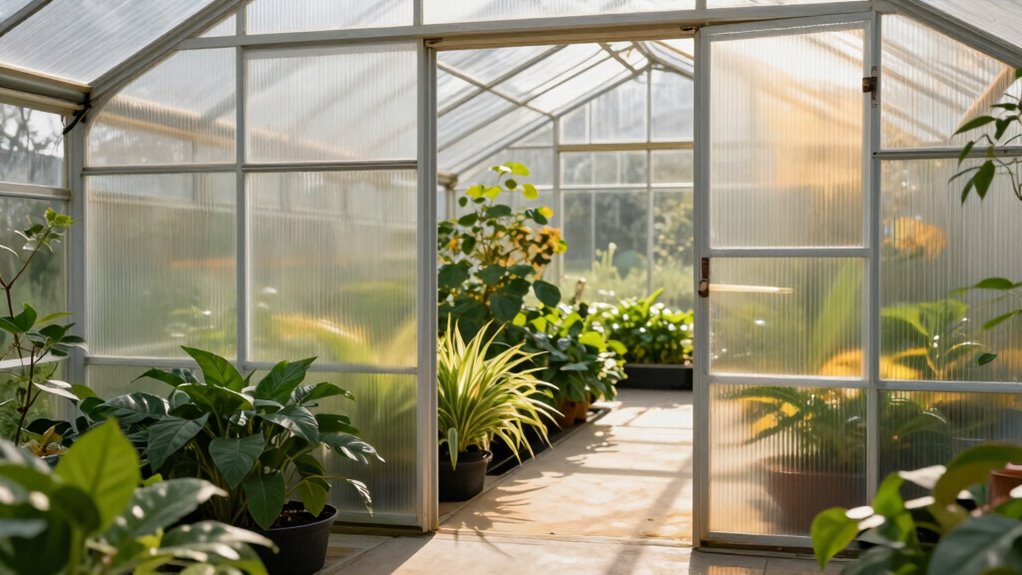

Polycarbonate has become the go-to material for home greenhouses because it’s lightweight, shatter-resistant, and safe to install. Its high impact resistance protects against hail and debris, while its excellent sunlight transmission supports healthy plant growth and reduces energy costs. Plus, its UV protection maintains clarity and insulation over time, helping you save money on maintenance. If you want to know how it offers durability and energy efficiency, keep exploring the benefits it provides.

Get garden gear delivered free — and shop member deals
- Fast, free delivery on millions of items
- Access to Prime Big Deal Days deals on October 6–7
- Prime Video, Amazon Music and more included
Key Takeaways
- Polycarbonate panels are lightweight and easy to install, reducing construction time and increasing safety.
- Their high impact resistance and shatter-proof nature ensure long-term durability against hail and debris.
- Excellent sunlight transmission supports plant growth while UV protection prevents panel degradation.
- They provide superior insulation, maintaining consistent indoor temperatures and lowering energy costs.
- Polycarbonate acts as an effective pest barrier, minimizing the need for chemical pest control.
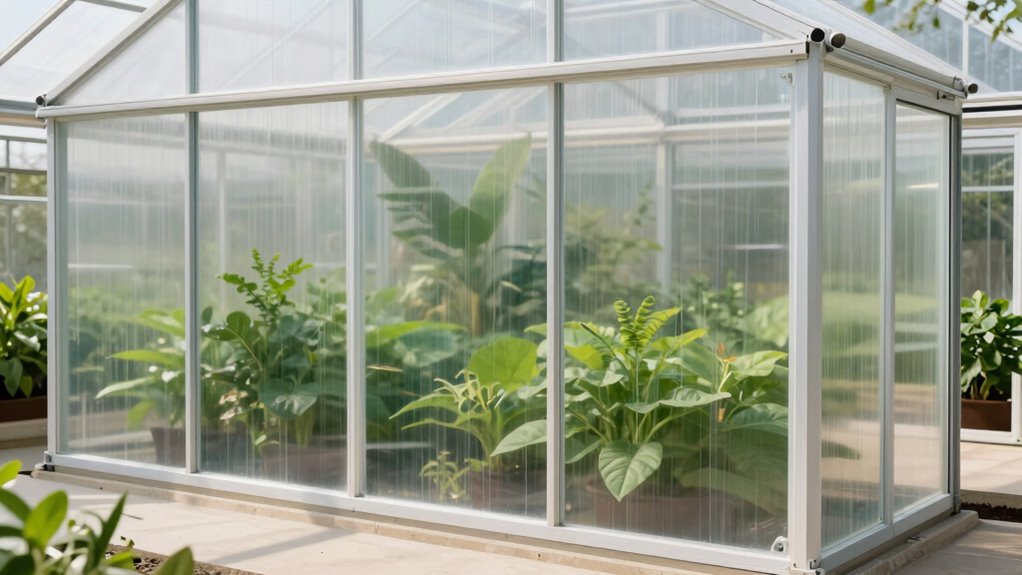
If you’re considering building a home greenhouse, polycarbonate panels are an excellent choice due to their durability and clarity. They provide a reliable barrier that lets in ample sunlight, which is crucial for healthy plant growth. Unlike glass, polycarbonate is lightweight and resistant to shattering, making installation easier and safer. Plus, their high impact resistance means they can withstand the elements better over time, saving you maintenance costs and worries about damage from hail or debris. When you opt for polycarbonate, you’re choosing a material that offers long-term stability and consistent performance, essential for creating a thriving indoor garden.
One of the key reasons polycarbonate has become the default for many home greenhouses is its ability to harness solar energy effectively. The panels transmit a high percentage of sunlight, ensuring your plants get the light they need to photosynthesize efficiently. This natural light can reduce your reliance on artificial grow lights, cutting down energy costs and making your greenhouse more eco-friendly. The panels also have good insulation properties, helping maintain steady temperatures inside. This means your plants stay comfortable and healthy even when outdoor weather fluctuates, further optimizing the use of solar energy and minimizing energy waste. Additionally, polycarbonate’s UV protection helps prevent the panels from degrading over time, maintaining their clarity and insulating properties for years to come.
Pest control is another area where polycarbonate panels shine. Their sturdy construction acts as a physical barrier, preventing pests from entering the greenhouse and damaging your plants. Unlike open-sided or less durable materials, polycarbonate’s resilience helps you keep out common nuisances like insects or rodents. This reduces the need for chemical pest control methods, making your greenhouse environment safer and healthier for both your plants and your family. Plus, because polycarbonate resists scratches and is easy to clean, you can maintain a hygienic environment that discourages pests from settling in. Understanding the impact resistance of polycarbonate highlights why it remains a popular choice for durable, pest-proof greenhouse panels. Its light transmission properties ensure your plants receive optimal sunlight while maintaining a secure environment. Moreover, the material’s ability to block UV rays also plays a role in protecting your plants from sun damage and ensuring a healthier growing environment.
As an affiliate, we earn on qualifying purchases.
Frequently Asked Questions
How Does Polycarbonate Compare to Glass in Insulation?
Polycarbonate insulates better than glass because it has lower thermal conductivity, helping you keep heat inside your greenhouse more effectively. Plus, its UV resistance protects against sunlight damage, extending its lifespan. You’ll notice that polycarbonate reduces heat loss and maintains a more stable temperature, making it ideal for your plants. Glass, while clear, doesn’t offer the same level of insulation or UV protection, so polycarbonate’s a smarter choice for energy efficiency.
What Is the Lifespan of Polycarbonate Panels?
Polycarbonate panels typically last 10 to 15 years, though durability concerns may cause some to worry about their longevity. You can extend their lifespan by choosing UV-resistant options and proper maintenance. While they’re durable, consider the environmental impact since they’re plastic-based and may not be as eco-friendly as glass. Regular cleaning and avoiding harsh chemicals can help maximize their durability and reduce environmental harm.
Are Polycarbonate Panels Resistant to UV Damage?
Yes, polycarbonate panels are highly resistant to UV damage, thanks to special coatings that protect against ultraviolet rays. This UV resistance enhances panel durability, preventing yellowing, cracking, and brittleness over time. You’ll find that these panels maintain their clarity and strength for years, making them a reliable choice for your greenhouse. Their resilience to UV damage guarantees your plants stay protected and your greenhouse remains attractive longer.
Can Polycarbonate Panels Be Easily Repaired or Replaced?
You can definitely repair or replace polycarbonate panels, and it’s easier than you might think. For panel repair, you just need to find the damaged section and use a suitable adhesive or replacement piece. When it’s time for replacement procedures, you’ll want to carefully remove the old panel, ensuring you don’t damage the frame, then fit the new one securely. With a little patience, you’ll have your greenhouse looking good as new.
How Do Polycarbonate Panels Impact Greenhouse Heating Costs?
Polycarbonate panels reduce your greenhouse heating costs by enhancing energy efficiency and providing excellent insulation. Their strong, double-wall design traps heat effectively, so you spend less on heating and maintain consistent temperatures. This leads to significant cost savings over time. Additionally, their durability means fewer replacements and repairs, further lowering ongoing expenses. Overall, using polycarbonate panels makes your greenhouse more energy-efficient and budget-friendly, especially during colder months.
Conclusion
You now stand at the threshold of your greenhouse dreams, where polycarbonate is the sturdy, clear guardian shielding your plants from the storm. It’s like a glass fortress, but lighter and tougher, turning your green haven into a sunlit sanctuary. With its resilience and clarity, polycarbonate transforms your space into a thriving oasis, where your plants can dance in the sunlight and grow strong. Embrace this material, and watch your garden flourish like never before.
Fall Picks
fall essentials
As an affiliate, we earn on qualifying purchases.