
Condensation in your greenhouse signals that conditions are out of balance and could cause problems. It usually happens when humidity gets too high or airflow is poor, leading to water droplets on surfaces. This can promote mold, plant diseases, or even structural damage if ignored. If you notice persistent foggy windows or damp walls, it’s a sign you need to act. Keep exploring to discover effective ways to improve your greenhouse environment and prevent damage.
Key Takeaways
- Condensation indicates high humidity and poor airflow, signaling environmental imbalance.
- Persistent condensation can promote mold, fungi, and plant diseases.
- It suggests ventilation is insufficient, risking structural damage over time.
- Early condensation signs help prevent long-term plant health and infrastructure issues.
- Monitoring and managing humidity levels are essential to maintain a healthy greenhouse environment.
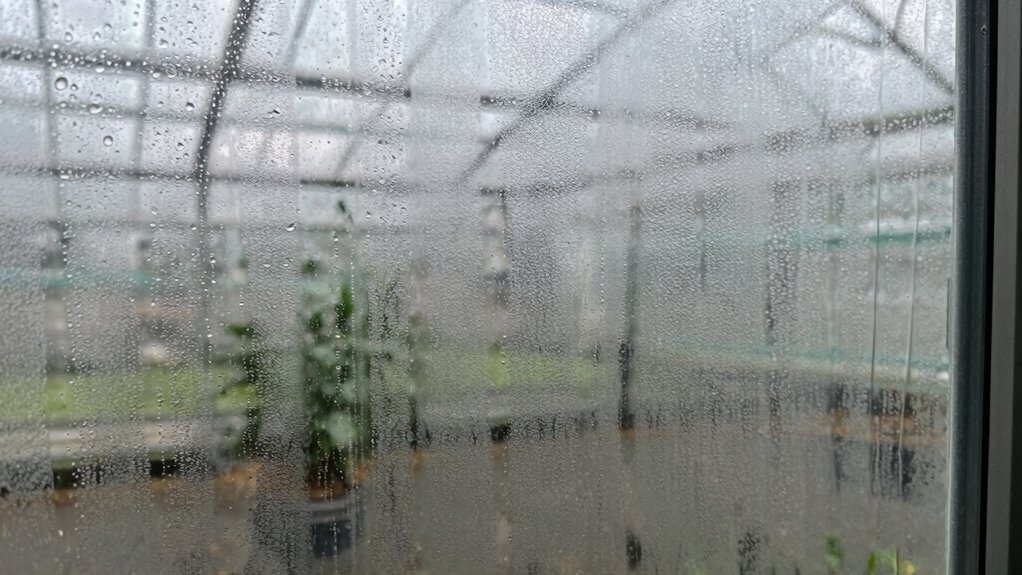
Condensation on windows or walls might seem like a minor inconvenience, but it can actually be a warning sign of deeper issues with your greenhouse’s environment. When you notice moisture buildup on your greenhouse’s surfaces, especially as window condensation, it signals that the internal atmosphere isn’t properly balanced. Excess moisture in the air condenses on cooler surfaces, creating visible water droplets. While it might seem harmless at first, persistent condensation indicates that your humidity levels are too high or that airflow isn’t sufficient. This imbalance can lead to problems like mold growth, plant diseases, and even structural damage over time.
Persistent condensation signals high humidity or poor airflow, risking mold, plant disease, and structural damage.
If you see frequent moisture buildup on your windows, it means your greenhouse isn’t venting moisture effectively. High humidity levels are often a result of inadequate ventilation or poor air circulation. When warm, moist air comes into contact with cooler surfaces, condensation occurs. This is a natural process, but if it’s happening constantly, it’s a sign that you need to improve airflow or reduce excess moisture. You might also be overwatering your plants or not managing humidity with dehumidifiers or exhaust fans. Addressing window condensation early can help prevent more serious issues down the line. Proper ventilation management is essential to maintaining a balanced environment and preventing persistent moisture problems.
Moisture buildup is not just a surface problem; it can affect the overall health of your greenhouse environment. Excess humidity creates an ideal environment for mold, mildew, and fungal pathogens to thrive. These threats can quickly spread to your plants, causing rot and disease. Moreover, persistent condensation can lead to water damage on your greenhouse’s framing and glass, weakening its structure over time. Recognizing the signs—like foggy windows or damp walls—means you can take corrective action before the situation worsens. Additionally, monitoring humidity levels is essential for maintaining a healthy environment and preventing these issues from escalating. Regularly checking and adjusting environmental controls can make a significant difference in avoiding long-term damage. Implementing proper ventilation techniques and humidity control measures can greatly reduce the risk of condensation-related problems.

Amico 12" Smart Shutter Exhaust Fan with Thermostat & 8 Speed, 1282 CFM (Up To 1600 Sq.Ft), 25W Energy Saving Brushless DC Motor, Wall Mount Garage/Attic/Greenhouse Vent Fan, Plug & Play, FCC
【Massive 1282 CFM Airflow & Wide Coverage】Dominate the heat with a powerful 1282 CFM airflow capability. Driven by…
As an affiliate, we earn on qualifying purchases.
As an affiliate, we earn on qualifying purchases.
Frequently Asked Questions
How Does Condensation Specifically Indicate Greenhouse Gas Buildup?
Condensation indicates greenhouse gas buildup because increased water vapor, a key atmospheric indicator, results from higher temperatures caused by trapped heat. When greenhouse gases like CO₂ and methane accumulate, they warm the atmosphere, causing more water vapor to condense into droplets or fog. This process serves as a visual sign that greenhouse gases are intensifying, signaling a shift in climate patterns and reinforcing the need to address emissions.
Can Condensation Occur Without Climate Change Impacts?
Condensation can occur without climate change impacts, especially when indoor humidity levels rise due to poor ventilation or excess moisture. If your indoor space lacks proper airflow, humidity increases, causing water vapor to condense on cooler surfaces. This isn’t necessarily a sign of greenhouse gas buildup but highlights the importance of maintaining good indoor ventilation to control humidity and prevent mold or damage.
What Other Signs Should I Look for Alongside Condensation?
Ever notice foggy windows and damp walls? Alongside condensation, check your indoor humidity levels—high humidity can cause mold and discomfort. Look out for roof leaks, which often accompany persistent condensation, signaling potential structural issues. Are your windows always foggy or do you see water stains? These signs point to excess moisture that might need quick attention. Addressing indoor humidity and roof leaks promptly helps prevent bigger problems down the line.
How Quickly Can Condensation Signal Dangerous Greenhouse Levels?
Condensation can signal dangerous greenhouse levels within hours if water vapor accumulates rapidly. When surface temperatures drop, the air can’t hold all the water vapor, leading to quick condensation. If you notice moisture forming suddenly and intensely, it indicates high greenhouse gases trapping heat and increasing water vapor. This rapid change warns you that greenhouse levels are rising, and immediate action might be needed to address the temperature and humidity imbalance.
Is Condensation Equally Warning in All Geographic Regions?
Condensation’s warning varies widely across regions because of regional variability and local climate differences. In humid areas, condensation might seem regular, masking warning signs, while in arid zones, even slight moisture can signal danger. You’ll find that condensation’s significance shifts based on local temperature, humidity, and seasonal patterns. So, always consider your region’s unique climate context, recognizing that what’s normal elsewhere could be a warning sign right where you are.

Dehumidifier, 95OZ Dehumidifier for Home 1000 Sq.Ft – Quiet with Auto Shut Off & Relaxing 7 Color Ambient Light,Ideal for Livingroom, Bedroom, Basement(Black)
Semiconductor dehumidifiers use thermoelectric cooling to remove moisture from the air. They create a drier, more comfortable environment…
As an affiliate, we earn on qualifying purchases.
As an affiliate, we earn on qualifying purchases.
Conclusion
Think of condensation as a whisper from your greenhouse, a silent alarm echoing through the glass. It’s a mirror reflecting hidden struggles, a gentle reminder that balance is fragile. When droplets form, they signal shifts beneath the surface—potential trouble brewing. Pay attention to these signs, for they’re the droplets of change, urging you to act before the storm. Embrace the symbolism, and let it guide you to nurture and protect what’s delicate, before it’s too late.

TempPro TP50 Digital Hygrometer Indoor Thermometer Room Thermometer and Humidity Gauge with Temperature Humidity Monitor(Previously ThermoPro)
Wellness Indicator: This humidity meter with humidity level icon indicates air conditions – DRY/COMFORT/WET, allowing this humidity sensor…
As an affiliate, we earn on qualifying purchases.
As an affiliate, we earn on qualifying purchases.

iLIVING 12" Wall Mounted Shutter Exhaust Fan, Automatic Shutter, with Thermostat and Variable Speed controller, 0.6A, 960 CFM, 1400 SQF Coverage Area Silver (ILG8SF12V-ST)
POWERFUL AIR VENTILATOR – 960 CFM, 115V, 0.6A, 1/20 Horse Power, 1650 RPM, Coverage up to 1400 square…
As an affiliate, we earn on qualifying purchases.
As an affiliate, we earn on qualifying purchases.