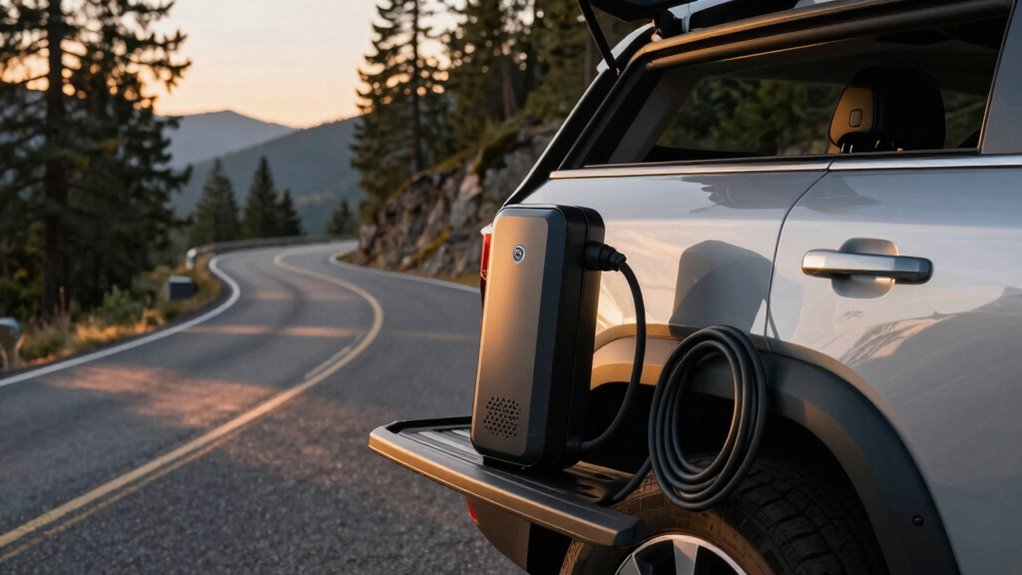

Portable EV chargers may seem like convenient backup tools, but their usefulness depends heavily on your surrounding infrastructure and situation. They require accessible outlets with stable power, which isn’t always available in remote or underdeveloped areas. Charging speeds are slower, and efficiency varies with your battery’s condition. Urban areas often have fast stations, making portable chargers less necessary. Knowing where and when they work best can save you time and frustration—if you stick with it, you’ll get uncover even more tips.

Get garden gear delivered free with Prime
- Fast, free delivery on millions of items
- Prime Video, Amazon Music and more included
- Member-only deals all year
Key Takeaways
- Portable chargers provide limited power and are best for emergency boosts rather than full recharges.
- Their effectiveness heavily depends on the availability and proximity of existing charging infrastructure.
- In remote or rural areas with poor grid quality, portable chargers may be unreliable or insufficient.
- They are more useful in unexpected situations, not as a primary charging solution for daily use.
- Route planning considering infrastructure and grid conditions is essential to maximize their utility.
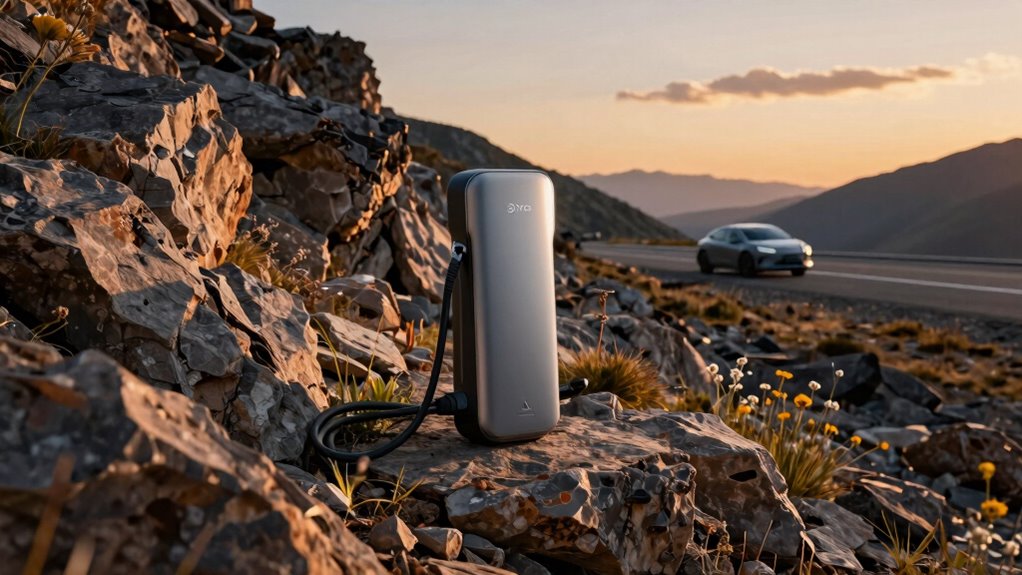
Portable EV chargers often seem like a convenient solution for emergencies or on-the-go charging, but their practicality is more limited than many assume. While they might appear to be a flexible way to keep your vehicle powered, the reality is that their effectiveness depends heavily on the existing charging infrastructure and your vehicle’s battery efficiency. In most cases, they serve better as a backup rather than a primary charging method.
Portable EV chargers are useful backups but limited by infrastructure and battery efficiency.
One key limitation is the current state of charging infrastructure. Portable chargers typically require a standard power outlet, which isn’t always available in remote areas or places with limited electrical access. Even if you can find an outlet, the charging speed may be painfully slow compared to dedicated charging stations. This means that if you’re relying on a portable charger in an emergency, you might not get enough charge in time to reach your destination or a proper charging station. It’s important to remember that portable chargers are designed for minimal, supplemental boosts rather than full recharges, which makes their utility highly situational.
Another factor to weigh is your vehicle’s battery efficiency. Modern EV batteries are designed to optimize energy consumption, but how they respond to different charging sources varies. Portable chargers often deliver a lower power output, which extends the charging time considerably. If your battery isn’t highly efficient or is already partially drained, relying solely on a portable charger could leave you stranded longer than you’d like. You might find yourself waiting for hours just to gain a modest amount of range, which defeats the purpose of quick, on-the-go charging. Additionally, the effectiveness of portable chargers can be influenced by charging infrastructure availability, which varies widely depending on your location and route. It’s also worth noting that the electric grid quality in some areas can affect how well portable chargers perform, further emphasizing the importance of route planning. A lack of reliable electrical supply can significantly hamper portable charging options, especially in less developed regions.
Furthermore, the overall charging infrastructure surrounding your typical routes plays a crucial role. In urban settings, where fast charging stations are plentiful, a portable charger might rarely be necessary. But in rural or less-developed areas, where charging stations are scarce, your options become limited. In these cases, a portable charger can be helpful, but only if you carefully plan your routes and have enough battery efficiency to make it to the next available station. Considering charging infrastructure in your travel planning can help you avoid potential pitfalls. It’s also beneficial to understand how grid reliability impacts charging options, especially in areas with unstable electrical supplies.
As an affiliate, we earn on qualifying purchases.
Frequently Asked Questions
How Long Does It Take to Charge a Vehicle With a Portable Charger?
Charging a vehicle with a portable charger typically takes several hours, depending on its charging speed and power limitations. If your portable charger delivers lower wattage, it’ll take longer to fully charge your EV. For faster charging, use one with higher power output, but always consider the charging speed and power limitations of your portable device. Keep in mind, these chargers aren’t usually designed for quick top-ups like dedicated stations.
Are Portable EV Chargers Compatible With All Electric Vehicle Models?
Portable EV chargers aren’t compatible with all electric vehicle models because compatibility depends on the charging station’s connector type and power capacity. You need to check if your vehicle’s charging port matches the portable charger’s connector. Additionally, confirm the charger’s power capacity aligns with your EV’s charging requirements. Some vehicles require higher power levels that portable chargers might not support, so always verify compatibility before use.
What Safety Features Should I Look for in a Portable Charger?
You should look for safety features like safety certifications and overcurrent protection in a portable charger. While convenience draws you in, these features guarantee safe operation during unexpected surges or faults. Safety certifications verify the charger meets industry standards, providing peace of mind. Overcurrent protection prevents damage to your vehicle and charger from power spikes, making your charging experience safer and more reliable, even when you’re on the go.
Can Portable Chargers Handle Fast-Charging Requirements?
Portable EV chargers can handle fast-charging requirements, but it depends on their charging speed and compatibility with your vehicle. Some models offer rapid charging capabilities, but you need to confirm they match your car’s specifications. Compatibility issues can limit performance, so always verify that your portable charger supports the fast-charging protocols of your EV. This way, you’ll maximize efficiency without risking damage or delays.
How Do Weather Conditions Affect Portable EV Charger Performance?
Weather conditions can greatly impact your portable EV charger’s performance. Extreme cold or heat affects its weather resilience, potentially slowing charging times or causing malfunctions. Additionally, power fluctuation caused by storms or outages can disrupt charging sessions. To guarantee reliable use, choose a charger designed for diverse weather conditions and consider protective accessories, so you’re ready regardless of environmental challenges.
Conclusion
You might think a portable EV charger is a game-changer, but it’s more situational than it appears. Imagine you’re on a weekend road trip, and your main charger fails unexpectedly. A portable charger could save the day, but if you’re far from any power source or the weather turns bad, it’s less reliable. Always weigh your typical routes and needs—sometimes, extra planning beats relying solely on a small, portable device.
Fall yard work Picks
leaf blowers
As an affiliate, we earn on qualifying purchases.