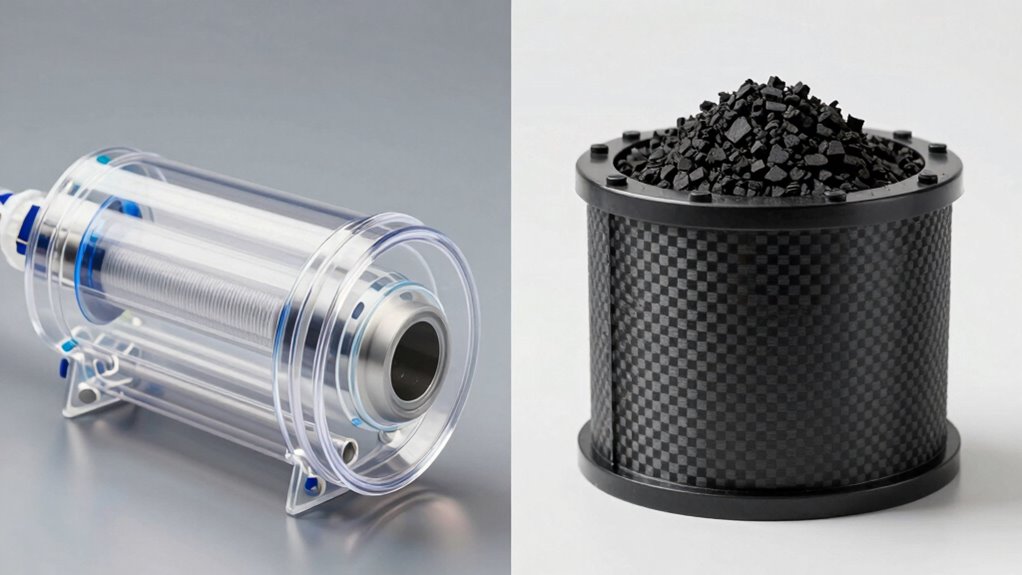

If you’re choosing between reverse osmosis and carbon filters, consider your water quality needs. Reverse osmosis is better if you need to remove heavy metals, salts, or high levels of dissolved solids, ensuring thorough filtration. Carbon filters are more affordable and excel at improving taste and odor by removing chlorine and organic compounds. Understanding their differences helps you select the right system; explore further to find out which suits your household specifically.
Key Takeaways
- Reverse osmosis removes a wider range of contaminants, including heavy metals and salts, compared to carbon filters.
- Carbon filters are more affordable and easier to maintain, making them suitable for basic taste and odor improvement.
- Reverse osmosis systems require higher initial investment and regular membrane replacements for optimal performance.
- For high levels of dissolved solids or persistent contaminants, reverse osmosis provides superior filtration.
- Carbon filters excel at chlorine removal and organic compound taste, ideal for improving water flavor and odor.
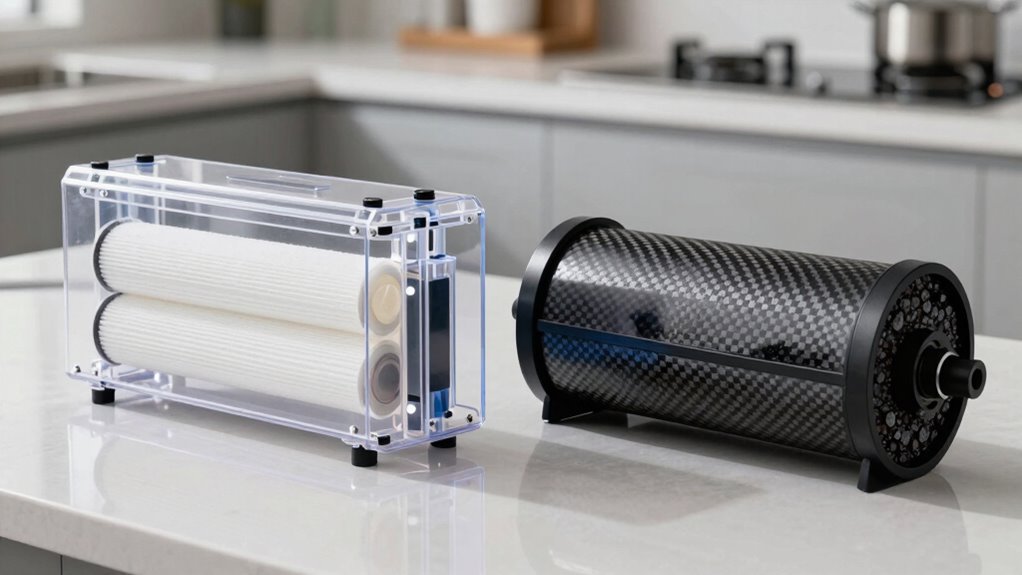
When choosing a water filtration system, understanding the differences between reverse osmosis and carbon filters is essential. Both options serve to improve your water quality, but they do so through different mechanisms and with varying levels of effectiveness. One of the key factors to consider is filtration efficiency. Reverse osmosis systems are highly effective at removing a wide range of contaminants, including heavy metals, salts, and certain pathogens. They use a semi-permeable membrane that filters out particles as small as 0.0001 microns, making them particularly thorough. Carbon filters, on the other hand, rely on activated carbon to absorb chemicals, chlorine, and organic compounds. While they excel at improving taste and odor, their filtration efficiency for heavy metals or dissolved solids isn’t as extensive as reverse osmosis.
Cost comparison is another important aspect to keep in mind. Generally, reverse osmosis systems tend to have a higher initial investment due to their complex setup and the need for specialized components like the membrane and storage tank. Maintenance costs can also add up, as the membrane needs periodic replacement and filters require regular changing. Conversely, carbon filters are often more affordable upfront and simpler to maintain, making them a popular choice for budget-conscious consumers. However, because carbon filters may need more frequent replacements depending on water quality, long-term costs can accumulate if you’re filtering large volumes of water or dealing with heavily contaminated sources.
You should also think about your specific water quality needs. If your water supply contains heavy metals, high levels of dissolved solids, or other persistent contaminants, reverse osmosis might be the better option due to its filtration efficiency. It provides a cleaner, safer product, especially for households with vulnerable members or those who want the highest quality drinking water. On the other hand, if your main concern is removing chlorine, sediment, or improving taste and odor, a carbon filter offers an effective and economical solution.
reverse osmosis water filtration system
As an affiliate, we earn on qualifying purchases.
As an affiliate, we earn on qualifying purchases.
Frequently Asked Questions
How Long Do Reverse Osmosis and Carbon Filters Typically Last?
You can expect your reverse osmosis system to last about 2 to 3 years, with filter lifespan and replacement frequency varying based on usage and water quality. Carbon filters generally need replacing every 6 to 12 months. Regular maintenance ensures peak performance, so keep an eye on filter condition and replace them promptly. This way, you maintain clean, great-tasting water without risking system damage or reduced effectiveness.
Can These Filters Remove Bacteria and Viruses?
You might wonder if these filters can remove bacteria and viruses, and generally, reverse osmosis systems excel at bacterial removal and virus filtration, making them highly effective. Carbon filters, however, typically aren’t designed for this purpose. While some advanced carbon filters may reduce certain pathogens, for complete bacterial and viral protection, rely on reverse osmosis or UV sterilization. Always verify the specifications to guarantee your system meets your safety needs.
Are There Any Health Risks Associated With Using Reverse Osmosis?
Health concerns with reverse osmosis are minimal, but you should be aware that it can remove beneficial minerals along with contaminants. This process effectively reduces harmful substances like heavy metals, bacteria, and viruses, ensuring cleaner water. However, overusing RO systems without mineral reintroduction may lead to mineral deficiencies. Regular maintenance and proper filtration choices help balance contaminant removal with your health, making sure you get safe, mineral-rich water.
What Maintenance Is Required for Each Filtration System?
You’ll love how low-maintenance these systems are—if you enjoy regular chores. With reverse osmosis, you’ll need to regularly replace filters and flush the system to prevent mineral buildup. Carbon filters? Just swap out the cartridge every few months and give the system a quick flush. It’s a small price for fresh water, and hey, who doesn’t enjoy a little routine? Keep up with maintenance, and your system will thank you.
How Do Costs Compare Over the Long Term?
Over the long term, reverse osmosis systems tend to have higher installation costs and ongoing expenses for filter replacements, impacting your financial implications. Carbon filters usually cost less upfront and have lower maintenance costs, making them more budget-friendly over time. However, consider the quality of water you need, as reverse osmosis provides more thorough filtration. Balancing initial investment with ongoing expenses helps you choose the most cost-effective solution.
Conclusion
When choosing between reverse osmosis and carbon filters, remember that there’s no one-size-fits-all solution. Think about what’s most important to you—whether it’s pure taste or removing specific contaminants. Sometimes, it’s about finding the right tool for the job, and you don’t want to put all your eggs in one basket. Weigh your options carefully, so you don’t end up crying over spilled milk when your water needs aren’t met.