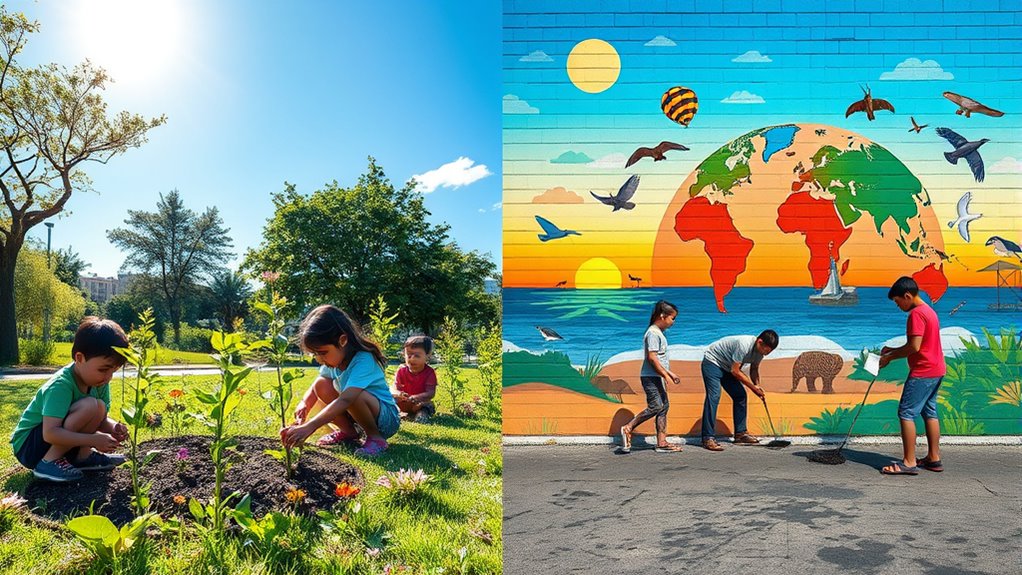

Earth Day, celebrated every April 22, focuses on raising awareness about climate change and encouraging individual and community actions like tree planting and conservation. In contrast, World Environment Day on June 5, is organized by the United Nations to promote global dialogue and policy change on issues such as pollution and biodiversity loss. While Earth Day emphasizes grassroots activities, World Environment Day fosters international cooperation. To understand how these events differ and connect, keep exploring their unique goals and impacts.

Get garden gear delivered free — and shop member deals
- Fast, free delivery on millions of items
- Access to Prime Big Deal Days deals on October 6–7
- Prime Video, Amazon Music and more included
Key Takeaways
- Earth Day (April 22) focuses on grassroots actions and individual responsibility to combat climate change locally.
- World Environment Day (June 5) is a UN-organized global campaign promoting international policy and collective action.
- Earth Day emphasizes sustainable practices like conservation and community initiatives; World Environment Day highlights global environmental issues.
- Earth Day primarily encourages community-level activities; World Environment Day fosters dialogue among governments, NGOs, and citizens.
- Earth Day aims to inspire personal and organizational change; World Environment Day aims to influence policy and international cooperation.

Have you ever wondered how Earth Day and World Environment Day differ in their approach to protecting our planet? While both focus on environmental issues, their goals and activities vary considerably. Earth Day, celebrated every April 22nd, is primarily about raising climate change awareness. It encourages individuals, communities, and organizations to take concrete steps toward reducing their carbon footprint. You might participate in local cleanups, plant trees, or advocate for policies supporting renewable energy initiatives. The emphasis is on inspiring action and fostering a sense of responsibility for the planet’s future. Earth Day’s campaigns often highlight the urgent need to combat climate change by shifting to sustainable energy sources, reducing emissions, and promoting conservation efforts that can make a tangible difference. Additionally, the day emphasizes the importance of promoting sustainable practices in daily life to ensure long-term environmental health. Promoting public awareness is also vital for motivating wider community engagement and policy support. Recognizing the role of private investment can significantly accelerate environmental progress, as capital is crucial for implementing innovative solutions. Strengthening community involvement can lead to more effective local initiatives that support broader environmental goals.
In contrast, World Environment Day, observed on June 5th, is more of a global awareness campaign organized by the United Nations. It aims to bring environmental issues to the forefront of international conversation. This day serves as a platform for governments, NGOs, and everyday citizens to discuss a wide range of topics, from pollution and deforestation to biodiversity loss. While climate change remains a core concern, World Environment Day often broadens its scope to include issues like water conservation, waste management, and protecting wildlife. The focus is on mobilizing collective action across nations, inspiring policy changes, and fostering global partnerships. The themes chosen each year help direct attention to specific environmental challenges, encouraging nations to implement targeted solutions.
Both days serve as vital reminders that protecting our planet requires different approaches. Earth Day’s grassroots activities and campaigns aim to inspire personal and community-level change, emphasizing the importance of individual responsibility. Meanwhile, World Environment Day acts as a rallying point for international cooperation, urging governments and organizations to work together on pressing environmental issues. Your role in both days can be impactful—whether by participating in local initiatives, raising awareness about climate change, or supporting renewable energy initiatives. These efforts collectively contribute to a larger movement toward sustainability. Ultimately, understanding the differences helps you appreciate how each day complements the other, reinforcing the message that protecting the environment demands both personal commitment and global action. By engaging with both, you can be part of a worldwide effort to create a healthier, more sustainable future for everyone.
tree planting kits for beginners
As an affiliate, we earn on qualifying purchases.
As an affiliate, we earn on qualifying purchases.
Frequently Asked Questions
How Did Earth Day Originate Compared to World Environment Day?
You might wonder about the history origins of Earth Day and World Environment Day. Earth Day started in 1970, sparked by concerns over pollution and environmental issues, organized by activists and students who wanted to raise awareness. In contrast, World Environment Day, established in 1974 by the United Nations, aims to promote global environmental action annually. Both events focus on environmental protection but have different origins and global reach.
Are There Specific Themes for Each Earth Day and World Environment Day?
You’ll find that Earth Day and World Environment Day each have unique theme distinctions that guide their celebrations. Earth Day often emphasizes themes like climate action, conservation, and sustainability, while World Environment Day varies annually, focusing on pressing global issues such as pollution or biodiversity. These celebration variations help raise awareness and inspire action worldwide, making each day’s message relevant and impactful through its specific theme.
How Do Different Countries Celebrate These Environmental Events?
You’ll notice that countries celebrate these environmental events through diverse activities, reflecting their cultural variations and local traditions. Some nations organize large-scale marches, tree plantings, or community clean-ups, while others host educational workshops or cultural festivals. These celebrations highlight how different communities honor environmental concerns uniquely, blending global awareness with local customs. Embracing these cultural variations fosters a deeper connection to the environment and encourages worldwide participation.
What Are Some Notable Global Campaigns Associated With Each Day?
You might be surprised by the global campaigns linked to these days. For Earth Day, initiatives like planting trees and combating plastic pollution take center stage, urging climate action worldwide. On World Environment Day, campaigns focus on raising awareness about sustainability and protecting ecosystems. These powerful movements inspire millions to participate, making a real difference. As you get involved, you’ll see how each day mobilizes global efforts to safeguard our planet’s future.
Can Participation in Both Days Be Combined for Greater Impact?
You can definitely harness the synergy potential of both days by combining initiatives for greater impact. Participating in events like clean-ups, awareness campaigns, or tree planting on both days amplifies your message and mobilizes more people. By aligning your efforts, you create a unified voice that highlights environmental issues more effectively, inspiring collective action and fostering lasting change. This approach maximizes your contribution to a healthier planet.
Conclusion
By now, you see that Earth Day and World Environment Day each play a essential role in protecting our planet. While Earth Day is a powerful reminder to cherish and preserve our home, World Environment Day pushes you to take action on global issues. Together, these days wield more influence than a thousand storms—igniting a massive wave of change. So, embrace both, and become a true guardian of our Earth’s future.
Fall Picks
fall essentials
As an affiliate, we earn on qualifying purchases.