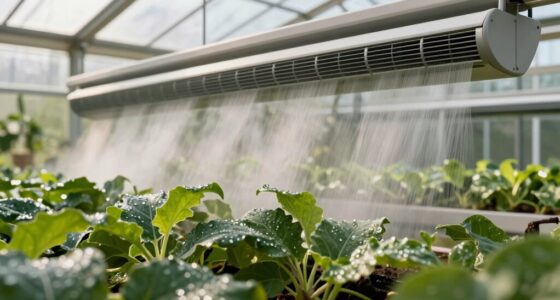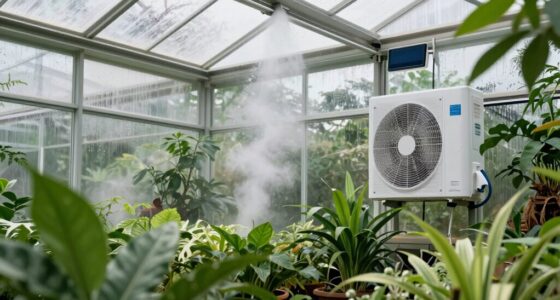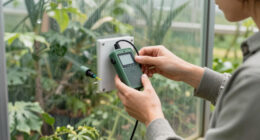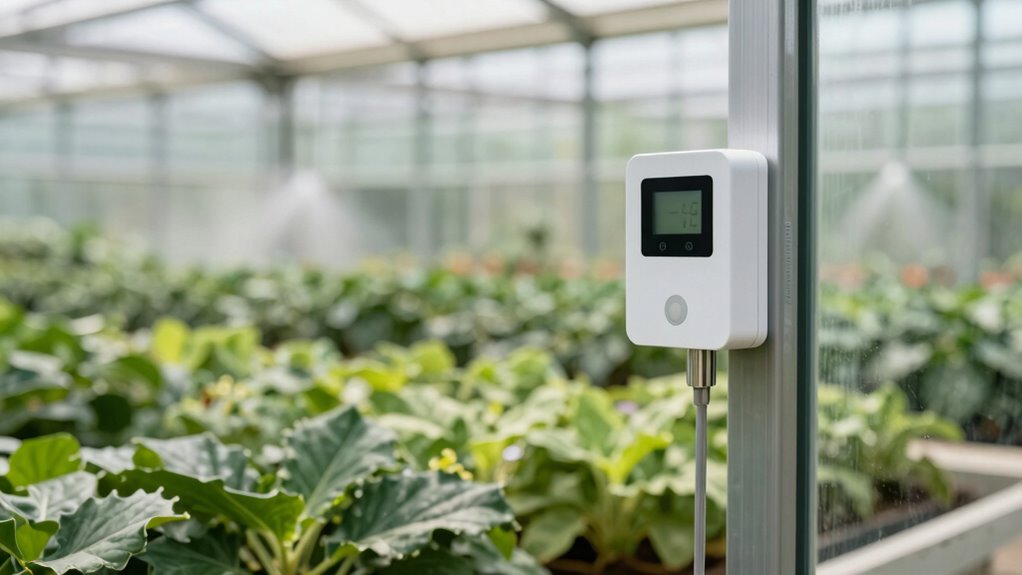

Climate sensors provide you with real-time, precise data on temperature, humidity, and light levels, helping you respond quickly to environmental changes. By regularly calibrating and maintaining these sensors, you guarantee trustworthy information that guides your decisions on ventilation, watering, and shading. Integrating data from multiple sensors allows you to spot patterns and optimize climate control systems. This strategic approach enables better crop outcomes and continuous improvements—if you keep exploring, you’ll uncover even more ways to enhance your greenhouse management.

Get garden gear delivered free — and shop member deals
- Fast, free delivery on millions of items
- Access to Prime Big Deal Days deals on October 6–7
- Prime Video, Amazon Music and more included
Key Takeaways
- Provide real-time environmental data for quick adjustments to temperature, humidity, and light conditions.
- Ensure accurate and reliable readings through regular calibration and maintenance.
- Integrate sensor data centrally to identify patterns and optimize climate control strategies.
- Enable data-driven decisions with advanced analytics for improved crop growth and resource management.
- Support remote monitoring and long-term planning via cloud-based data integration.
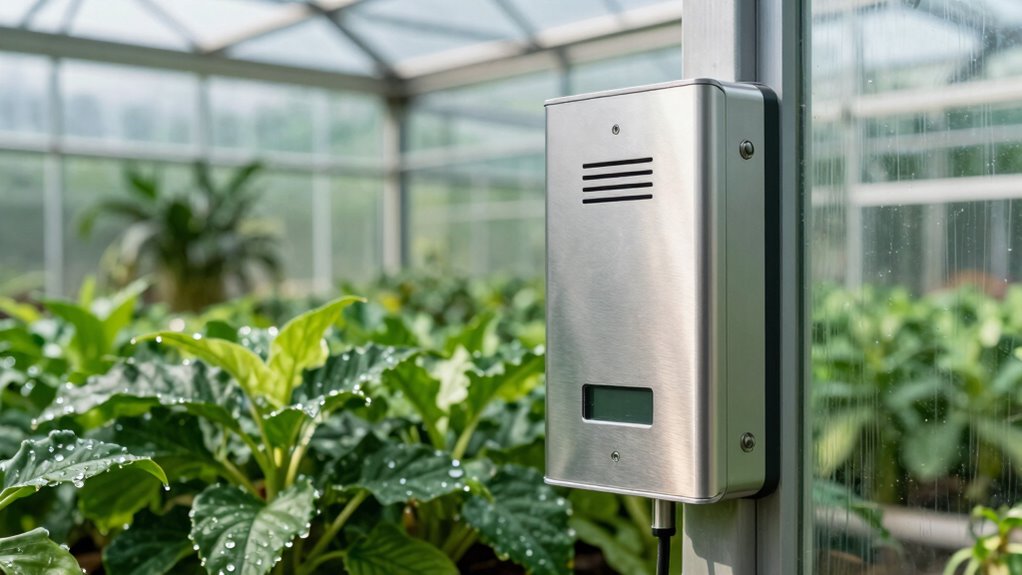
Climate sensors have become essential tools for making informed greenhouse decisions, enabling you to monitor environmental conditions in real-time. With these sensors, you gain instant insights into temperature, humidity, light levels, and other critical factors that influence plant growth. This real-time data allows you to quickly respond to changing conditions, preventing issues like heat stress or excessive humidity that could harm your crops. As you rely more on these sensors, ensuring their accuracy becomes paramount. Proper sensor calibration guarantees that the data you collect is precise, which is indispensable for making dependable decisions. Regularly calibrating your sensors helps eliminate measurement errors, ensuring that the environmental data you base your actions on remains reliable over time. When sensors are correctly calibrated, you can trust the readings to inform decisions about ventilation, watering, and shading, optimizing growth conditions and resource use. Additionally, choosing high-quality sensors with durable components can extend their lifespan and maintain accuracy in challenging greenhouse environments. Incorporating sensor maintenance practices can further enhance their longevity and performance.
Data integration plays a significant role in turning raw sensor data into actionable insights. By integrating data from multiple sensors into a centralized system, you create a thorough picture of your greenhouse environment. This integration allows you to identify patterns and correlations that might not be obvious when looking at individual readings. For example, temperature and humidity data combined with light levels can help you fine-tune your climate control systems more effectively. Automated systems can then adjust fans, misters, or shades based on the integrated data, reducing manual effort and improving consistency. Furthermore, data integration supports long-term planning; analyzing historical data helps you recognize seasonal trends and anticipate future needs, leading to more strategic decision-making. Incorporating cloud-based data solutions can further enhance data management and accessibility from anywhere. Utilizing sensor calibration techniques regularly can also help maintain the accuracy of your environmental measurements over time. To maximize the benefits of climate sensors, investing in advanced data analytics can uncover deeper insights and optimize your greenhouse operations.
As an affiliate, we earn on qualifying purchases.
Frequently Asked Questions
How Do Climate Sensors Differ From Traditional Weather Monitoring Tools?
Climate sensors differ from traditional weather tools because they offer real-time sensor integration, providing precise data directly from your greenhouse environment. Unlike conventional tools, which often rely on distant or less frequent measurements, sensors deliver higher data accuracy, allowing you to make quicker, informed decisions. This continuous, detailed information helps optimize conditions, improve plant health, and boost productivity, giving you a clear advantage in managing your greenhouse effectively.
What Is the Cost-Benefit Analysis of Installing Climate Sensors?
Installing climate sensors may seem costly upfront, but the benefits far outweigh the expenses. With proper sensor maintenance, you’ll gather precise data, drastically reducing crop loss and energy costs. Plus, seamless data integration enables you to make lightning-fast decisions, boosting yields and profits. Think of it as investing in a super-powered decision-making system that pays for itself quickly, transforming your greenhouse into a highly efficient, profit-generating machine.
Can Climate Sensors Predict Future Greenhouse Climate Conditions?
Yes, climate sensors can help predict future greenhouse conditions through predictive analytics, but their accuracy depends on sensor reliability. When sensors are well-maintained and calibrated, they provide valuable data that allows you to anticipate changes, like temperature or humidity shifts. This proactive approach helps you make informed decisions, optimize conditions, and prevent issues before they occur. However, always guarantee sensor quality for reliable, future-focused predictions.
How Often Should Climate Sensors Be Calibrated for Accuracy?
You should calibrate your climate sensors at least once every six months to maintain sensor accuracy. Regular calibration guarantees measurement precision, allowing you to rely on data for making informed greenhouse decisions. Factors like environmental conditions and sensor quality can influence calibration frequency, so monitor sensor performance regularly. Consistent calibration prevents drift in readings, helping you optimize climate control and improve crop yields effectively.
Are Climate Sensors Suitable for All Types of Greenhouses?
Climate sensors suit many greenhouses, offering sensor durability and seamless data integration. You’ll find them adaptable, whether managing small or large setups, open or enclosed environments. Their durability ensures they withstand humidity, temperature swings, and daily wear. Plus, data integration helps you make informed decisions quickly. While some specialized greenhouses may need custom solutions, most growers benefit from these versatile, reliable sensors, enhancing control and productivity across diverse greenhouse types.
Conclusion
By embracing climate sensors, you empower your greenhouse with precise, proactive decisions. These sensors serve as steadfast sentinels, spotting subtle shifts and signaling smart strategies. With this technology, you transform uncertainty into understanding, ensuring lush growth and lush profits. So, seize the sensor’s signals, stay steadfast, and see your greenhouse thrive with confidence, clarity, and consistency. Let science and sensors synchronize to secure your success—sowing stability, streamlining solutions, and sprouting sustainable success.
Fall Picks
fall essentials
As an affiliate, we earn on qualifying purchases.