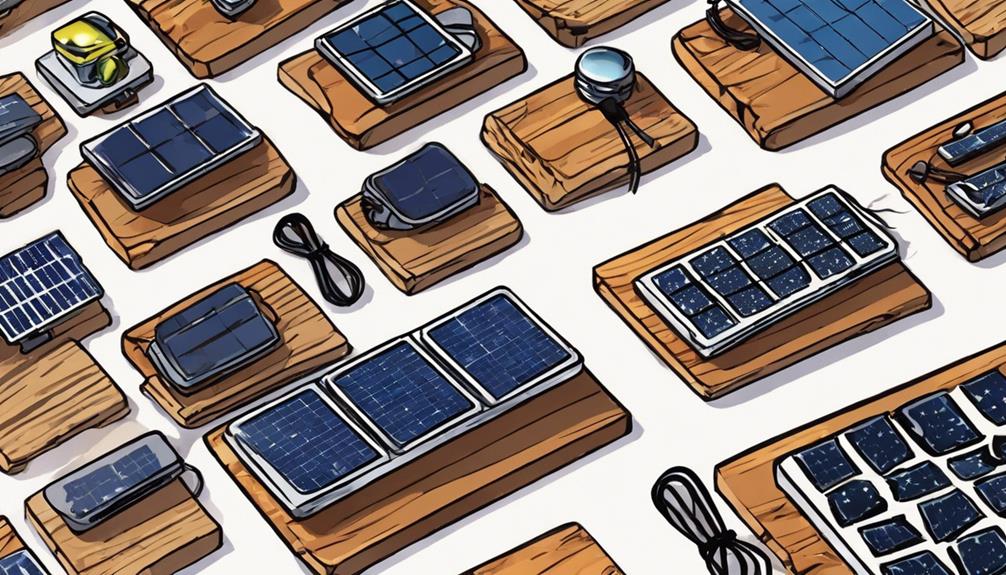

Choosing among mini solar panels depends on what you want them to power: a small circuit, a classroom experiment, or a phone outdoors. My picks reflect those different jobs rather than treating every panel as interchangeable. The KEJNYT 1W 5V five-pack is my best overall choice for hands-on DIY builds, thanks to its useful voltage and wire clips. The FellDen 5V ten-pack suits buyers who want more matching panels for experiments, while the REDIGOO 10W charger is the more direct option for USB devices.

Get garden gear delivered free with Prime
- Fast, free delivery on millions of items
- Prime Video, Amazon Music and more included
- Member-only deals all year
The main tradeoff is between bare project panels and ready-to-use charging panels. Wire clips make circuit experiments easier, but these small panels still need suitable electronics for battery charging. Portable chargers offer device ports, yet their output depends on direct sun and they do not store energy. I rank each option by how well its format, stated output, and connections match its likely use—not by treating a panel’s wattage as a guarantee of real-world performance.
Complete the kit


Key Takeaways
- Best for adaptable DIY circuits: KEJNYT’s five 1W, 5V panels combine useful project output with wire clips for solder-free connections.
- Best for building a multi-panel experiment: The KEJNYT 3V ten-pack offers ten matching small panels and clips, but its lower voltage per panel calls for circuit planning.
- Best for a larger matched set: FellDen supplies ten 5V panels with micro USB connectors; verify the listed power information before designing around it.
- Best for portable USB charging: REDIGOO has USB-A and USB-C ports, though it charges only in sunlight and requires a cable.
- Best for a compact foldable format: FlexSolar is a 10W monocrystalline panel with carrying attachments, but its stated water-resistance rating is inconsistent.
| KEJNYT 1W 5V Mini Solar Panels with Wire Clips, 5-Pack |  | Best Overall for DIY Projects | Panel count: 5 | Maximum power: 1W per panel | Output voltage: 5V | VIEW ON AMAZON | See Our Full Breakdown |
| KEJNYT 3V 0.45W Mini Solar Panels with Wire Clips, 10 Pack |  | Best for Multi-Panel Experiments | Panel count: 10 | Power: 0.45W per panel | Output voltage: 3V per panel | VIEW ON AMAZON | See Our Full Breakdown |
| FellDen 5V Polycrystalline Micro Solar Panels, 10-Pack, 200mA |  | Best for a Larger 5V Project Set | Panel count: 10 | Panel voltage: 5V | Amperage capacity: 200mA | VIEW ON AMAZON | See Our Full Breakdown |
| REDIGOO 10W Mini Solar Panel Charger for Cell Phones |  | Best for USB Device Charging | Power: 10W | Ports: USB-A and USB-C | Maximum output: 5V/2A per port | VIEW ON AMAZON | See Our Full Breakdown |
| FlexSolar 10W Foldable Mini Solar Panel Charger |  | Best Foldable Pick for Small Devices | Maximum power: 10W | Output voltage: 5V DC | Connector: MC4 | VIEW ON AMAZON | See Our Full Breakdown |
| mini solar panel | Dimensions | Connector | Panel count | Output voltage |
|---|---|---|---|---|
| KEJNYT 1W 5V Mini Solar Panels | 3.52 × 3.52 × 0.08 in per panel | Wire clip | 5 | 5V |
| KEJNYT 3V 0.45W Mini Solar Pan | 55 × 60 × 2 mm per panel | Wire clip | 10 | 3V per panel |
| FellDen 5V Polycrystalline Mic | 110 × 60 × 2.5 mm per panel | Micro USB | 10 | — |
| REDIGOO 10W Mini Solar Panel C | 8.28 × 6.46 × 0.98 in | — | — | — |
| FlexSolar 10W Foldable Mini So | 9.6 × 4.5 × 1.5 in | MC4 | — | 5V DC |
More Details on Our Top Picks
KEJNYT 1W 5V Mini Solar Panels with Wire Clips, 5-Pack
I rank this five-pack of 1W, 5V panels first because it hits a practical middle ground for mini solar projects: each panel is larger and higher-output than KEJNYT’s 3V option, while its wire clips make basic circuit connections accessible without soldering. At 89.5 × 89.5 mm, each panel can suit a small model, light, or project enclosure without the carry-focused format of FlexSolar or REDIGOO.
The wire clips are the defining advantage for beginners who want to change connections as they learn. Five matching panels also give a builder room to try series or parallel arrangements, provided the circuit is designed for the resulting voltage and current. Compared with FellDen’s ten 5V panels, this set has fewer panels but clearer stated power per unit; compared with the 3V KEJNYT ten-pack, its 5V rating may fit some small-device projects more naturally.
There are limits. These are still low-current project panels, not a substitute for a household solar setup or a guaranteed device charger. Output depends on strong sunlight, orientation, and load, and polarity matters when wiring. I would pair the panels with appropriate regulation or a charge controller before connecting a battery. Choose this set for flexible learning and small builds; skip it if your main aim is charging a phone straight from a panel.
Pros:- Five matching panels support small builds and multi-panel experiments.
- Wire clips allow solder-free connections to simple circuits.
- 1W and 5V ratings offer more per-panel output than the KEJNYT 3V set.
- Compact square format suits project boxes, crafts, and models.
Cons:- Designed for low-current projects, not larger devices.
- Output varies with sunlight and circuit load.
- Battery charging requires suitable control electronics.
Best for: DIY builders, students, and hobbyists who want several 5V panels with solder-free connections for small circuits, lights, or models.
Not ideal for: Buyers seeking a ready-to-use USB phone charger, battery storage, or meaningful power for larger electronics.
- Panel count:5
- Maximum power:1W per panel
- Output voltage:5V
- Amperage capacity:0.2A
- Material:Polycrystalline silicon
- Connector:Wire clip
- Dimensions:3.52 × 3.52 × 0.08 in per panel
- Model:KJ0018
Our verdict“I’d choose this set for versatile small DIY builds where 5V panels and quick circuit changes matter more than device-ready USB charging.”
KEJNYT 3V 0.45W Mini Solar Panels with Wire Clips, 10 Pack
This ten-pack of compact 3V panels is my pick for learners who want several small sources to wire into experiments. Each unit measures 55 × 60 mm and provides a stated 0.45W, so it is more suited to solar toys, simple lighting, and circuit demonstrations than to powering a single demanding device. The set offers twice as many panels as KEJNYT’s 1W pack, but each panel has lower stated voltage and power.
That difference is useful rather than automatically a drawback: ten matching panels make it possible to explore series and parallel arrangements, while the included wire clips help with temporary connections and adjustments. Compared with the FellDen ten-pack, this option has a smaller footprint per panel and clip connections rather than micro USB. Compared with the KEJNYT 1W pack, it offers more units for experimentation but less output from each individual panel.
The 3V rating calls for circuit planning, and output changes with sunlight and load. A battery cannot simply be connected on the assumption that the panel will charge it safely; use a suitable controller and match the circuit to the intended battery. This set is a strong fit for low-power learning projects, but not a direct route to phone charging or a ready-made power supply.
Pros:- Ten matching panels provide room for series and parallel experiments.
- Wire clips support temporary connections and circuit adjustments.
- Small 55 × 60 mm format fits compact crafts and solar toys.
- Clear per-panel ratings of 3V and 0.45W help with project planning.
Cons:- Each panel has less stated power than KEJNYT’s 1W panels.
- Output varies with sunlight and the connected load.
- Battery charging needs a suitable controller.
Best for: STEM learners and hobbyists who want a larger set of small panels for solar toys, experiments, and configurable low-power circuits.
Not ideal for: Anyone seeking high output from one panel, USB device charging, or a panel that safely charges a battery without additional electronics.
- Panel count:10
- Power:0.45W per panel
- Output voltage:3V per panel
- Current:150mA
- Material:Polycrystalline silicon with epoxy
- Connector:Wire clip
- Dimensions:55 × 60 × 2 mm per panel
- Model:KJ0016
Our verdict“I’d pick this ten-pack for hands-on multi-panel experiments, but choose the 1W KEJNYT set if stronger output from each panel matters more.”
FellDen 5V Polycrystalline Micro Solar Panels, 10-Pack, 200mA
FellDen’s appeal is its combination of ten panels with 5V output and micro USB connectors. The 110 × 60 mm panels are larger than the KEJNYT 3V units, and the connector format may suit projects that already use compatible USB-style inputs. Its epoxy resin construction is described as resistant to wind and snow, a claim that may be relevant for a small outdoor project, though it should not be read as a guarantee of long-term weatherproofing.
Compared with KEJNYT’s wire-clip kits, FellDen places more emphasis on plug-in connectivity than on quick access to bare circuit connections. Its ten-panel count matches the 3V KEJNYT pack, but its stated 5V output makes it a different fit for low-power DC experiments. The listing gives a 200mA amperage capacity, yet also states a maximum power of 200W. Those figures do not align as a typical small 5V panel specification, so I would verify the actual rating with the seller or product documentation rather than design a circuit around 200W.
This uncertainty is why FellDen ranks below the KEJNYT 1W pack for a general DIY recommendation. It may still suit a buyer who values a matching ten-panel set and the micro USB connector, but small panel dimensions limit its role, and it is not a practical choice for larger solar systems. Treat the output as dependent on sun and load, and use proper charging electronics for batteries.
Pros:- Ten matching panels suit classroom and hobby experiments.
- 5V output and micro USB connectors may fit compatible project inputs.
- 110 × 60 mm panels offer more surface area than the KEJNYT 3V units.
- Epoxy resin construction is described as resistant to wind and snow.
Cons:- The listed 200W maximum power conflicts with the stated 5V and 200mA capacity.
- Small panel dimensions limit use in larger solar setups.
- Low-power output still depends on sunlight and the connected device.
Best for: Project builders who want ten compact 5V panels with micro USB connectors for low-power DC experiments and compatible setups.
Not ideal for: Buyers who need unambiguous power specifications, larger-system capability, or solder-free access to bare circuit wiring.
- Panel count:10
- Panel voltage:5V
- Amperage capacity:200mA
- Maximum power listed:200W; verify because it conflicts with the stated voltage and current
- Material:Polycrystalline silicon
- Construction:Epoxy resin
- Connector:Micro USB
- Dimensions:110 × 60 × 2.5 mm per panel
Our verdict“I’d consider FellDen for a ten-panel 5V experiment only after confirming its power rating, since the listing’s key output figures conflict.”
REDIGOO 10W Mini Solar Panel Charger for Cell Phones
Unlike the bare KEJNYT and FellDen project panels, REDIGOO is built around device charging. Its 10W monocrystalline panel includes USB-A and USB-C ports, with a stated maximum output of 5V/2A per port. That makes it the most straightforward choice here for someone who wants to connect a compatible phone or small device outdoors, rather than assemble a circuit from separate panels.
The dual-port setup is a practical advantage over FlexSolar’s listed MC4 connector, which is not the same direct device-facing arrangement. REDIGOO also has a more compact listed size than FlexSolar’s folded dimensions, though it weighs 0.76 lb and is not the lightest option. Its stated 23% conversion efficiency is a product claim, not a promise of a particular charging speed; panel angle, clouds, shade, device demand, and cable choice all affect what reaches a device.
The central limitation is that this panel does not store electricity. It needs sunlight to provide power, so charging can slow or stop as conditions change, and it will not keep charging through a dark period without a separate battery or power bank. The product also requires an additional cable, and its description notes reduced performance through glass. I’d choose it over the DIY kits for outdoor USB use, but skip it if you need a stable power source regardless of weather or time of day.
Pros:- USB-A and USB-C ports support direct connection to compatible devices.
- 10W monocrystalline panel is designed for portable charging.
- Compact listed dimensions suit outdoor packing.
- Stated 23% conversion efficiency provides a useful comparison point, though real output varies.
Cons:- It stores no electricity and works only when exposed to sunlight.
- A separate cable is needed to connect devices.
- Performance is reduced through glass and can vary with shade or changing sun.
Best for: Campers, hikers, and outdoor users who want a compact solar panel with USB-A and USB-C outputs for small devices.
Not ideal for: Buyers who need stored energy, dependable charging in shade, or bare panel connections for experimenting with circuits.
- Power:10W
- Ports:USB-A and USB-C
- Maximum output:5V/2A per port
- Cell material:Monocrystalline silicon
- Stated efficiency:Up to 23%
- Dimensions:8.28 × 6.46 × 0.98 in
- Weight:0.76 lb
- Energy storage:None
Our verdict“I’d choose REDIGOO over the DIY kits when USB ports matter, but only if sunlight-dependent charging fits the trip.”
FlexSolar 10W Foldable Mini Solar Panel Charger
FlexSolar occupies a different niche from the DIY panel packs: it is a foldable 10W monocrystalline charger intended for small devices such as fans, cameras, water pumps, and power banks. The supplied carabiners and elastic strap give it a carrying and attachment setup that the flat KEJNYT and FellDen project panels do not provide. That makes it a more natural fit for an outdoor kit than a circuit board or classroom model.
Compared with REDIGOO, FlexSolar’s stated 10W output is similar, but the listed connector is MC4 rather than USB-A and USB-C. Buyers should check that this connection suits their intended device or charging setup before choosing it. Its listed dimensions are 9.6 × 4.5 × 1.5 inches and weight is 200g, which supports portability, though the product information does not describe built-in energy storage. Like REDIGOO, it can only provide useful power when sunlight is available.
The main reason I rank it fifth is uncertainty around its water-resistance claim: the title says IP67, while the description says IP57. Those ratings are not interchangeable, so I would not rely on either for a particular exposure level without confirmation. Its 65°C maximum temperature is another specification worth checking against the intended setting. This remains a plausible compact outdoor panel, but the connector and conflicting protection details make REDIGOO the clearer choice for direct USB charging.
Pros:- Foldable design and compact listed dimensions support portability.
- Monocrystalline cells are specified for 10W output.
- Carabiners and an elastic strap provide attachment options.
- Suitable in concept for small outdoor devices and power banks with compatible connections.
Cons:- Water-resistance information conflicts between IP57 and IP67.
- MC4 connector may require a compatible cable or charging arrangement.
- 10W output is intended for small devices and varies with sunlight.
Best for: Outdoor users who want a foldable 10W panel with included attachment accessories and have a compatible MC4 charging setup.
Not ideal for: Buyers who need clearly stated water protection, built-in USB ports, energy storage, or a plug-and-play phone charger.
- Maximum power:10W
- Output voltage:5V DC
- Connector:MC4
- Cell material:Monocrystalline silicon
- Dimensions:9.6 × 4.5 × 1.5 in
- Weight:200g
- Temperature limit:65°C maximum
- Water resistance:IP57 in description; IP67 in title
Our verdict“I’d choose FlexSolar for a foldable outdoor setup only after confirming the connector and water-resistance rating for the intended use.”
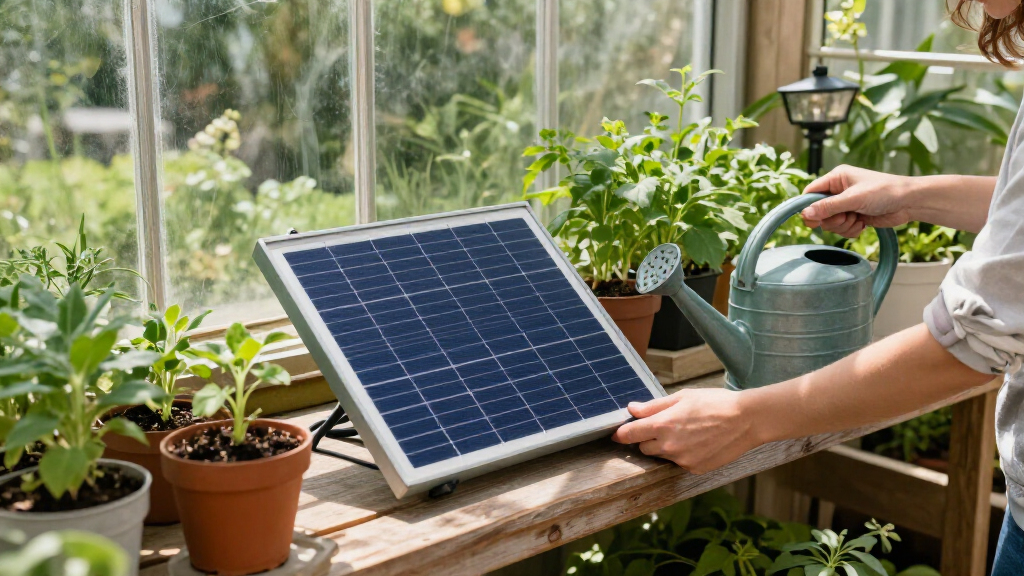
How We Picked
I ranked these options by matching each product’s format and connections to a clear mini-solar use. A small panel with wire clips can be more practical for a STEM project than a higher-output product designed to charge a phone, while a USB panel is easier for device charging but less flexible for building circuits. I also compared the stated panel count, voltage, power, physical size, and portability to identify who benefits from each design.
I treated the supplied specifications as claims, not verified performance results. Sunlight, angle, shading, wiring, and the connected load all affect output; a panel’s labeled rating does not promise that a device will charge at that rate in ordinary conditions. I gave weight to transparent, usable details, and called out issues that affect planning—especially the FellDen power figure, which is listed as 200W despite the product description identifying a compact 5V, 200mA panel, and FlexSolar’s conflicting water-resistance ratings. I did not assume any bare panel includes a charge controller or energy storage.
The order favors useful versatility for common mini-panel projects, followed by specialized strengths. KEJNYT’s 1W five-pack leads because its 5V output and wire clips suit a broad range of small builds. The other KEJNYT set and FellDen kit serve related but distinct experimental needs; portable chargers rank by their device-facing convenience, with their solar-only limitations kept in view.
| mini solar panel | Material | Connector |
|---|---|---|
| KEJNYT 1W 5V Mini Solar Panels | Polycrystalline silicon | Wire clip |
| KEJNYT 3V 0.45W Mini Solar Pan | Polycrystalline silicon with epoxy | Wire clip |
| FellDen 5V Polycrystalline Mic | Polycrystalline silicon | Micro USB |
| REDIGOO 10W Mini Solar Panel C | — | — |
| FlexSolar 10W Foldable Mini So | — | MC4 |
Factors to Consider When Choosing Mini Solar Panels
I separate mini solar panels into two groups: project components and portable device chargers. Start with the job you need to do, then match the panel’s output and connector to the electronics it will feed. A compact panel is not automatically suitable for every small device.
Decide Whether You Need a Project Panel or a Charger
For building circuits, solar toys, or classroom demonstrations, bare panels with wire clips are easier to adapt. The KEJNYT packs fit that role, with the 1W five-pack giving more stated output per panel and the 3V ten-pack supplying more pieces for experiments. FellDen’s micro USB connector may suit a compatible project, but its listed power figure should be checked before relying on it.
For charging a phone or another USB device outdoors, REDIGOO is more direct because it has USB-A and USB-C ports. FlexSolar is also a portable 10W option, but its MC4 connection makes compatibility a key question. Neither charger stores electricity, so a panel alone cannot provide power after the sun goes away.
Read Voltage, Current, and Power Together
Voltage, current, and power describe related parts of the output, not interchangeable measures. The stated wattage gives a broad idea of panel capacity, while voltage and current help determine whether the output can suit a particular circuit. For example, the KEJNYT panels are described as 3V and 0.45W or 5V and 1W, depending on the model. They are not automatically interchangeable just because both are mini panels.
FellDen’s stated 5V, 200mA, and 200W maximum-power details conflict. I would ask for clarification rather than infer usable performance from that claim. Also remember that output changes with sunlight, angle, shade, and the load attached; the printed rating is not a guarantee of everyday output.
Check Connectors Before Planning a Build
Connection style affects how much extra work a panel needs. Wire clips on the KEJNYT options suit temporary circuit changes and basic experiments. FellDen uses micro USB, while REDIGOO offers USB-A and USB-C for device connections. FlexSolar lists MC4, which may require a compatible input or cable for the intended equipment.
Before connecting any panel to a battery, check the battery’s charging requirements and use suitable control electronics. A panel’s voltage can shift under changing light and load; a charge controller helps manage battery charging. Do not assume a connector alone makes a panel safe for direct battery charging.
Match Size and Portability to Where It Will Be Used
The KEJNYT panels are compact components for project boxes, models, and small experiments, not folding travel chargers. FellDen’s panels are larger than KEJNYT’s 3V units, while REDIGOO lists an 8.28 × 6.46-inch body. FlexSolar adds a foldable format, carabiners, and a strap, which may be useful when mounting or carrying a panel outdoors.
Portability does not solve changing light. A panel placed at a poor angle or in partial shade may produce less than expected. For outdoor charging, think about where the panel will sit during use and whether the device can tolerate intermittent power.
Treat Weather and Efficiency Claims Carefully
FellDen describes epoxy construction as resistant to wind and snow, and FlexSolar’s supplied information gives conflicting IP57 and IP67 water-resistance ratings. I would not treat either description as a substitute for clear limits on exposure, mounting, and care. Ask the seller or check product documentation when weather protection matters.
REDIGOO lists conversion efficiency up to 23%, but this does not mean every setup will deliver that performance. Sun angle, temperature, shading, and device demand all affect output. Compare stated claims as part of the decision, then choose based on the physical setup and connection requirements you can verify.
Frequently Asked Questions
Can a mini solar panel charge a phone?
Some can, if they provide a compatible device connection and enough power under the available sunlight. REDIGOO includes USB-A and USB-C ports, making it the most direct phone-charging choice here. Charging speed can vary with shade, panel angle, cloud cover, and the phone’s power demand, and none of the listed portable chargers stores energy for later.
Do I need a charge controller for these panels?
If you are charging a battery, use a suitable charge controller or charging circuit matched to that battery and panel. The KEJNYT project panels are not described as having built-in battery management, and their output changes with light and load. A panel’s voltage rating by itself does not confirm that direct battery connection is safe.
What is the difference between the two KEJNYT panel sets?
The 3V set contains ten smaller 0.45W panels with wire clips, which suits experiments that benefit from having more individual panels. The 5V set has five larger 1W panels, also with wire clips, and offers greater stated output from each panel. I’d choose the ten-pack for quantity and circuit exploration, or the five-pack when the higher per-panel rating better matches the project.
Can I connect several mini solar panels together?
Panels can be arranged in series or parallel when the circuit design and panel ratings support that arrangement. Series connections affect voltage; parallel connections affect available current. Check the requirements of the device or regulator first, confirm polarity, and avoid assuming that matching connectors alone make a multi-panel setup suitable.
Which option is best for outdoor use?
For direct USB charging outdoors, REDIGOO is the clearest fit because it has USB-A and USB-C ports. FlexSolar offers a foldable form and attachment accessories, but its water-resistance rating conflicts between the title and description, and its MC4 connector may need a compatible setup. For either charger, expect output only while the panel receives useful sunlight.
Conclusion
For general DIY and STEM projects, I’d start with the KEJNYT 1W 5V five-pack: its wire clips, compact panels, and stronger stated output per panel make it the most adaptable choice here. If your priority is having more individual panels for series and parallel experiments, choose the KEJNYT 3V ten-pack instead.
For a ten-panel 5V project set, FellDen could suit a compatible build, but I would confirm its contradictory power listing first. For camping or hiking, REDIGOO is my pick when direct USB ports matter; FlexSolar makes more sense if foldability and attachment accessories are the priority and its connector and water rating meet your needs. Across all five, plan around changing sunlight, check compatibility before wiring, and use proper charging electronics for batteries.