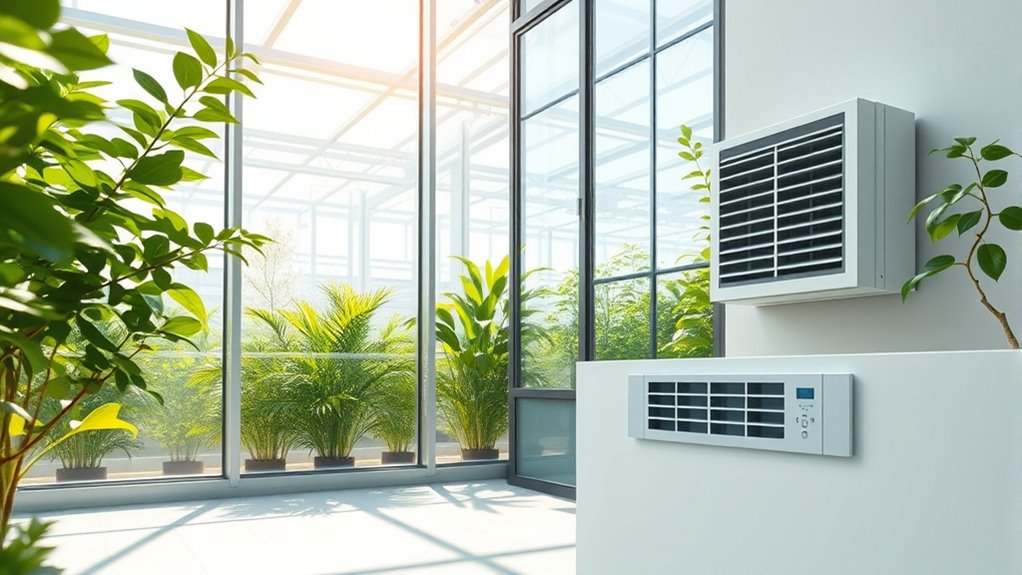

To keep your greenhouse thriving, invest in energy-efficient HVAC systems that reduce energy use, lower costs, and cut your carbon footprint. Proper insulation and smart ventilation help maintain stable temperatures and ideal humidity levels, preventing issues like mold and pests. Regular maintenance and upgrades guarantee your system operates at peak efficiency. Combining these strategies creates a healthier environment for your plants while saving money—discover more ways to optimize your greenhouse’s climate control.

Get garden gear delivered free with Prime
- Fast, free delivery on millions of items
- Prime Video, Amazon Music and more included
- Member-only deals all year
Key Takeaways
- Implement energy-efficient HVAC systems with smart controls to optimize heating, cooling, and ventilation, reducing energy costs and environmental impact.
- Use proper insulation materials like double-glazed panels and sealed doors to maintain stable internal temperatures.
- Incorporate adjustable and automatic ventilation systems to regulate humidity, prevent mold, and improve air quality.
- Integrate sensors and passive methods such as shading and thermal curtains for precise climate control and energy savings.
- Regular maintenance and system upgrades ensure optimal performance, lower bills, and promote healthy plant growth.
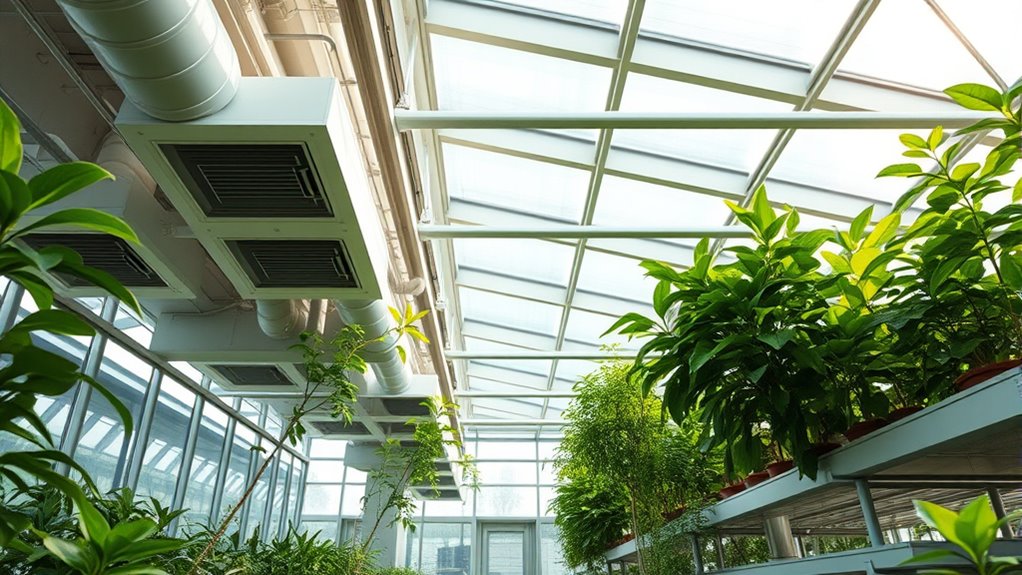
Are you looking for ways to reduce your energy bills and lower your environmental impact? One of the most effective strategies is optimizing your greenhouse’s heating, cooling, and ventilation systems. Implementing energy-efficient HVAC systems not only saves you money but also creates a healthier environment for your plants. To start, focus on proper thermal insulation. Good insulation minimizes heat transfer between the inside of your greenhouse and the outside environment, helping maintain stable temperatures year-round. When your structure is well-insulated, your heating and cooling systems don’t have to work as hard, which reduces energy consumption and prolongs equipment lifespan. Materials like double-glazed panels, insulated walls, and sealed doors can considerably enhance thermal insulation, ensuring your greenhouse stays warm in winter and cool in summer without excessive energy use.
In addition to insulation, ventilation control plays a key role in maintaining the ideal climate for your plants. Proper ventilation helps regulate temperature, humidity, and air quality, preventing issues like mold, pests, and plant stress. Modern HVAC systems with adjustable ventilation controls let you fine-tune airflow based on real-time conditions. Automatic vents, exhaust fans, and powered inlet systems can be set to respond to changing temperatures or humidity levels, ensuring your greenhouse environment remains ideal with minimal manual intervention. By managing ventilation effectively, you prevent energy waste caused by over-ventilating or under-ventilating, both of which can compromise plant health and increase energy costs. Incorporating risk mitigation techniques ensures long-term efficiency and sustainability of your HVAC systems.
Energy-efficient HVAC systems also incorporate smart technology that further enhances their effectiveness. Sensors detect conditions inside your greenhouse, and automated controls adjust heating, cooling, and ventilation accordingly. This precision means you’re not wasting energy maintaining conditions that are already ideal. Additionally, integrating passive climate control methods, such as shading and thermal curtains, complements your HVAC system by reducing the workload on active systems. These measures work together to keep temperatures stable and humidity levels balanced, reducing the overall energy demand.
Finally, regular maintenance and system upgrades are essential. Clean filters, calibrated thermostats, and timely repairs keep your HVAC systems running at peak efficiency. Investing in newer, high-efficiency equipment can dramatically cut energy use compared to older models. When you combine good thermal insulation, smart ventilation control, and ongoing maintenance, your greenhouse becomes a model of energy efficiency. You’ll see lower bills, a smaller carbon footprint, and healthier plants thriving in a balanced environment. These smart choices help you grow sustainably while protecting the planet—making your greenhouse not just productive, but also environmentally responsible.
energy-efficient greenhouse HVAC system
As an affiliate, we earn on qualifying purchases.
As an affiliate, we earn on qualifying purchases.
Frequently Asked Questions
How Do HVAC Systems Impact Plant Growth Rates?
HVAC systems directly influence plant growth rates by managing plant humidity and airflow optimization. When you control humidity levels, you prevent mold and disease, promoting healthier plants. Proper airflow ensures even temperature distribution, reducing stress and encouraging faster growth. By maintaining ideal environmental conditions, you help your plants thrive, maximizing yield and quality. An efficient HVAC system is essential for creating a stable, healthy environment that supports rapid, sustainable plant development.
What Are the Initial Costs of Installing Energy-Efficient HVAC Systems?
The initial installation costs of energy-efficient HVAC systems vary based on your greenhouse size and system complexity, typically ranging from a few thousand to tens of thousands of dollars. You can explore financing options to ease upfront expenses, such as loans or leasing programs. Investing in a high-quality, energy-efficient system may have higher initial costs but ultimately reduces energy bills and enhances plant growth, making it a smart long-term choice.
How Often Should HVAC Systems Be Maintained for Efficiency?
You should perform routine inspections on your HVAC system at least twice a year to guarantee ideal efficiency. During these inspections, check for any issues and clean or replace filters regularly—ideally every 1-3 months, depending on usage. Keeping filters clean and addressing minor problems early helps your system run smoothly, reduces energy costs, and prolongs its lifespan, so stay proactive with maintenance to keep your greenhouse thriving.
Are There Specific HVAC Models Best Suited for Different Greenhouse Sizes?
You should select HVAC models based on your greenhouse size, insulation, and ventilation strategies. Smaller greenhouses benefit from compact, energy-efficient units, while larger ones need robust systems with zoned controls. Consider models that optimize airflow and maintain consistent temperatures. Properly matching your HVAC to your specific greenhouse setup guarantees efficiency, reduces energy costs, and promotes healthy plant growth, keeping your greenhouse thriving regardless of its size.
How Can HVAC Systems Be Integrated With Renewable Energy Sources?
You might think integrating HVAC with renewable energy is complex, but it’s actually straightforward. You can use solar integration and wind power to supply clean energy, reducing costs and environmental impact. By installing solar panels or small wind turbines, your system becomes more sustainable. This guarantees your greenhouse stays climate-controlled efficiently while harnessing renewable resources, making your operation greener and more resilient without sacrificing performance.
Conclusion
By choosing energy-efficient HVAC systems, you’re planting seeds for a thriving greenhouse that blooms with vigor. These systems act as the heartbeat of your space, pumping life-giving comfort and sustainability into every corner. With each breeze and whisper of warmth, you nurture a lush paradise that grows stronger and more vibrant day after day. Embrace these innovations, and watch your greenhouse become a radiant oasis where nature and technology grow in perfect harmony.
Fall Picks
fall essentials
As an affiliate, we earn on qualifying purchases.