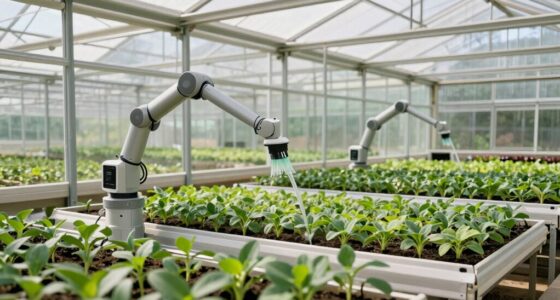
CO2 enrichment boosts plant growth by increasing photosynthesis, leading to higher yields and healthier crops. Keeping CO2 levels between 800 and 1,200 ppm is ideal for maximizing benefits without stressing plants. Regularly monitoring CO2 with reliable sensors helps you maintain ideal levels. Proper delivery methods and balancing environmental factors like light, temperature, and humidity will enhance overall results. Want to discover more ways to optimize your greenhouse environment? Keep exploring for expert tips and best practices.
Key Takeaways
- CO2 enrichment boosts photosynthesis, leading to faster plant growth, higher yields, and improved crop quality.
- Maintaining CO2 levels between 800-1,200 ppm optimizes plant health without causing stress.
- Regular monitoring with sensors ensures CO2 stays within ideal ranges for maximum benefits.
- Proper environmental management, including lighting and humidity control, enhances the effectiveness of CO2 enrichment.
- Using controlled delivery methods like gas generators or tanks ensures safe, efficient CO2 supplementation.

CO2 enrichment involves increasing the concentration of carbon dioxide in a controlled environment to boost plant growth and productivity. When you manage the levels of CO2 carefully, you can considerably improve photosynthesis enhancement, which is the fundamental process that allows plants to convert light into chemical energy. By providing an ideal amount of CO2, you give your plants the raw material they need to produce sugars and other essential compounds more efficiently. This not only accelerates growth rates but can also lead to healthier plants with higher yields. In greenhouse management, controlling CO2 levels becomes an indispensable part of optimizing the entire growing environment. You’ll need to monitor CO2 concentrations regularly, ensuring they stay within the perfect range—typically between 800 and 1,200 parts per million (ppm)—to maximize benefits without risking plant stress or wastage.
Implementing CO2 enrichment requires understanding your specific crop’s needs and the conditions within your greenhouse. When you introduce additional CO2, you should consider the lighting, temperature, and humidity, since these factors interact closely with photosynthesis rates. For example, during periods of high light intensity, plants can absorb more CO2, so increasing CO2 levels at these times can lead to more efficient photosynthesis enhancement. Proper greenhouse management involves integrating CO2 supplementation with other environmental controls, creating a balanced ecosystem that promotes rapid and healthy growth. You might use gas generators, compressed CO2 tanks, or natural sources like composting, depending on your scale and budget. Always ensure proper ventilation to prevent CO2 buildup beyond safe levels, which could negatively impact both plants and human workers. Additionally, utilizing controlled environment systems can further optimize CO2 delivery and environmental stability.
Monitoring is key to successful CO2 enrichment. Use reliable sensors and data loggers to track CO2 levels continuously, adjusting your systems as needed. When you fine-tune your greenhouse management practices, you’ll notice quicker plant development, improved uniformity, and higher quality produce. Additionally, maintaining ideal CO2 levels can make your operation more cost-effective by reducing the time required for crops to reach maturity. Remember, the goal isn’t just to increase CO2 but to do so strategically, ensuring the environment remains conducive to healthy plant growth without waste or risk. By mastering these techniques, you’ll harness the full potential of photosynthesis enhancement, leading to more productive and profitable cultivation. Proper greenhouse management and precise CO2 control are your best tools for maximizing plant health and yield in any controlled environment.
CO2 enrichment greenhouse system
As an affiliate, we earn on qualifying purchases.
As an affiliate, we earn on qualifying purchases.
Frequently Asked Questions
How Does CO2 Enrichment Affect Plant Nutrient Uptake?
CO2 enrichment boosts plant growth by enhancing photosynthesis, which in turn improves nutrient absorption. When you increase CO2 levels, your plants can produce more energy, allowing their roots to better uptake essential nutrients like nitrogen, phosphorus, and potassium. This improved nutrient uptake results in healthier, more vigorous plants. So, by enriching CO2, you’re effectively supporting stronger plant growth and more efficient nutrient use, leading to better overall plant health.
What Are the Safety Considerations for CO2 Enrichment Systems?
You should prioritize CO2 safety by ensuring proper ventilation and monitoring levels constantly. Enrichment hazards include overexposure, which can cause health issues like headaches or dizziness, so use sensors and alarms to maintain safe CO2 concentrations. Always follow manufacturer instructions and train staff on handling systems properly. Regularly inspect equipment for leaks or malfunctions, and keep emergency protocols in place to prevent accidents and protect everyone’s safety.
Can CO2 Enrichment Be Used Outdoors Effectively?
A bird in the hand is worth two in the bush, so outdoor application of CO2 enrichment can be effective if you carefully consider environmental factors. You’ll need to monitor weather, wind, and humidity, as these influence CO2 dispersion. While it’s possible, outdoor use requires precise control and adjustments, making it less predictable than indoor systems. Proper planning guarantees you maximize benefits without waste or unintended effects.
How Do I Measure Optimal CO2 Levels for Different Plants?
You should use CO2 sensors to measure ideal levels for your plants. Monitor different plant growth stages because their CO2 needs vary; seedlings need less, while flowering stages may require more. Regularly check sensor readings, aiming for about 400-800 ppm depending on the plant. Adjust your CO2 injection accordingly, ensuring your plants get the right amount for healthy growth without excess.
What Are Common Signs of CO2 Deficiency in Plants?
You notice your plants struggling—stunted growth, pale leaves, or slow photosynthesis efficiency. These are classic signs of CO2 deficiency. When plants lack enough CO2, their growth indicators falter, and photosynthesis slows down, leaving leaves weak and yellowing. If you see these signs, it’s a clear warning that your plants need more CO2 to thrive. Addressing this promptly can turn things around and boost overall plant health.
Conclusion
By enriching CO2, you can boost growth, increase yields, and enhance resilience. By understanding benefits, you release potential; by following best practices, you guarantee success; by staying informed, you protect your crops’ future. Embrace CO2 enrichment with confidence, passion, and care. Let it inspire your farming journey, fuel your innovation, and transform your harvests. With commitment and knowledge, you’ll cultivate not just plants, but a thriving, sustainable future.