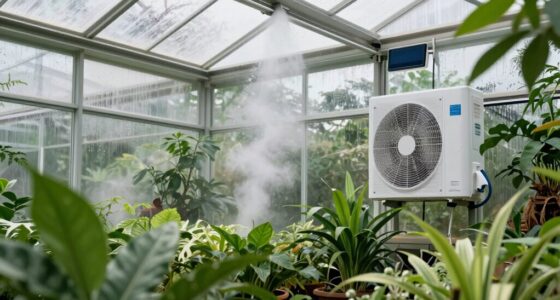
Ground-to-air heat transfer systems use the Earth’s stable underground temperatures to efficiently heat or cool spaces. By circulating fluids through underground pipes made of materials with specific thermal properties, you can transfer heat to or from the ground. The ground’s thermal conductivity and soil type considerably affect system performance. Proper design, like pipe depth and material choice, optimizes efficiency. Keep exploring to discover how to maximize these systems’ sustainability and effectiveness.

Get garden gear delivered free with Prime
- Fast, free delivery on millions of items
- Prime Video, Amazon Music and more included
- Member-only deals all year
Key Takeaways
- Ground-to-air heat transfer systems utilize stable underground temperatures for efficient seasonal heating and cooling.
- Thermal conductivity of ground materials influences the rate and effectiveness of heat exchange between the earth and air.
- Circulating fluid through underground pipes transfers heat between the ground and air systems, optimizing energy use.
- Proper pipe depth and ground material selection are critical for maximizing geothermal system efficiency.
- Ground-to-air heat transfer reduces reliance on conventional energy sources, offering a sustainable and environmentally friendly solution.
Have you ever wondered how the Earth’s constant underground temperature can be harnessed for heating and cooling? It all comes down to the natural properties of the ground and how efficiently it can transfer heat. When you tap into the Earth’s thermal energy, you’re utilizing a sustainable and reliable source that remains relatively stable year-round. The key to this process is understanding thermal conductivity—the ground’s ability to conduct heat. Materials like soil, rock, and groundwater all have different thermal conductivities, which determine how effectively heat can move through them. Recognizing this helps in designing systems that maximize heat exchange, making geothermal solutions more efficient.
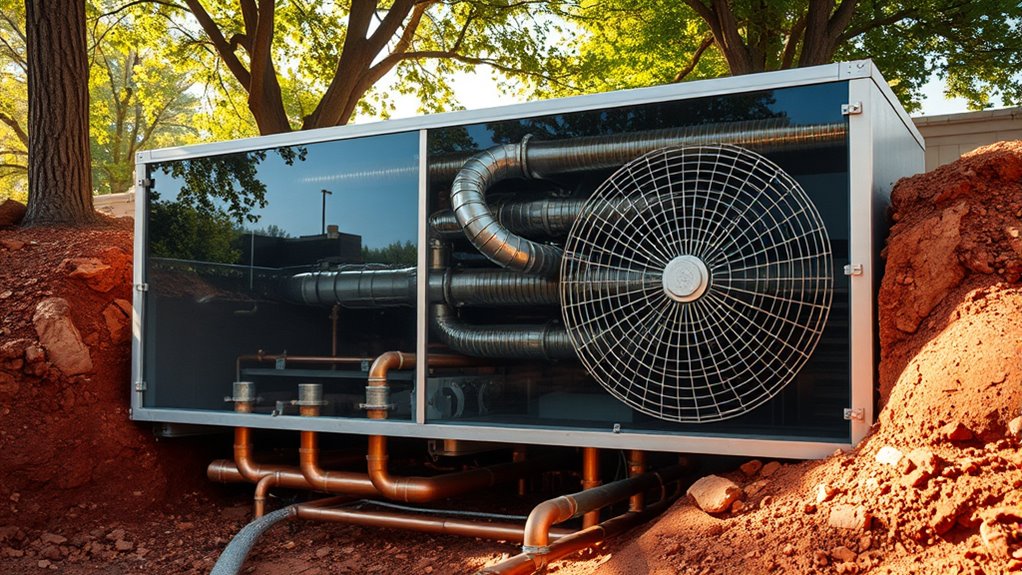
In a ground-to-air heat transfer system, the underground environment acts as a heat reservoir. During winter, you can extract heat from the ground to warm your building; in summer, you reverse the process to cool it down. This heat exchange relies on the ground’s ability to transfer heat between the earth and the heat pump or other heat exchange devices. The process involves circulating a fluid—usually water or a water-antifreeze mix—through underground pipes called loops. As the fluid moves through these loops, it absorbs or releases heat depending on the season. The thermal conductivity of the ground determines how quickly and effectively this heat transfer occurs, impacting the system’s overall efficiency.
Because the ground maintains a relatively constant temperature, your geothermal system doesn’t need to work as hard as traditional heating and cooling systems. This means less energy consumption and lower utility bills. Furthermore, the effectiveness of this heat exchange process depends heavily on the design of the system, including the depth of the pipes and the type of ground material. Higher thermal conductivity materials allow heat to flow more freely, resulting in more efficient heat transfer. Conversely, low thermal conductivity soils can limit performance, requiring deeper or more extensive piping. Additionally, understanding the types of ground materials involved can help optimize system design for maximum efficiency.
Frequently Asked Questions
How Does Soil Moisture Affect Heat Transfer Efficiency?
Soil moisture considerably impacts heat transfer efficiency because it affects soil conductivity. When soil is moist, it conducts heat better, making heat transfer more efficient. Conversely, moisture variability can cause fluctuations in this process, reducing overall effectiveness. You’ll notice that consistently moist soil improves geothermal systems, while dry or unevenly moist soil hampers heat exchange. Managing soil moisture levels helps optimize heat transfer performance, ensuring your system runs efficiently.
What Are the Environmental Impacts of Geothermal Drilling?
You should be aware that geothermal drilling can impact the environment, especially if you don’t follow strict environmental regulations. It can cause land disturbance, noise, and potential groundwater contamination. Drilling impacts may also include habitat disruption and the release of gases. To minimize these effects, guarantee proper site management, adhere to regulations, and implement best practices, helping protect ecosystems while harnessing geothermal energy effectively.
Can Ground-To-Air Systems Work in Extreme Climates?
Ground-to-air systems can work in extreme climates, but their efficiency depends on thermal conductivity and climate adaptability. You’ll find these systems perform well in moderate conditions, but in very hot or cold environments, their effectiveness may decrease without proper design adjustments. To succeed, you need to optimize insulation, enhance heat exchange components, and tailor the system to your specific climate, ensuring reliable performance regardless of temperature extremes.
How Long Does It Take for a Geothermal System to Pay for Itself?
A geothermal system typically pays for itself within 5 to 10 years through energy savings and cost recovery. You’ll notice lower utility bills as the system efficiently heats and cools your home. While upfront costs can be high, the long-term savings on energy bills offset this investment. Plus, geothermal systems often require less maintenance, making them a smart, eco-friendly choice for sustainable living.
Are There Any Maintenance Challenges Unique to Ground-To-Air Heat Transfer?
You might face some maintenance challenges with ground-to-air heat transfer systems, like corrosion issues in the piping and system leakage. Regular inspections help detect corrosion early and prevent leaks that can affect efficiency. Keep an eye on connection points and joints, and guarantee the antifreeze or working fluid stays in good condition. Addressing these issues promptly maintains system performance and prolongs its lifespan.
Conclusion
Think of geothermal and ground-to-air heat transfer as Earth’s secret conversation with you, whispering warmth and coolness through its underground channels. Just as a hidden river guides water smoothly to its destination, these systems channel Earth’s natural energy to keep you comfortable. By tapping into this ancient dialogue, you become part of a sustainable story, where you harness Earth’s silent power to nurture your space—quiet, reliable, and always in tune with nature’s gentle rhythm.
Halloween Picks
halloween
As an affiliate, we earn on qualifying purchases.