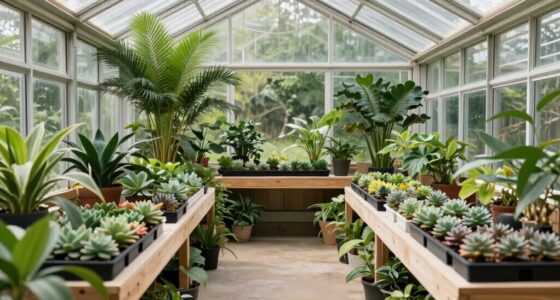
Greenhouse climate controllers use sensors to monitor temperature, humidity, and airflow, helping you maintain ideal growing conditions. You can set specific targets (setpoints) for these parameters, and automation manages heaters, fans, and vents to keep everything steady. This precise control boosts plant health and maximizes yields while reducing manual efforts. If you want to discover how advanced systems can optimize your greenhouse environment, continue exploring the key features and benefits.

Get garden gear delivered free with Prime
- Fast, free delivery on millions of items
- Prime Video, Amazon Music and more included
- Member-only deals all year
Key Takeaways
- Greenhouse climate controllers automate temperature, humidity, and airflow regulation through sensors and setpoints for optimal growing conditions.
- Sensors monitor real-time environmental parameters to enable precise adjustments of heaters, fans, and vents.
- Setpoints define desired temperature and humidity levels, guiding automatic system responses for stable climate control.
- Automation reduces manual interventions, ensures consistent conditions, and supports diverse crop requirements.
- Data logging and remote access allow for environment review, pattern analysis, and fine-tuning of climate settings.

Greenhouse climate controllers are indispensable tools for maintaining ideal growing conditions by automatically regulating temperature, humidity, and airflow. When you set up a climate controller, you’re equipping your greenhouse with a system that continuously monitors environmental parameters and makes real-time adjustments. One of the key features you’ll rely on is humidity regulation, which ensures that moisture levels stay within optimal ranges for your plants. Proper humidity control prevents problems like mold, mildew, and plant stress, helping you achieve healthier, more vigorous growth. Alongside humidity regulation, temperature monitoring plays a critical role in keeping your plants comfortable and productive.
Greenhouse controllers ensure optimal plant health through automatic temperature and humidity regulation.
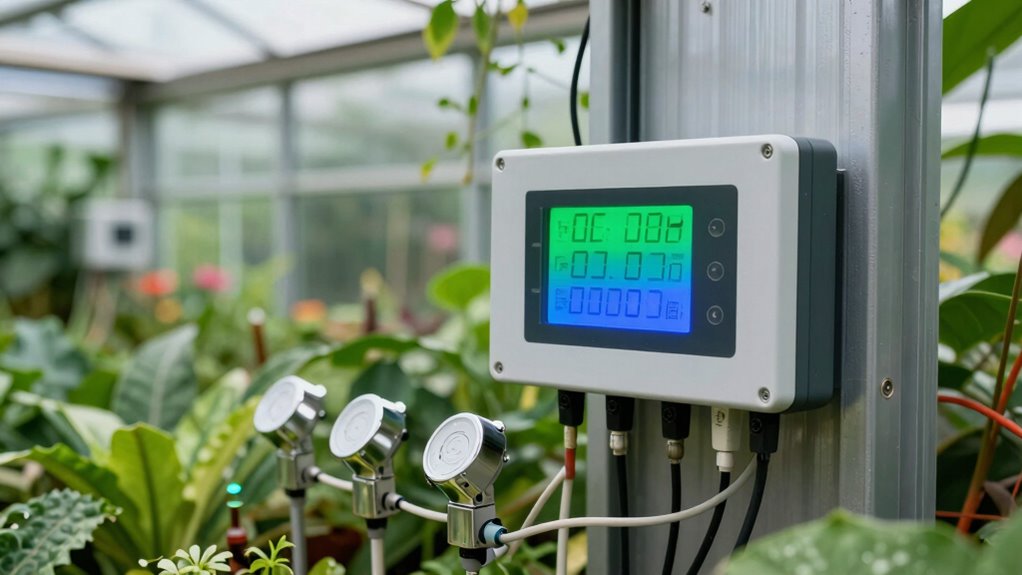
With temperature sensors integrated into your controller, you get precise readings that inform your system when to activate heaters, fans, or cooling vents. This constant feedback loop helps avoid temperature fluctuations that can stunt growth or cause damage. Many controllers allow you to set specific temperature setpoints, so your system reacts automatically to maintain a stable environment. This automation reduces the need for manual interventions, saving you time and effort, especially during off-hours or when you’re away. It also guarantees your greenhouse remains within the ideal temperature range, which is essential for different crops and growth stages.
Your controller’s ability to integrate humidity regulation with temperature monitoring creates an all-encompassing climate management system. For example, if the temperature rises beyond your setpoint, the controller might activate fans and ventilation to cool the space while also adjusting humidity levels to prevent excessive dryness or dampness. Conversely, if humidity gets too high, the system can turn on dehumidifiers or ventilation fans to reduce moisture content, all while keeping the temperature in check. This seamless automation helps create a stable environment that supports plant health and maximizes yields.
Many advanced climate controllers also incorporate data logging and remote monitoring features. This allows you to review historical data, identify patterns, and fine-tune your setpoints for better control. Additionally, some systems enable you to control your greenhouse environment via smartphone apps, giving you flexibility and peace of mind. By integrating sensors and setpoints into one automated system, you can reduce manual adjustments, minimize errors, and ensure your plants receive consistent care. Ultimately, a well-designed greenhouse climate controller with reliable humidity regulation and temperature monitoring capabilities becomes your most valuable tool for enhancing growth conditions and improving crop outcomes. Incorporating load calculations into your setup ensures your system is properly powered for optimal performance and safety.
greenhouse climate controller with sensors
As an affiliate, we earn on qualifying purchases.
As an affiliate, we earn on qualifying purchases.
Frequently Asked Questions
How Do I Choose the Right Climate Controller for My Greenhouse?
To choose the right climate controller, consider your greenhouse’s size and specific needs. guarantee it supports proper sensor calibration for accurate readings and is compatible with your existing control system. Look for features like user-friendly interfaces and reliable automation options. By matching these factors to your setup, you’ll optimize climate management, improve plant health, and streamline operations. Always research product reviews and consult experts to make an informed decision.
What Maintenance Is Required for Greenhouse Sensors and Controllers?
You need to regularly calibrate your sensors to make certain of accurate readings, especially before the growing season or after extreme weather. Keep your controller firmware up to date to fix bugs and improve performance. Clean sensors gently to prevent dust buildup, and check connections periodically. While technology advances, routine maintenance keeps your greenhouse climate controllers reliable, just like fine-tuning a musical instrument for perfect harmony.
Can Climate Controllers Integrate With Existing Greenhouse Automation Systems?
Yes, climate controllers can integrate with your existing greenhouse automation systems. To guarantee smooth system integration, check for compatibility standards like OPC UA or Modbus. You may need to update or customize your current setup, but many controllers are designed to work seamlessly with various systems. Confirm compatibility beforehand, and consider consulting with manufacturers to avoid integration issues and optimize your greenhouse’s automation efficiency.
How Do I Troubleshoot Common Issues With Greenhouse Climate Controllers?
Troubleshooting your greenhouse climate controller begins with checking for wiring woes and confirming proper sensor calibration. Make certain all connections are secure, and recalibrate sensors if readings seem off. Look for loose wires or damaged cables causing inconsistent data. Reset the system if needed, and verify setpoints are correctly configured. Regularly inspecting these components helps prevent problems and keeps your climate control running smoothly, safeguarding your greenhouse’s growth and productivity.
What Are the Latest Technological Advancements in Greenhouse Climate Control?
You should explore the latest advancements like IoT integration, which enables real-time data collection and automation, improving precision agriculture. Smart sensors now provide more accurate climate monitoring, allowing you to optimize conditions efficiently. Automated systems can adjust humidity, temperature, and ventilation based on sensor data, reducing manual effort. These innovations help you enhance crop yield and resource management, making your greenhouse more sustainable and productive.
Conclusion
By understanding how sensors, setpoints, and automation work together, you can optimize your greenhouse environment efficiently. For instance, imagine a tomato grower who uses automated climate controllers; they adjust watering and temperature based on real-time sensor data, resulting in higher yields and healthier plants. Embracing these technologies allows you to tailor conditions precisely, reducing energy costs and improving crop quality. With smart climate control, you’re better equipped to meet your greenhouse’s unique needs and boost productivity.
Fall Picks
fall essentials
As an affiliate, we earn on qualifying purchases.