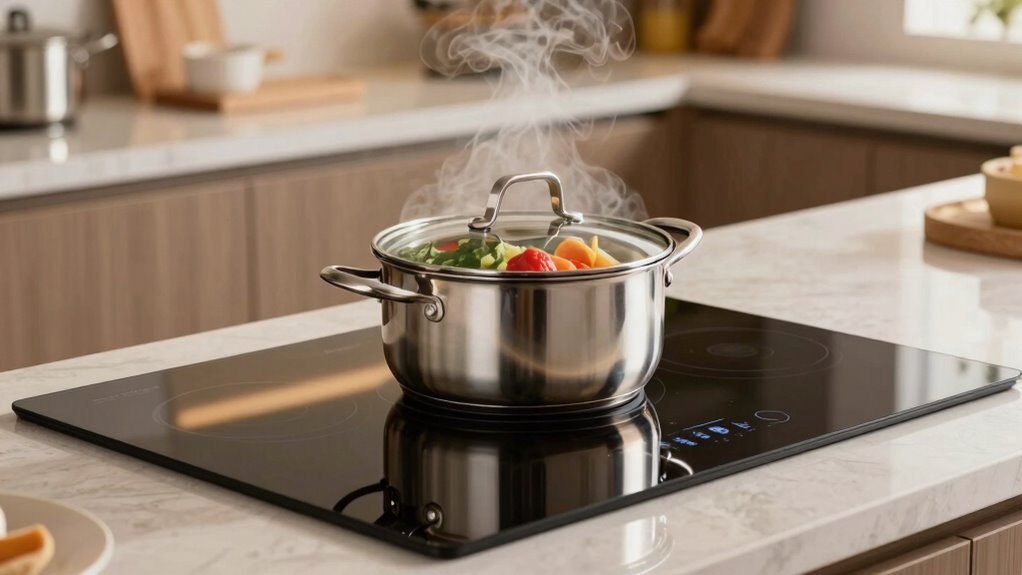

Induction cooking feels different at first because it challenges your expectations with its cooler surface and precise heat control. Unlike traditional stoves, it heats cookware directly, making it safer and faster. The unfamiliar sensation of a cool cooktop can seem strange but is intentional for safety and efficiency. Embracing these differences helps you cook more effectively and enjoy the benefits. If you keep exploring, you’ll see how these differences become your advantages in the kitchen.

Get garden gear delivered free — and shop member deals
- Fast, free delivery on millions of items
- Access to Prime Big Deal Days deals on October 6–7
- Prime Video, Amazon Music and more included
Key Takeaways
- Induction cooking’s unfamiliar feel is intentional, encouraging users to adjust expectations for safer, more precise control.
- The cooler surface during cooking differs from traditional stoves, highlighting the technology’s safety benefits.
- Faster heating and responsive temperature adjustments initially seem different but offer greater efficiency.
- Compatibility of cookware is essential, making the cooking process feel new compared to conventional methods.
- Embracing the differences enhances safety, efficiency, and overall cooking experience.

When you first try induction cooking, it might feel unfamiliar or even a bit strange. The way it heats your pots and pans is different from traditional stoves, and that can be a little disorienting at first. You’ll notice that the surface stays relatively cool, even while your food is cooking, which can seem counterintuitive. This isn’t just a design quirk; it’s part of the technology’s core. It’s important to understand safety considerations here—because the cooktop itself doesn’t get hot in the same way as gas or electric stoves, you’re less likely to burn yourself accidentally. That said, you still need to be cautious with cookware that might be hot from residual heat, and keep an eye out for any electrical safety tips, like ensuring your cookware is compatible and that the cooktop is properly grounded. Additionally, understanding induction technology can help you better appreciate how precisely it heats your cookware. One of the biggest advantages of induction cooking is its energy efficiency. When you’re used to traditional methods, it might seem like induction is saving you energy right away—because it heats faster and uses power more directly. Instead of wasting heat on the surrounding air, induction stoves transfer energy straight into the cookware, which means less heat loss. This efficiency isn’t just good for your utility bills; it also makes cooking quicker and more precise. You’ll find that you can bring water to a boil in a fraction of the time, and you can fine-tune the heat with remarkable accuracy. That’s especially helpful for delicate sauces or recipes that require precise temperature control.
Getting comfortable with induction cooking means adjusting your expectations and understanding how it differs from what you’re used to. The initial unfamiliarity is the point—because once you adapt, you’ll appreciate the safety benefits and energy efficiency it offers. You won’t need to worry about open flames or hot coils, and you’ll notice how much faster your meals come together. As you become more familiar with the technology, you’ll also learn to select the right cookware, since induction requires magnetic metals like cast iron or stainless steel. Embracing these differences might take a little time, but the payoff is a safer, more efficient, and more enjoyable cooking experience.
induction cooktop with safety features
As an affiliate, we earn on qualifying purchases.
As an affiliate, we earn on qualifying purchases.
Frequently Asked Questions
How Long Does It Take to Get Used to Induction Cooking?
You’ll typically get used to induction cooking within a few days to a week. During the learning curve and adjustment period, you might find it takes some time to master heat control and cookware compatibility. But as you practice, you’ll notice how quickly and precisely the heat responds, making cooking more efficient. Patience is key; once familiar, you’ll appreciate the quick adjustments and energy savings induction offers.
Can Induction Cooktops Be Used With Any Cookware?
They say, “Don’t judge a book by its cover,” but with induction cooktops, you should evaluate your cookware first. Not all cookware works with induction; it needs to be magnetic. Check for compatibility, especially if you want energy efficiency. Use a magnet to test your pots and pans—if it sticks, you’re good to go. This guarantees you get the best performance and save energy while cooking.
Is Induction Cooking Safer Than Traditional Methods?
Yes, induction cooking is generally safer than traditional methods. It uses energy efficiently, reducing energy waste and lowering your environmental impact. Since the cooktop heats only the cookware and not the surface, there’s less risk of burns or fires. Plus, the precise temperature control minimizes accidents, making it a safer choice for your kitchen. You benefit from a more efficient, eco-friendly, and safer cooking experience overall.
Does Induction Cooking Affect Food Taste or Quality?
Induction cooking doesn’t negatively affect your food’s taste or quality; in fact, it can enhance flavor and preserve texture. Because induction heats quickly and precisely, you get even cooking and better control, which keeps ingredients fresh and flavorful. You’ll notice your dishes retain their natural textures, and flavors remain vibrant. So, you might find your meals taste better and have improved quality, thanks to the efficient, consistent heat induction provides.
What Are the Initial Costs of Switching to Induction?
Switching to induction is like upgrading from a bicycle to a sports car—initial costs are higher. You’ll need to invest in an induction-compatible cooktop and possibly new cookware, with prices varying based on size and features. Installation considerations include ensuring your kitchen’s electrical system can handle the energy efficiency of induction, which may mean rewiring or upgrading circuits. While upfront costs are significant, the long-term savings and performance often make it worthwhile.
Conclusion
At first, induction cooking might feel unfamiliar, but that’s part of the experience. Once you get used to its quick response and precise control, you’ll wonder how you ever cooked without it. Did you know that induction stoves heat up to 50% faster than traditional ones? Embracing the initial difference can transform your cooking routine into a more efficient, enjoyable process. So, give it time—you’ll soon appreciate how seamlessly induction cooking fits into your life.
Halloween Picks
halloween
As an affiliate, we earn on qualifying purchases.